Killa Design’s mirror-polished villas hover above the water like a chain of spacecraft, turning Sheybarah Island into one of the Red Sea’s most visually distinctive resort projects.
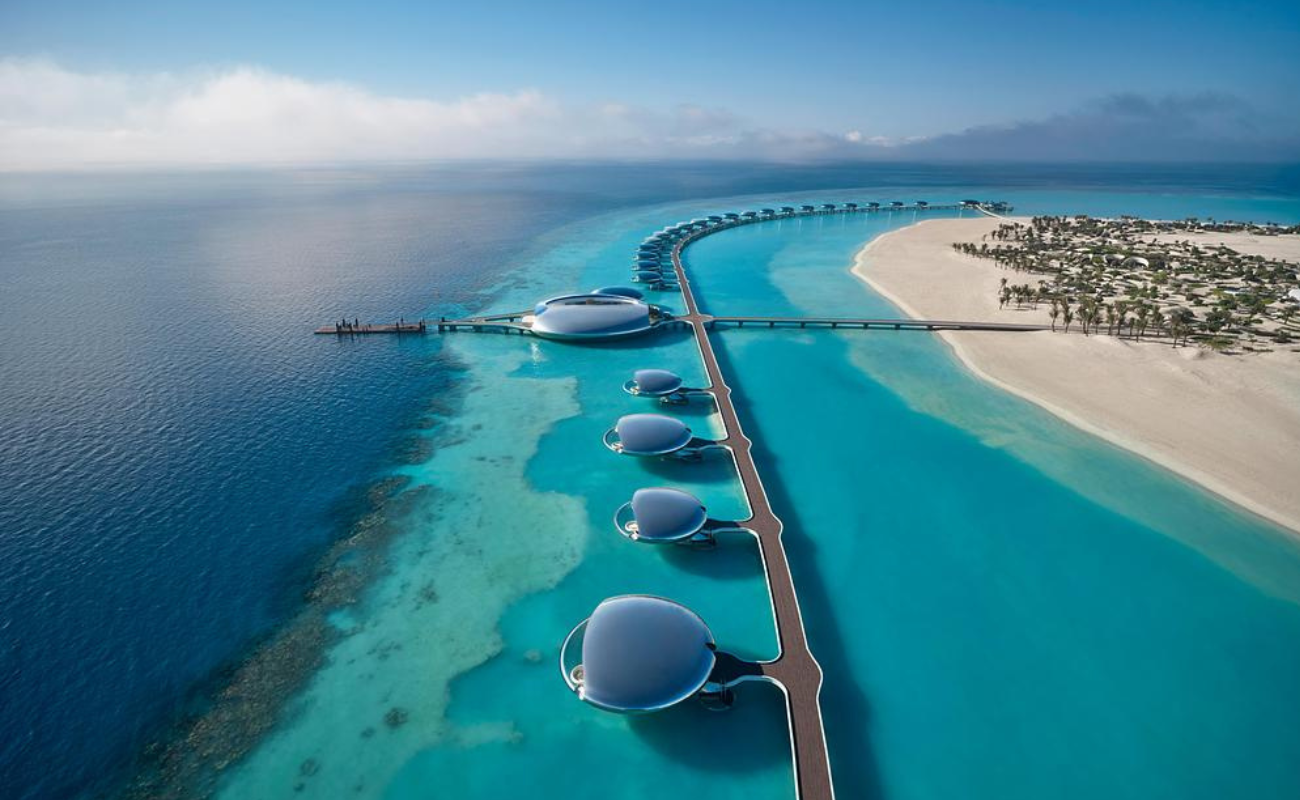
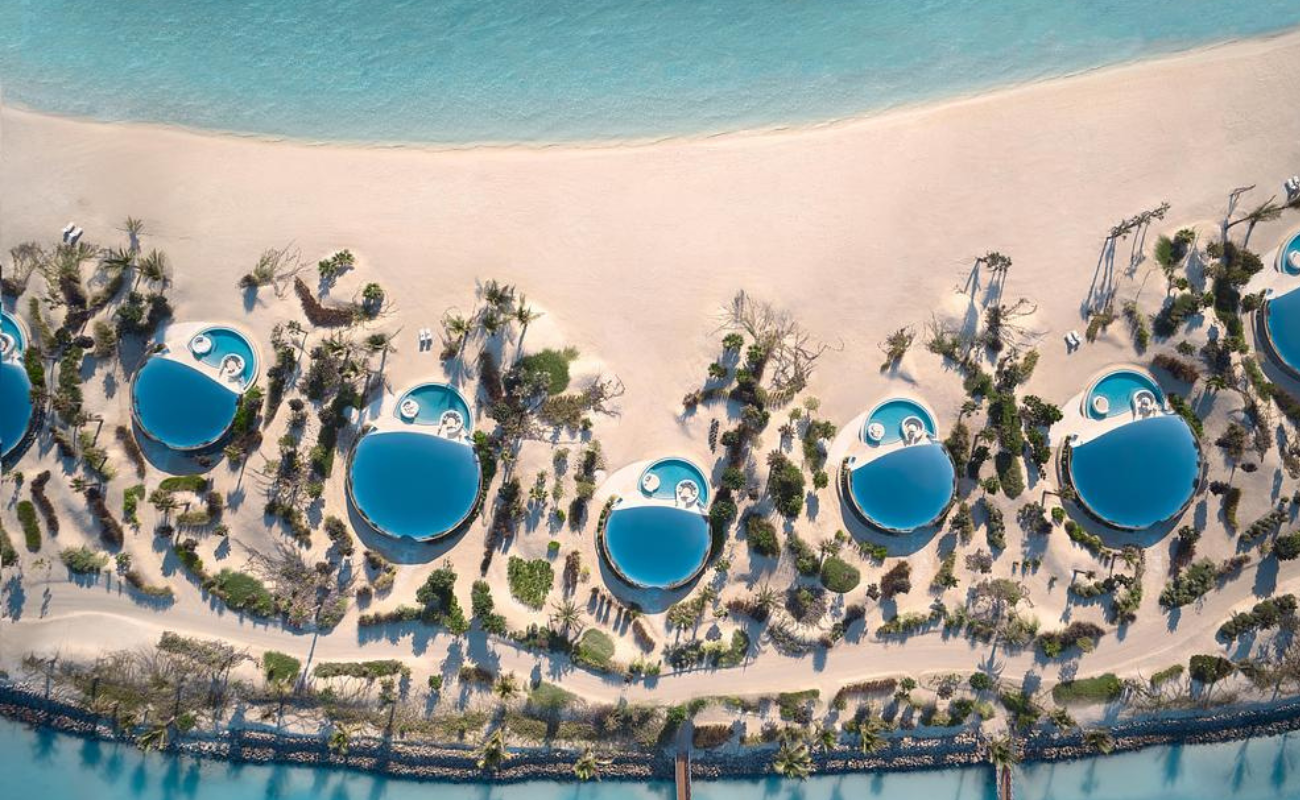
From above, Shebara Resort looks less like a hotel than a settlement from another planet. A narrow spine reaches across the lagoon, connecting silver pods that appear to float above the water, while larger circular structures anchor the development against the pale sand of Sheybarah Island.
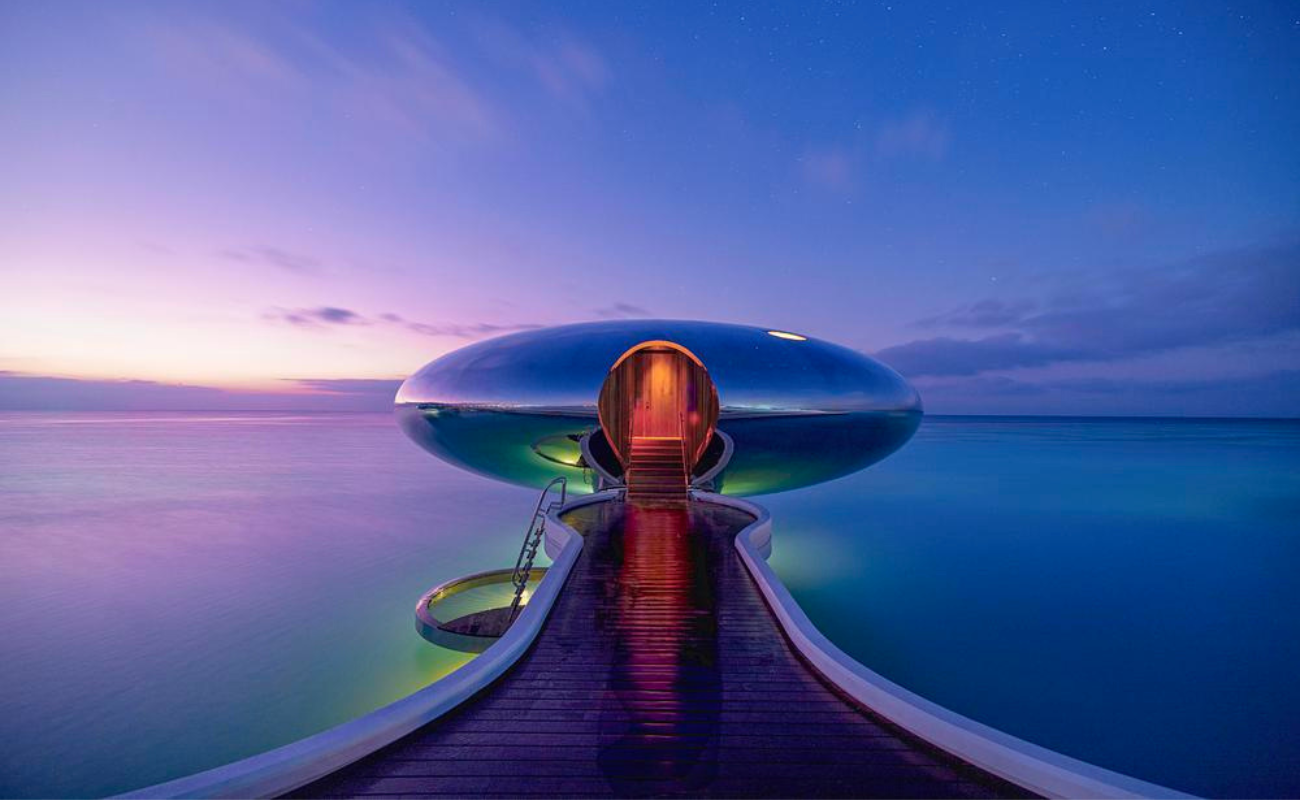
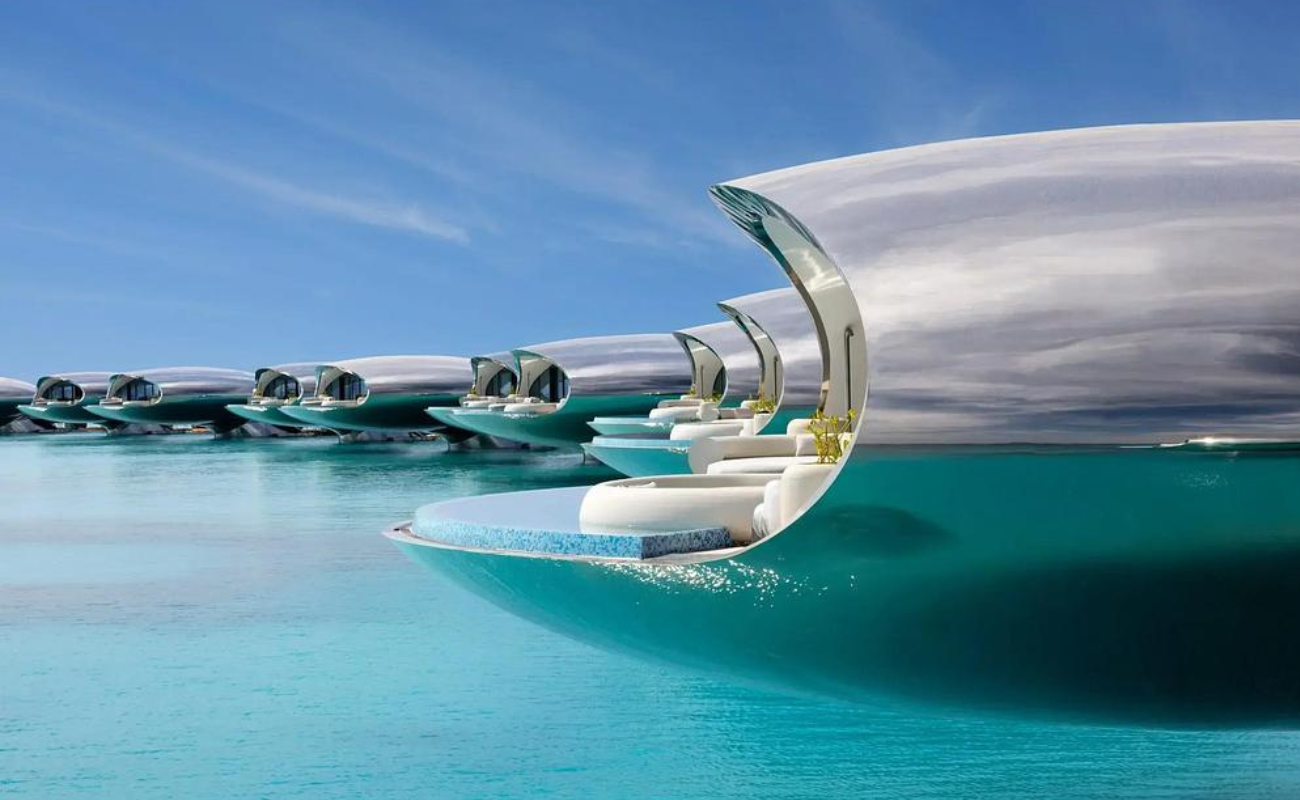
The effect is deliberately theatrical. Designed by Killa Design, the resort’s polished stainless-steel villas reflect the colour of the sea, the changing sky and the movement of light across the lagoon. Their rounded forms were inspired by a string of pearls, but in the finished architecture they also have something unmistakably futuristic about them.
Up close, the villas become even stranger. Their metallic shells curve over private decks and pools, with mirrored surfaces shifting between blue, silver and violet as daylight changes. At dusk, warm light spills from their entrances, intensifying the contrast between the machine-like exterior and the water around them.
Architecture that appears to float
The 73-villa resort was developed by Red Sea Global and completed in 2024, with interiors by Studio Paolo Ferrari. It includes 38 overwater villas and 35 beachfront villas, connected by walkways that trace a graphic line through the lagoon.
The overwater accommodation is cantilevered above the water, positioned more than 50 metres from the natural coral reef and supported by columns intended to limit contact with the seabed.
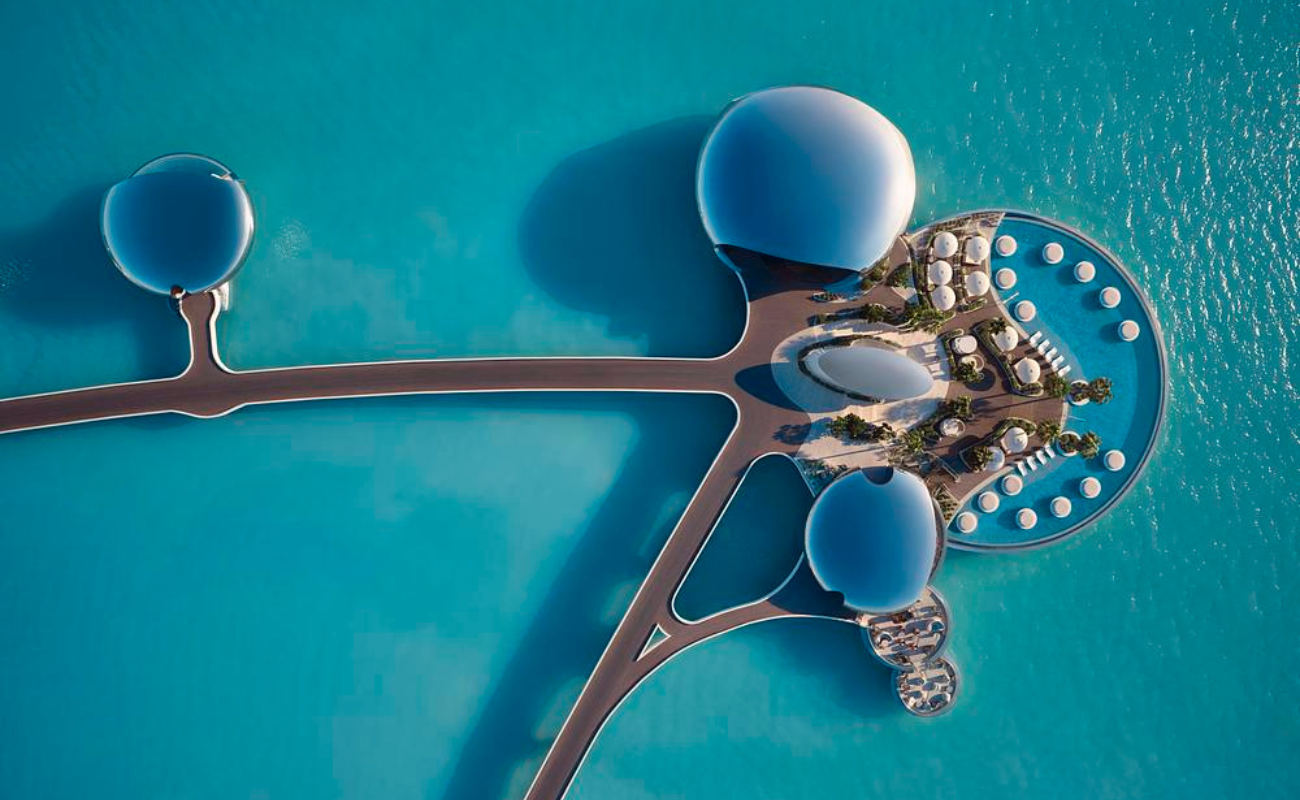
Viewed from the air, the layout becomes part of the design spectacle. Circular buildings, curving jetties and reflective pods create a composition that feels closer to a speculative city than a conventional beach resort.
A string of pearls reworked in steel
Killa Design drew on the image of pearls emerging from the sea, translating the idea into smooth, rounded volumes clad in polished stainless steel. The reflective surfaces allow the villas to change with their surroundings. Under clear skies they take on the blue of the lagoon. At sunset they become darker and more metallic, interrupted by the warm glow of their entrances and interiors.
Rather than blending into the landscape through natural materials or muted colour, Shebara uses reflection. The buildings remain visually assertive, but their surfaces continually borrow from the sea and sky.
Built offshore to reduce disruption
Construction was shaped by the sensitivity of Sheybarah Island, which contains mangroves, dunes, desert flora, turtle nesting grounds and coral habitats.
Each villa was built, fitted out and commissioned offshore before being transported to the island and connected to the resort’s infrastructure. According to the project team, this method was chosen to reduce the disturbance caused by conventional construction on the island. The positioning of the villas was also planned around existing marine and coastal habitats.
The systems behind the spectacle
Behind the futuristic appearance sits a network of environmental infrastructure. The resort is powered by an on-site solar farm covering 110,000 square metres. It also includes desalination and reverse osmosis systems, sewage treatment, water reclamation and electric land and marine transport.
The project information outlines guest programmes connected to coral gardening, mangrove expansion, turtle nesting and environmental education. The intention is to make the resort’s infrastructure and conservation approach part of the visitor experience rather than keep it entirely out of sight.
Shebara also aims to support education and employment in nearby rural communities, with a stated focus on creating opportunities for Saudi women through its colleague programme.
A resort designed as a spectacle
The tension at Shebara is clear. Its architecture is designed to attract attention, while its environmental strategy is intended to reduce physical disruption to the island.
Visually, the project makes little attempt to resemble a traditional coastal resort. The mirrored pods, circular decks and long walkways create an image that is engineered, theatrical and almost alien. That is where Shebara is most convincing. It turns the hotel itself into the destination, placing guests inside an imagined future of marine architecture suspended above the Red Sea.
How to book
Book your stay here.
What is Shebara Resort?
Shebara Resort is a 73-villa luxury resort on Sheybarah Island in Saudi Arabia’s Red Sea. It was developed by Red Sea Global and designed by Killa Design.
Why does Shebara Resort look futuristic?
Its villas are formed from smooth, rounded pods clad in polished stainless steel. Their reflective surfaces mirror the sea and sky, giving the resort an almost spacecraft-like appearance.
Who designed Shebara Resort?
Killa Design designed the architecture, while Studio Paolo Ferrari created the interiors.
What inspired the design of Shebara Resort?
According to Killa Design, the resort was inspired by a string of pearls emerging from the sea.
Where is Shebara Resort?
Shebara Resort is on Sheybarah Island in the Red Sea, approximately 25km from the Saudi Arabian mainland.
How many villas are at Shebara Resort?
The resort has 73 villas, comprising 38 overwater villas and 35 beachfront villas.
How do guests reach Shebara Resort?
The island is accessible by boat or seaplane.
How was Shebara Resort constructed?
The villas were built, fitted out and commissioned offshore before being transported to the island and connected to its infrastructure.
What sustainability features does Shebara Resort have?
The project includes a 110,000-square-metre solar farm, desalination, water reclamation, electric transport and off-site villa construction intended to reduce disturbance to the island.
For best flight prices:
Visit here for schedules and prices.