ART TRAILS AND OPEN ROADS: DISCOVERING HIDDEN CREATIVE SPACES ACROSS THE UK
The UK offers a wealth of creative spaces with good disabled access, including rural galleries, restored warehouses, and off-grid artist studios. Many of these spots reflect the country’s inventive spirit, rewarding anyone willing to look beyond familiar city settings.
Accessing these places demands careful planning. The routes themselves add to the appeal: narrow country lanes can lead to quiet sculpture parks, while coastal walks sometimes reveal unexpected installations. Former factories and old town buildings turn into lively creative venues. Travelling to these art spots brings the thrill of exploration and the satisfaction of finding something new.
Across Britain, both historic and modern venues commit to welcoming all visitors. Ramps, guides, and clear information make it easier for people from different backgrounds and abilities to join in. Thanks to these changes, more people enjoy the country’s artistic life, venturing into well-known galleries or seeking out less-explored spaces.
The Rise of Art Trails Across Britain’s Landscape
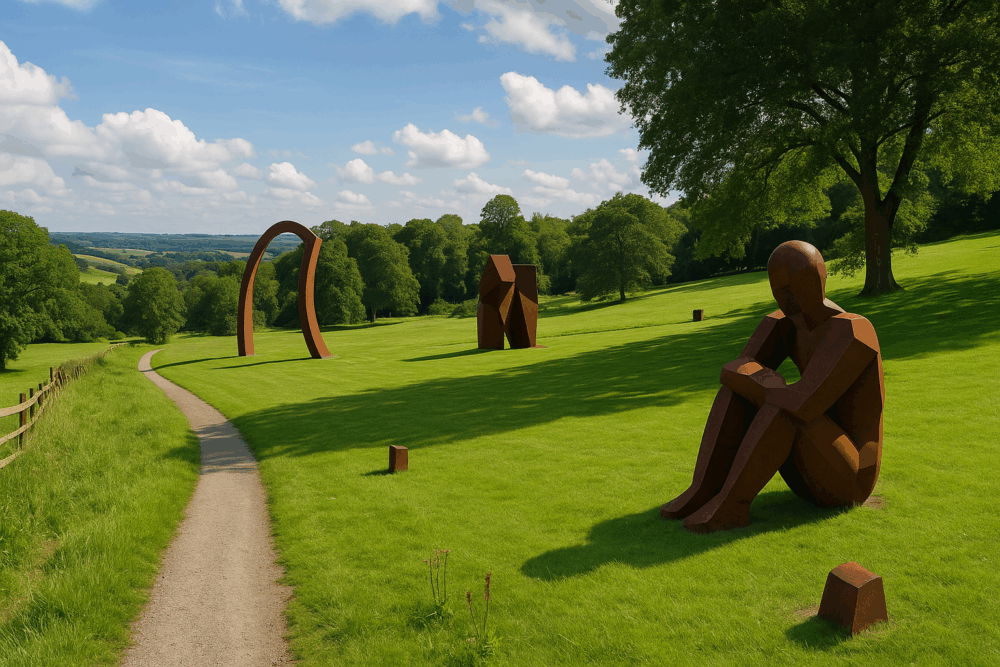
The UK is home to a growing number of art trails, with routes like the North Downs Way offering a mix of sculpture and landscape. With wheelchair accessible vehicles, sites previously difficult to reach now welcome more visitors, including those with mobility needs.
Public art installations have become more common in recent years, especially across rural and coastal areas. This growth reflects rising interest in experiencing art beyond traditional gallery walls.
The Yorkshire Sculpture Park stands as a notable example, featuring works by Henry Moore and Barbara Hepworth across rolling parkland. Other major trails include The Line in London, which connects installations along the River Thames, and Jupiter Artland near Edinburgh, where contemporary sculptures nestle within carefully designed woodlands.
Hidden Creative Hubs Beyond the Major Cities
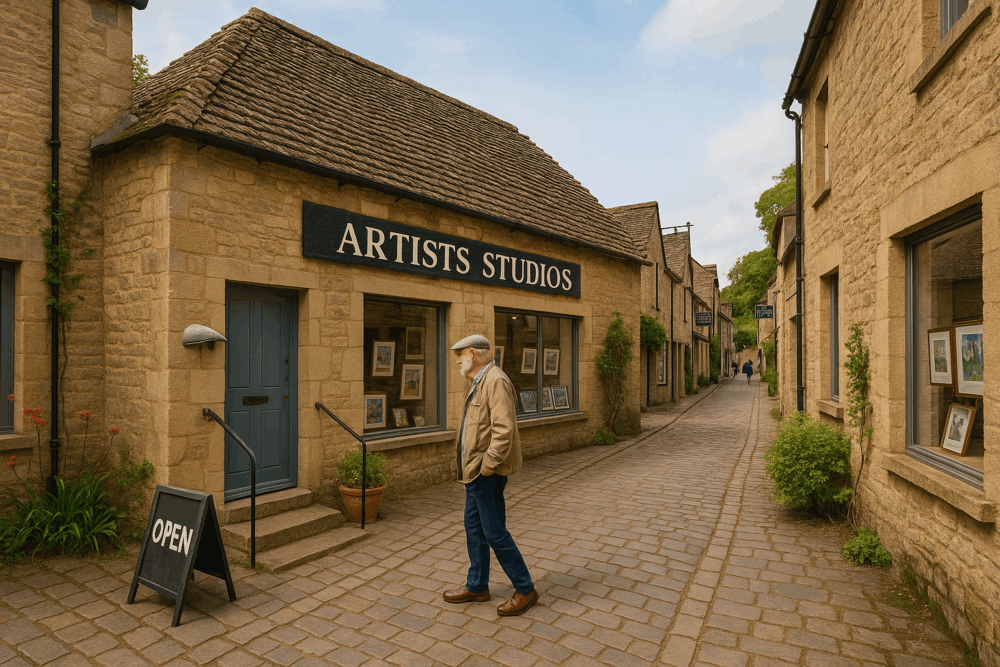
Creative communities thrive in unexpected places. Margate, once a quiet seaside town, now draws artists due to its affordable workspace and the Turner Contemporary gallery. Dreamland’s revival adds to its appeal. Artists set up studios in old shops and warehouses, giving the area a distinctive energy.
In the Cotswolds, Stroud’s old textile mills now house printmakers, ceramicists, and painters. The Stroud Valleys Artspace welcomes the public, with visitors able to talk to artists and buy work directly at the monthly market.
When planning visits to these historic venues, resources like AccessAble and Euan’s Guide provide detailed accessibility information. Independent travellers might use wheelchair accessible vehicles to reach these sometimes remote creative spaces.
Coastal Art Revivals
Seaside locations have reinvented themselves through art. St Ives in Cornwall has inspired artists for years, and since its improvements in 2017, Tate St Ives offers level access for all. Hastings has followed Margate’s example, with the Hastings Contemporary gallery placed between their fishing beach and historic huts.
Some galleries, such as Tate St Ives, address this with online virtual tours, letting people preview collections and layouts from home before arranging a trip.
Navigating Britain’s Creative Landscapes
Art-themed travel requires preparation, especially with attractions stretched across wide regions. Travellers seeking independence can explore wheelchair accessible cars by Allied Mobility to reach workshops and galleries. Such vehicles open up journeys that public transport cannot reach.
Each region brings its own considerations. The Scottish Highlands showcase outdoor sculptures against dramatic views, though long journeys are common. In rural Wales, places like MOMA Wales await at the end of winding lanes. East England offers gentler drives, though venues can be miles apart.
The time of year shapes the experience. Winter often brings mud and limited accessibility in sculpture parks, while spring and autumn bring milder weather and fewer crowds.
Technology for Art Exploration
Digital resources now make it simpler to find and visit creative venues. Online guides and apps list galleries and artworks, including information about access. Many cultural venues now offer virtual tours and access guides, often with videos or VR previews, letting people explore shows and layouts online before deciding whether to visit in person.
This gives people the option to select events or locations that meet their requirements. Checking access details before setting out increases enjoyment for every visitor.
Community-Led Art Initiatives Improving Access
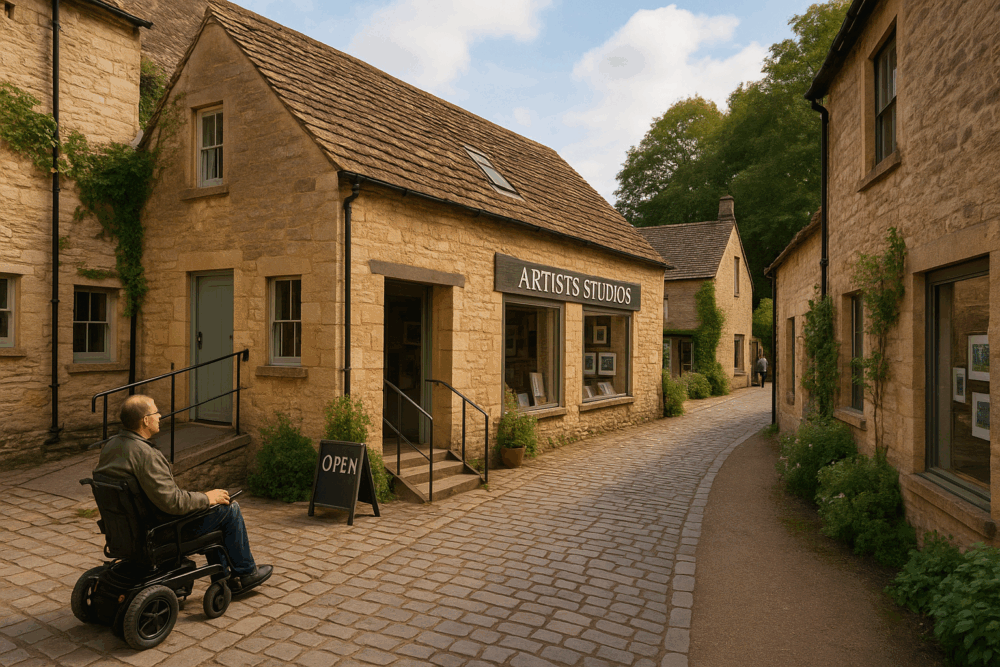
Local initiatives further improve inclusion from the outset. In Dumfries, the Stove Network turns empty shops into accessible arts venues. Disabled creators play a major role in the community, making every event more welcoming. Leicester’s Attenborough Arts Centre was designed for everyone, with tactile and audio-described exhibitions included from the outset.
Disability Arts Online supports artists through digital shows and a dedicated podcast. Their resources help both makers and organisers plan accessible events and creative activities. Such early and careful coordination creates more welcoming artistic networks.
Many venues rely on local advice to plan for genuine access. For example, Leicester’s Attenborough Arts Centre creates its guides based on feedback from disabled artists and audiences. Stroud Valleys Artspace compiles maps and entrance resources from visitor suggestions.
For group events and art weekends, travel remains important. Wheelchair accessible vehicles help more people participate in gatherings like Dumfries and Galloway’s Spring Fling. Such transport solutions open up more creative adventures across the UK for people of all abilities.
Across the UK, creativity is no longer confined to major cities or traditional galleries. With improved accessibility, digital tools, and community-driven projects, more people can experience the joy of art in unexpected places. Whether following a sculpture trail, visiting a converted mill, or attending a rural art weekend, every journey becomes part of the creative experience: open, welcoming, and full of discovery.