Why Creatives Are Quietly Choosing Fukuoka
For years, Japan’s creative gravity has pulled hard towards Tokyo, Kyoto and, more recently, Osaka. Inside Fukuoka, Japan’s quietly radical creative capital, a different story has been unfolding, confident, compact and quietly ambitious. Long overlooked, the city is now stepping into its moment, not through spectacle or hype, but through something far more persuasive, liveability.
On Kyushu’s northern edge, facing the Asian mainland, Fukuoka City is emerging as one of Asia’s most compelling creative hubs. Not through spectacle or hype, but through something far more persuasive, liveability. This is a city where creatives don’t just pass through. They stay. They build. They make work.
INSIDE FUKUOKA, JAPAN’S QUIETLY RADICAL CREATIVE CAPITAL
With a progressive startup ecosystem, a rare Japanese Startup Visa, strong design culture and deep rooted craft traditions, Fukuoka offers a new model for urban creativity, one that blends heritage with forward thinking hospitality, retail, art and fashion.
For creative travellers, it may be Japan’s most interesting city right now.
Why Creatives Are Quietly Choosing Fukuoka
Fukuoka doesn’t behave like a capital city. It’s compact, human scaled and remarkably easy to live in. The airport sits minutes from the centre. Neighbourhoods feel walkable and local. Green space, particularly around Ohori Park, softens the urban edge.
But beneath that calm surface is a fast growing international community of designers, digital nomads, artists and founders drawn by opportunity rather than noise. Fukuoka was the first Japanese city to introduce a Startup Visa, allowing overseas entrepreneurs and freelancers to live and work long term while building new ventures. That single policy decision has quietly reshaped the city’s creative DNA.
The result is a place that feels both deeply Japanese and globally fluent. Traditional festivals coexist with co working spaces. Century old textiles sit comfortably alongside contemporary fashion and architecture. It’s a city building a future without erasing its past.

NOT A HOTEL FUKUOKA, Where Hospitality Becomes a Creative Platform
Few places capture Fukuoka’s new mindset better than NOT A HOTEL FUKUOKA.
Founded in 2020, NOT A HOTEL operates at the intersection of architecture, technology and lifestyle. Its concept, Your home anywhere in the world, moves beyond conventional hospitality, offering high end, design led living spaces that work equally well for short stays and extended creative residencies.
The Fukuoka property is conceived as a three dimensional, city like structure, eight stacked guest rooms, each with its own distinct purpose and personality. These are not hotel rooms designed for passive consumption. They are spaces built for living, working and hosting.
+CHEF features a chef’s table, full professional kitchen and outdoor dining area, ideal for private dinners and collaborations.
+DESK includes a ten seat meeting table with integrated power, presentation screens and workspace infrastructure, blurring the line between accommodation and studio.
Wrapped in greenery and integrated into its neighbourhood, NOT A HOTEL FUKUOKA feels less like a destination and more like a private address.

In 2025, the concept gained global cultural weight when Pharrell Williams and NIGO joined as creative advisors and investors. Their involvement formalised what was already evident, NOT A HOTEL isn’t selling nights. It’s curating a cultural ecosystem.
Prices start from ¥120,000 per night, approximately £580, positioning it firmly in the luxury creative space, high end, but purposeful.
Maison HAKOSHIMA, Reviving a Lost Textile, One Garment at a Time
Fukuoka’s creative energy isn’t limited to the new. Some of its most compelling work is rooted firmly in revival.
Maison HAKOSHIMA has brought Hakozaki shima, a traditional textile woven in the Hakozaki district since the Meiji era, back from near extinction. Once worn daily by locals, coal miners and festival participants, the fabric vanished during wartime, lost for almost 70 years.
Designers Keisuke Obata and Mai Hayashi have resurrected it using machine weaving, reimagining the material for contemporary fashion and lifestyle pieces. The result is subtle, wearable and quietly distinctive, heritage without nostalgia.
Their clothing and accessories make perfect keepsakes, objects that carry real cultural weight without shouting about it.
Fukuoka Art Museum, A Modernist Anchor in the Park
Set within the calm geometry of Ohori Park, the Fukuoka Art Museum is both a cultural anchor and an architectural statement. Designed by modernist master Kunio Maekawa, the building sits comfortably among water and greenery, reinforcing Fukuoka’s connection between nature and urban life.
The museum’s collection spans over 5,000 years, from ancient Asian artefacts to contemporary works from Japan, Asia and the West. Painting, sculpture, film, ceramics and folding screens sit side by side, creating a broad, thoughtful cultural narrative.
One of the museum’s most recognisable works sits outside. Yayoi Kusama’s giant yellow pumpkin, now synonymous with her global practice, first appeared unexpectedly on a busy Fukuoka street in 1994. It was her first outdoor sculpture, and it changed the city’s relationship with public art overnight.
Today, that pumpkin remains a symbol of Fukuoka’s willingness to embrace bold contemporary culture early.
Admission remains refreshingly accessible, reinforcing the city’s democratic approach to art and culture.

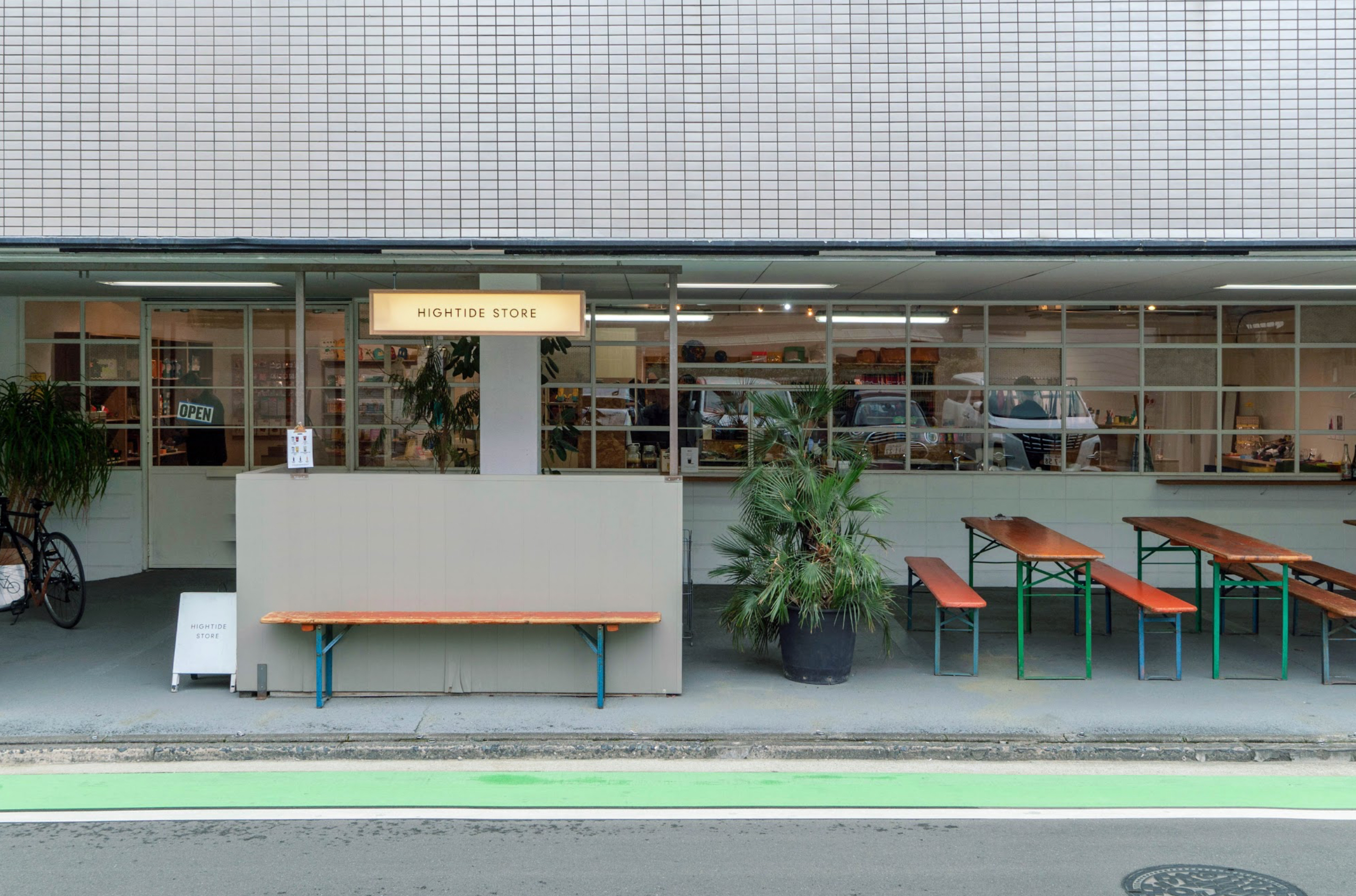
HIGHTIDE STORE FUKUOKA, Everyday Design, Done Properly
In Shirogane, Chuo Ward, HIGHTIDE STORE FUKUOKA delivers a masterclass in everyday design. As the flagship store of the internationally recognised stationery brand, it balances bold minimalism with warmth and usability.
Alongside the iconic penco range, visitors will find custom notebooks made in collaboration with Tokyo’s Kakimori, international lifestyle products and a relaxed café serving coffee, homemade lemonade and craft beer.
It’s the kind of place that feels essential rather than indulgent, designed for people who value function, form and good taste in equal measure.

Hakata Machiya Folk Museum, Making Culture Tangible
To understand Fukuoka properly, you need to touch its craft.
The Hakata Machiya Folk Museum offers one of the most engaging introductions to local heritage in Japan. Housed in a restored Meiji era townhouse once used by a textile manufacturer, the museum brings history into the present through hands on experience.
Visitors can watch Hakata ori weaving demonstrations, take part in workshops, from doll making to paper mâché, and explore exhibitions dedicated to regional craftsmanship. A small shop and café complete the experience, making it easy to take a piece of that tradition home.
It’s immersive, inclusive and refreshingly unpretentious.
The Creative Traveller’s Japan, Reimagined
Fukuoka doesn’t try to compete with Tokyo. It doesn’t need to. Its appeal lies elsewhere, in balance, access and intention.
This is a city where ancient festivals coexist with modern design. Where startups sit comfortably alongside centuries old craft. Where hospitality doubles as a creative platform. And where life feels genuinely liveable.
For creative travellers seeking something deeper than surface level Japan, for designers, founders and cultural explorers looking to spend time rather than tick boxes, Fukuoka may be the most compelling destination in the country right now.
Quietly, confidently, it’s becoming Asia’s next creative powerhouse.
For more information about Fukuoka City visit www.gofukuoka.jp