Hotels Designed by Artists: The World’s Most Creative Escapes
THE AESTHETIC OF ESCAPE: HOTELS DESIGNED BY ARTISTS
Most hotels are designed to be forgotten. Neutral walls, beige carpets, and abstract art you’d struggle to notice even if it fell on your head. They’re built to be comfortable, anonymous, and to get out of the way.
But a different kind of hotel is quietly rewriting the rulebook. Instead of being canvases for blandness, these spaces are actual canvases, designed, decorated, and sometimes even inhabited by artists. They’re not just places to sleep; they’re places to experience, to wander, and to live inside someone else’s imagination for a night or two.
And if you think that sounds pretentious, you’d be right. Pretentious, strange, and occasionally breathtaking.
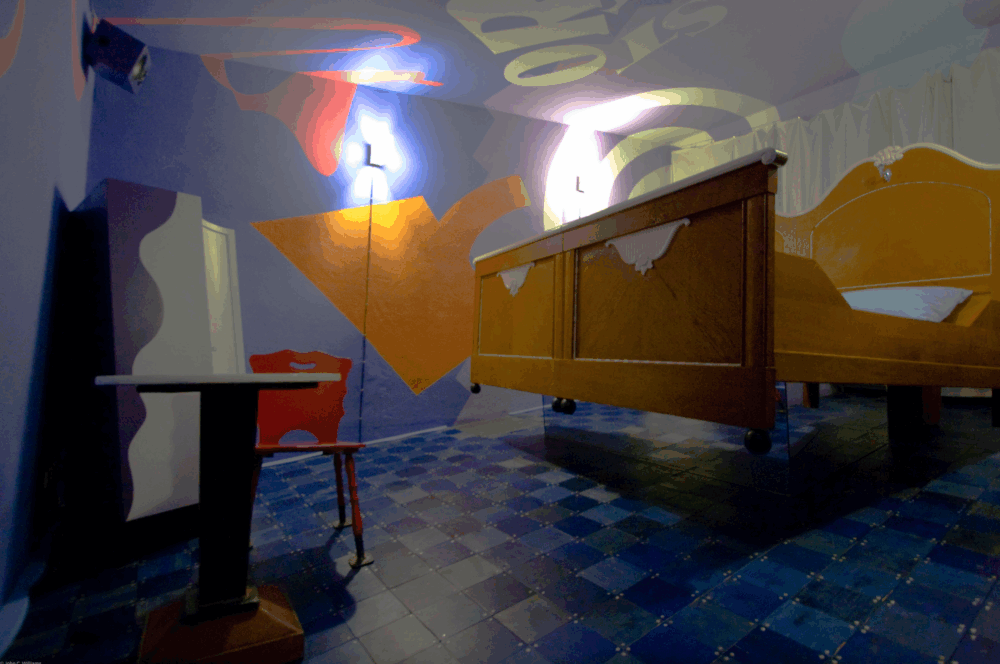
Propeller Island City Lodge, Berlin
Berlin doesn’t do “normal hotels” particularly well, and Propeller Island leans gleefully into that reputation. Created by artist Lars Stroschen, every room is a one-off artwork. You can sleep in a coffin, float in a mirrored cube, or drift off in a bed that hovers mid-air like something out of a David Lynch dream sequence.
Is it restful? Not especially. But it proves that hotels don’t have to be just about sleep — they can be performance art you happen to spend the night inside.
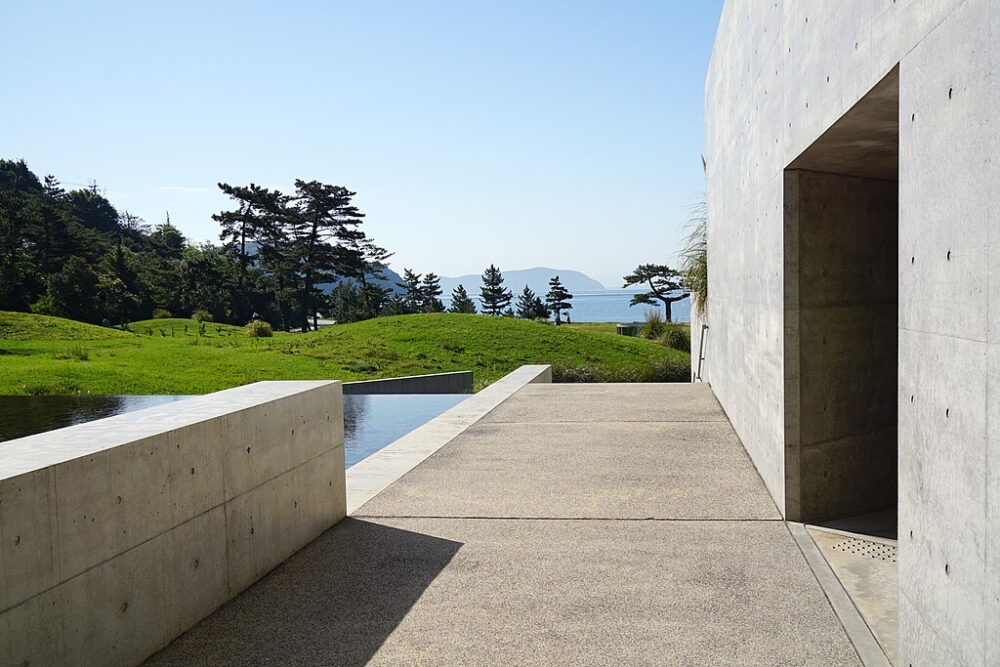
Naoshima Benesse House
Naoshima Benesse House, Japan
Naoshima is Japan’s legendary “art island,” and Benesse House is its cultural anchor — part museum, part hotel, all wrapped in Tadao Ando’s stark concrete geometry. Here, you don’t just hang art on the walls; you live among it. Works by Yayoi Kusama, Hiroshi Sugimoto, and Richard Long fill the spaces, while Ando’s architecture itself is sculpture in slow motion.
Guests step from their tatami mats into a gallery before breakfast. At night, you can wander the beach and stumble across installations glowing quietly in the dark. It’s not so much a hotel stay as a three-day art residency you accidentally booked through Expedia.

Hotel Pelirocco, Brighton
Of course, Brighton has an art hotel. Hotel Pelirocco is the city’s punk-rock, pop-art answer to boutique accommodation. Each room is an artist’s playground: one a shrine to Dolly Parton, another drenched in Japanese manga, another wallpapered with psychedelic collage.
It’s kitsch, it’s brash, it’s very Brighton. And it offers something beige chains never could: a sense of humour. The walls are loud, the beds are bold, and the overall effect is that you’ve fallen asleep in the pages of a graphic novel.
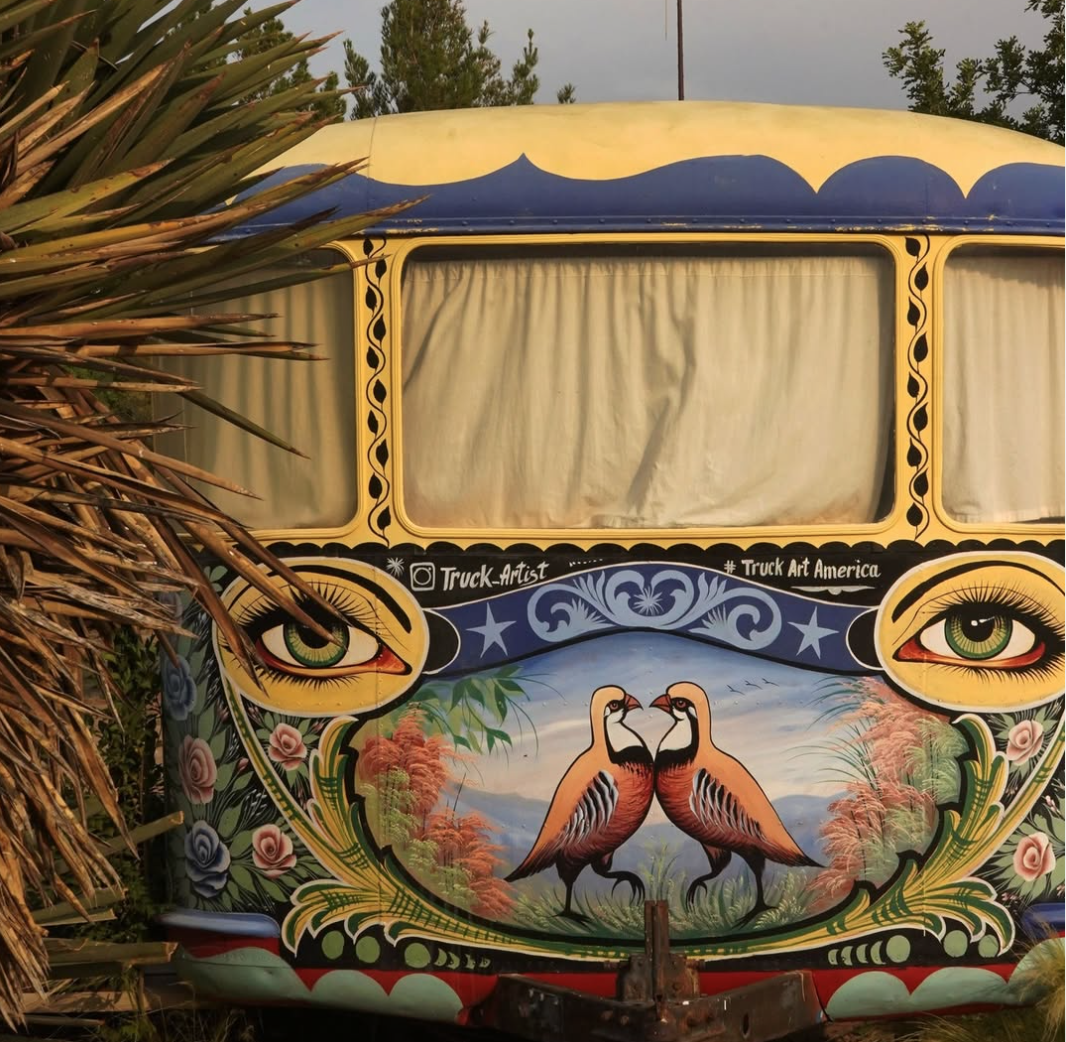
El Cosmico
El Cosmico, Marfa, Texas
Marfa is already a magnet for artists, drawn by Donald Judd’s minimalist legacy and the sheer strangeness of a desert town turned art capital. El Cosmico took that spirit and turned it into a hotel — if “hotel” is the right word for a collection of vintage trailers, yurts, and tepees scattered across the desert under vast Texan skies.
Designed with input from artist Liz Lambert, El Cosmico was never about conventional luxury. The luxury was in the disconnection: no TVs, no mini-bars, just the desert, the stars, and a sense of living in a Wes Anderson outtake.
The original site has now closed, but the story isn’t over. El Cosmico will rise again on a sprawling 60-acre site, set to reopen in 2027 — bigger, bolder, and with a new architectural collaboration that promises to push the idea of the “art hotel” into an entirely new chapter.
Arte Luise Kunsthotel
Arte Luise Kunsthotel, Berlin
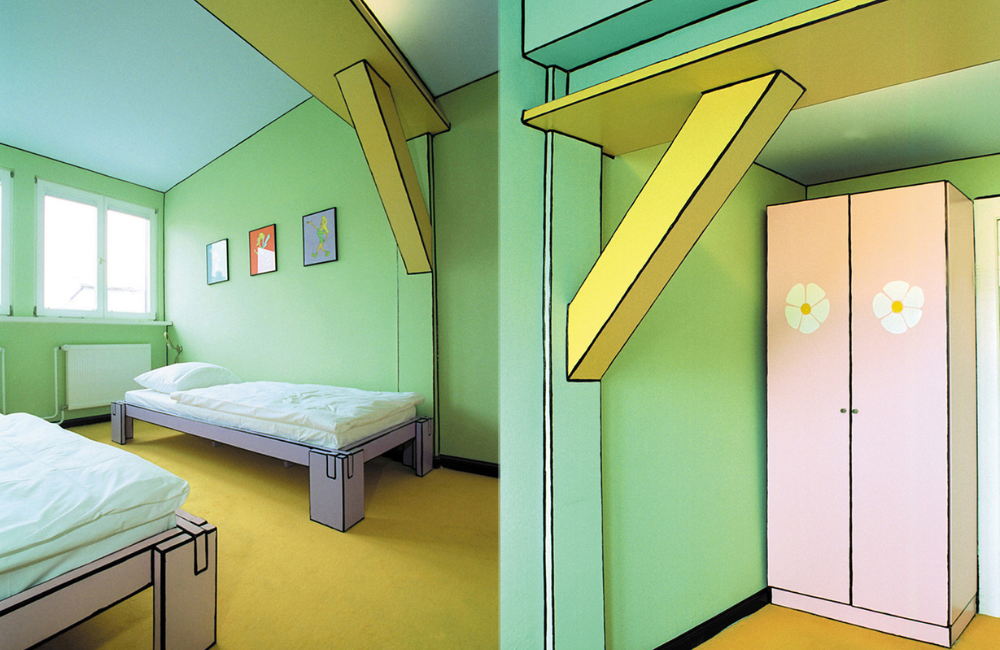
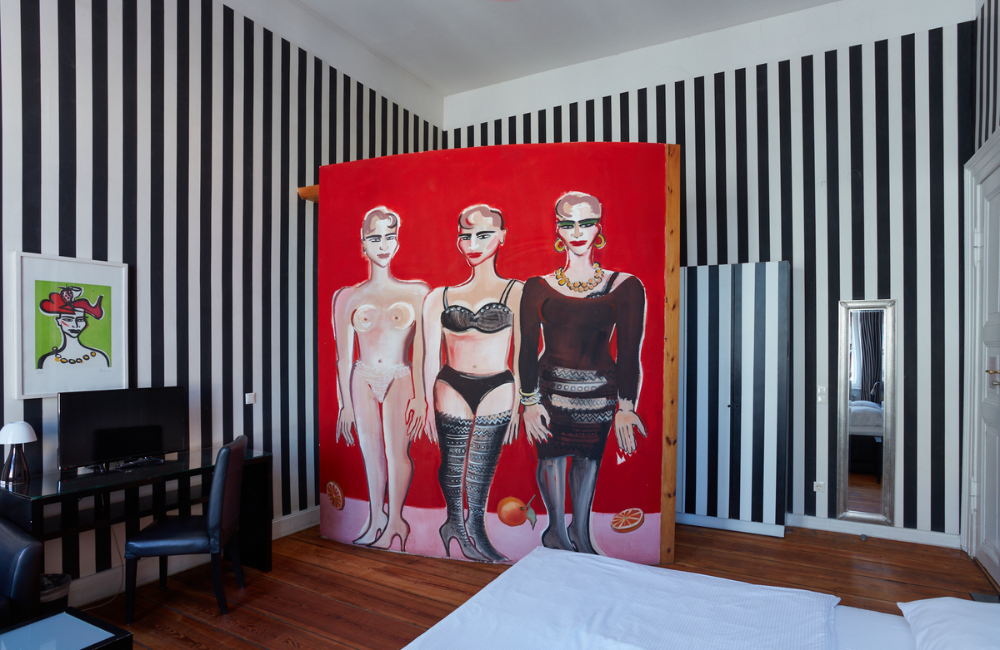
Berlin again — because of course. At the Arte Luise Kunsthotel, each room is given over to a different contemporary artist. Some are whimsical, others political, a few downright unsettling. One room has clouds painted floor to ceiling; another looks like a minimalist prison cell.
It’s less about cohesion and more about variety — the whole hotel is a gallery you can check into, with the bonus that you don’t get thrown out at closing time.
Faena Hotel, Miami
Faena Hotel, Miami Beach
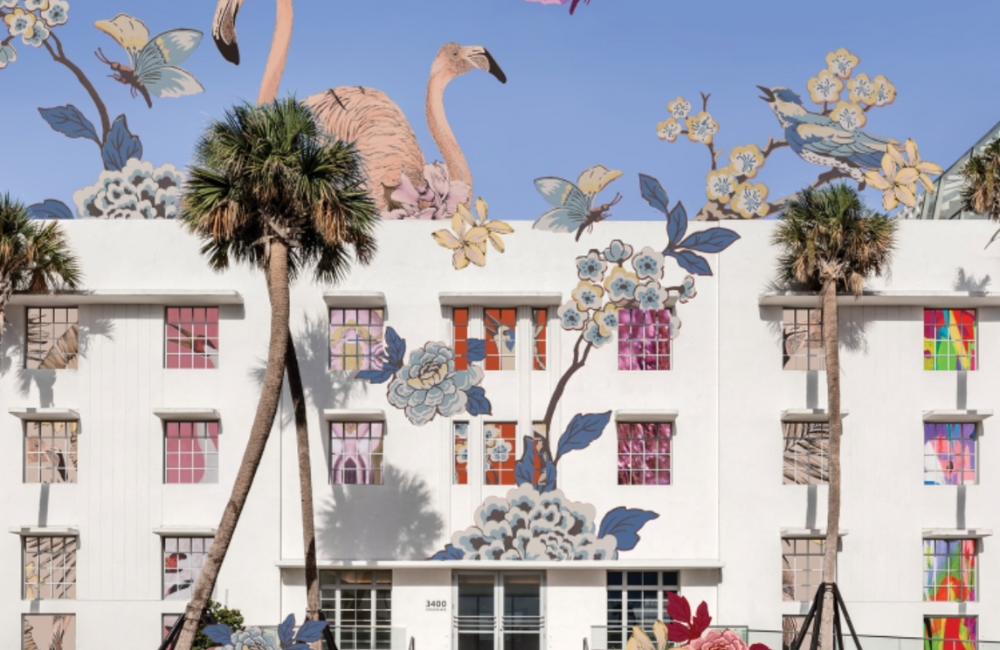
A bold statement on Miami Beach, Faena Hotel is a glorious collision of Art Deco glamour and contemporary creativity. Red velvet, gold leaf, and Damien Hirst’s giant gilded woolly mammoth skeleton (yes, really) set the tone before you even get to the lobby bar.
At its heart is Faena Art, a nonprofit initiative that brings together artists from North and South America. Guests are invited to wander through thought-provoking installations that blur art, science, and philosophy. One day it might be a towering sculpture, another a surreal immersive performance.
And the experience isn’t confined to galleries. Whether you’re reclining by the turquoise Atlantic or drifting through one of the hotel’s curated exhibitions, every moment feels deliberately staged — like living inside an endlessly unfolding artwork. Add the cultural events, which pull in everyone from Miami locals to the international art crowd, and Faena becomes less a hotel, more a stage for the city’s creative life.
Why It Matters
Artist-designed hotels are not for everyone. They’re often impractical, occasionally uncomfortable, and sometimes too clever for their own good. But that’s the point. They resist the idea that travel should be smoothed into sameness. Instead, they offer a jolt — a chance to escape not just your city, but the very idea of what a hotel should be.
Because escape isn’t always about white sand beaches or infinity pools, sometimes it’s about waking up in a coffin in Berlin, staring at Kusama dots on a Japanese island, drinking tequila in a neon trailer in the Texan desert, or ordering a martini beneath a gold mammoth in Miami.
It’s travel as theatre. And, at least for a night, you’re part of the show.