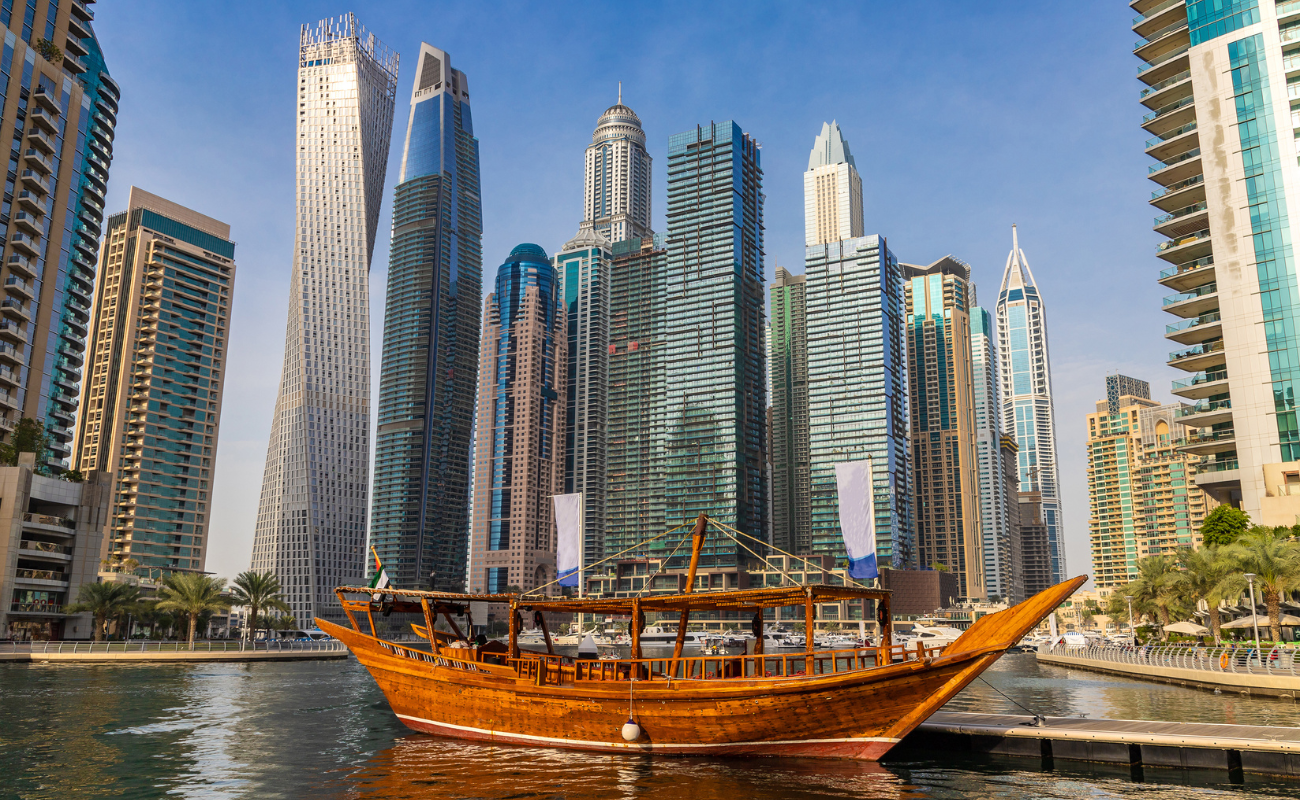
Dubai often presents itself through glass, steel and ambitious engineering, yet one of its most revealing design stories still moves at water level. Along Dubai Creek, a natural saltwater inlet of the Persian Gulf in Dubai, wooden dhows still sit low against the quay, their broad hulls carrying the marks of work, weather and repair. But the vessels don’t simply illustrate a maritime past. They show how skilled making can survive by adapting to new engines, cargo systems and commercial demands without abandoning their most recognisable form.
A working shape, not a single design
“Dhow” describes a family of vessels rather than one fixed boat, which scholars generally date to between 600 BC and 600 AD. Builders adjusted size, hull shape and layout according to purpose: some carried fishing crews, others served the pearl trade, while larger craft moved goods through the Gulf and wider Indian Ocean network. Dubai Culture’s account of traditional boat building explains that local shipwrights constructed vessels from planks and shaped them around these different working needs.
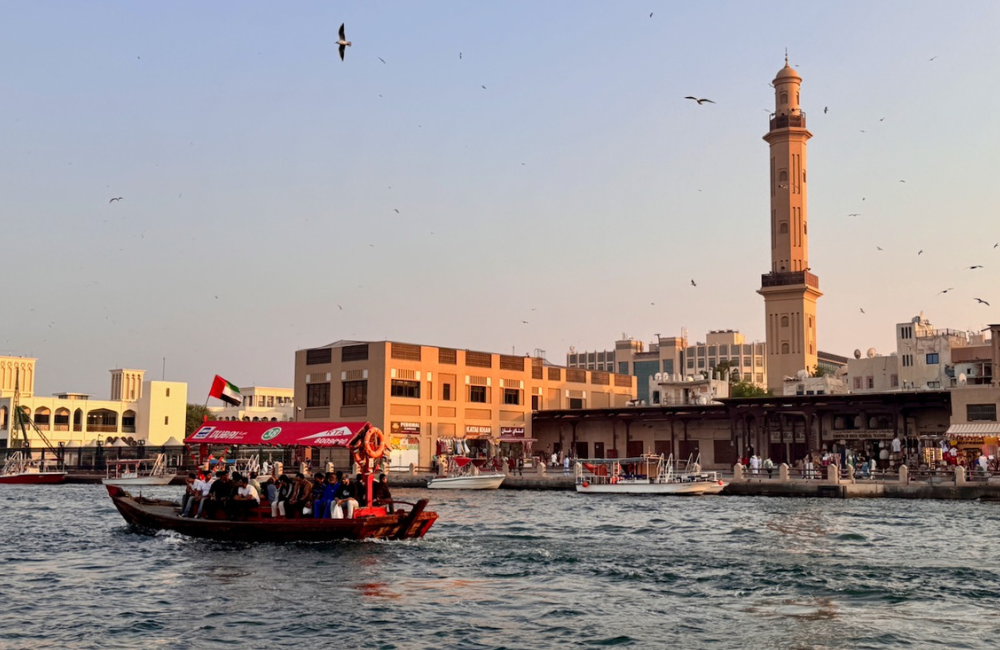
That practical variety is quite important when you look across the Creek. A high-sided cargo vessel doesn’t perform the same job as a passenger dhow adapted for dining or sightseeing, and neither should be confused with an abra, the smaller water taxi that carries people between Deira and Bur Dubai. Travellers planning holidays in Dubai with a cultural focus can place these boats within a wider exploration of the city rather than treating the Creek as just a nostalgic photo stop; a creative and cultural journey through Dubai moves beyond the skyline and reads the city through its heritage districts, food and contemporary art.
The hull begins with judgement
A wooden boat demands decisions that machinery cannot make alone. Shipwrights must understand how timber behaves, judge the curve of the hull and shape each plank so it meets the next without weakening the overall structure. Internal frames support the vessel, yet the outer planking creates the form that determines how it sits in the water and carries weight. Builders then seal the seams and revisit them throughout the boat’s working life, because salt, heat and movement continually test the material.
Traditional skill therefore lies as much in proportion as manual technique. No two pieces of timber behave identically, so experience guides the adjustments between a planned shape and the material in hand. UNESCO’s record of Persian Gulf wooden boat-building knowledge describes a related regional tradition in which makers passed shipbuilding, navigation and weather knowledge through generations, though cheaper fibreglass vessels have gradually displaced many wooden craft. The comparison helps explain why maintenance matters culturally as well as mechanically. Repair keeps both the hull and the maker’s understanding in active use.
The Creek keeps the vessels useful
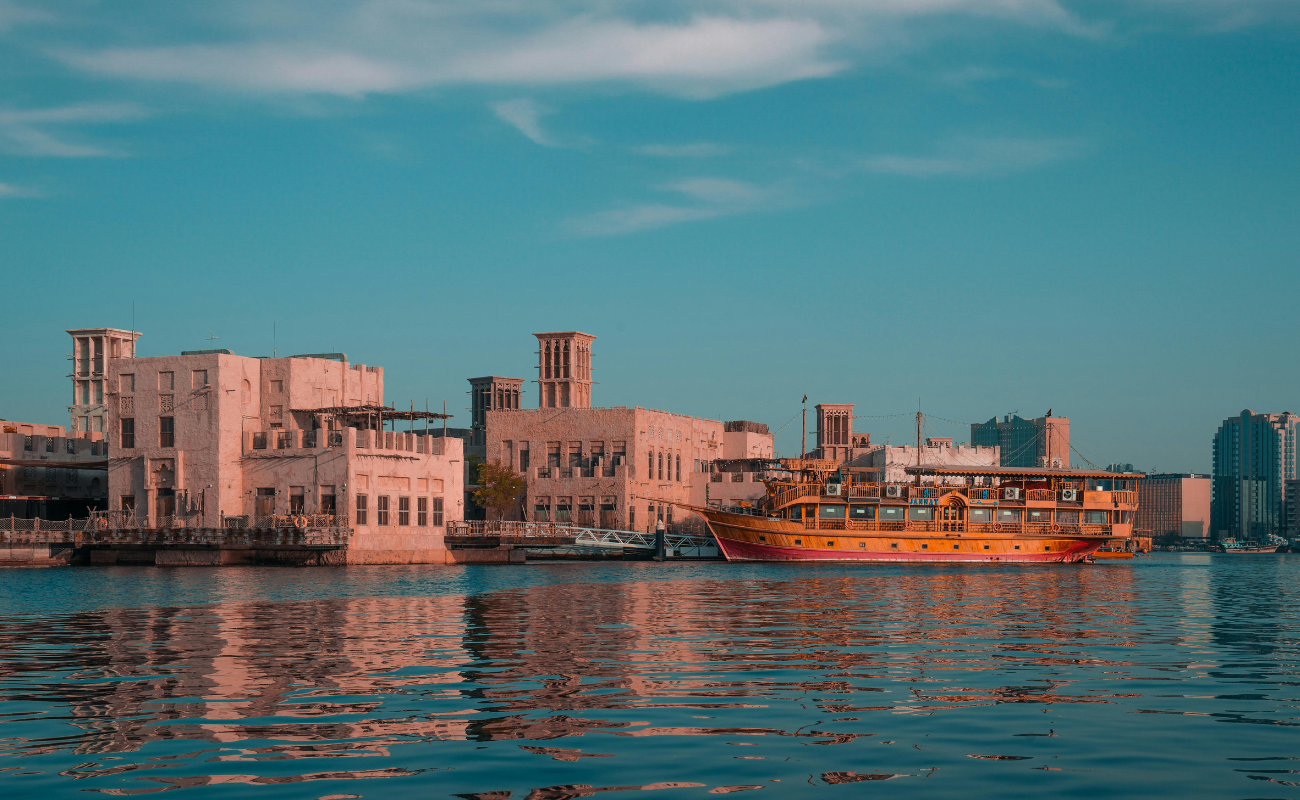
Dubai Creek prevents the dhow from becoming a frozen museum object. Working vessels still occupy a commercial landscape where crews handle cargo in between modern port infrastructure. Look carefully and you can see repair as part of the boats’ visual language: replaced boards differ in tone, painted surfaces reveal earlier coats and heavy rubbing marks show where ropes and loads meet the hull.
This continued use changes how heritage reads. The dhow survives not because Dubai refused to modernise, but because operators fitted old forms to contemporary systems. Engines replaced dependence on sail for many vessels. Port procedures, digital coordination and modern safety requirements altered the working environment. The boat’s structure remains recognisable, while the operation around it evolves.
That coexistence fits neatly beside Dubai’s evolving design culture beyond the skyline, where makers and designers increasingly treat inherited knowledge as something to question and reuse rather than merely reproduce.
What to notice along the water
Begin with silhouette. Compare the raised bow, broad cargo-carrying middle and stern of a larger dhow with the compact profile of an abra. Then look at the timber itself. Smooth new sections sit beside scarred boards, revealing where crews have repaired the vessel rather than replacing it. The wharves and nearby souks complete the picture. Boats, goods and markets developed as connected parts of the same trading environment, so the Creek makes more sense when you view the waterfront and surrounding streets together. But observe only from public areas and allow crews to work without interruption. After all, these remain operational spaces, not staged workshops.