INSIDE DUBAI DESIGN WEEK 2026: NATASHA CARELLA ON DESIGN, CULTURE AND THE FUTURE OF THE CITY
From experimental architecture and emerging regional talent to independent galleries and creative neighbourhoods, Dubai Design Week offers a fresh perspective on the city’s cultural landscape. Festival Director Natasha Carella shares what to discover this November and why Dubai’s design scene deserves international attention.
Dubai is best known for its ambitious architecture and ever-changing skyline, but a creative scene is developing beyond the familiar landmarks. From independent galleries and experimental design studios to a growing community of makers and cultural institutions, the city is increasingly establishing itself as a destination for art, architecture and contemporary design.
Returning from 3 to 8 November 2026, Dubai Design Week brings together designers, architects and creative practitioners from across the world, with a particular focus on talent from West and South Asia and the wider Global South. Taking place at Dubai Design District (d3), the festival offers exhibitions, installations, new commissions and conversations exploring how design responds to the world around us.
We spoke to Dubai Design Week Director Natasha Carella about the festival’s evolution, the ideas shaping this year’s programme and the creative spaces worth discovering beyond the event itself.
Dubai Design Week has been running for more than a decade. How have the festival and the city’s design scene evolved?
When Dubai Design Week launched in 2015, one of the ambitions was to create greater visibility for the quality and diversity of design emerging from the UAE and wider region. Held annually at Dubai Design District (d3), our strategic partner, it was also about creating a point of connection between that community and the international design world.
What has happened since is much bigger than the growth of the festival itself. The ecosystem around it has matured. There are more designers establishing practices here, stronger educational and cultural infrastructure, greater investment in the creative economy, a growing manufacturing landscape and, importantly, a much more informed audience for design.
Dubai is no longer simply somewhere international design arrives once a year. Design is being commissioned here, produced here, collected here and increasingly debated here. Downtown Design has been an important part of that evolution because it gives the commercial side of the ecosystem a serious platform, bringing established international manufacturers into direct proximity with regional studios, emerging designers, galleries, collectors and the specification community. This year, international names sit alongside programmes such as Tashkeel’s Tanween, the Athath Fellowship and 1971 Design Space.
As that landscape has evolved, so has our role. The question is no longer simply: how do we give design from this region a platform? Increasingly, it is: what can this region contribute to the global design conversation?
That is an important shift because it moves us away from thinking about the region primarily through representation and towards recognising the knowledge, methodologies and ideas emerging from here.
And perhaps the most rewarding change is what happens beyond the six days themselves. Relationships formed during the Week increasingly become commissions, collaborations, businesses and longer-term conversations. For me, that is a much more meaningful measure of a design festival than simply how many people pass through it.
What feels particularly exciting about Dubai Design Week 2026?
What feels particularly relevant this year is the question of connection at a moment when the ways we communicate, work and relate to one another are rapidly changing. Rather than looking at those shifts purely through technology or economics, we’ve been interested in what they mean for people, and where design has agency within that.
What excites me is the breadth of the enquiries that have been produced. Across one week, you can move from an exhibition examining language through sound, symbols, gesture and oral history, to an architectural commission exploring how light, shade, planting and temperature affect how we feel and gather, to experimental archaeology, material research, traditional craft, digital technologies and participatory public installations.
The boundaries between disciplines feel increasingly porous, which reflects the way creative practice itself is evolving. Some of the most interesting practitioners today don’t necessarily define themselves through architecture, design, craft, technology or art alone; they move between them depending on the question they are trying to answer.
You see that across the programme this year. Palestinian aestudio is transforming reclaimed concrete rubble into new architectural forms; Japan’s Nikken Sekkei and SOBOKUYA bring traditional timber craftsmanship into a contemporary structure for gathering and communal making; Rasha Saffarini reinterprets the traditional practice of palm-tree trimming as a contemporary communal space; while L’ÉCOLE, School of Jewelry Arts, supported by Van Cleef & Arpels, approaches making through experimental archaeological research into lost goldsmithing techniques from the Second Iron Age.
We’re interested in that coexistence of very old knowledge and very new questions. Innovation doesn’t always mean inventing something entirely new. Sometimes it means looking again at knowledge that already exists and asking what relevance it might have now.
What makes the current Middle Eastern art and design scene so exciting?
There is a growing confidence in the region that I find incredibly exciting. For a long time, creative work from this part of the world was often discussed internationally through quite broad ideas of geography, heritage or identity. There can be an expectation that cultural identity needs to be immediately legible in the work, through a recognisable motif, material or narrative.
What I find exciting about a younger generation of practitioners is a resistance to that. They can work deeply from place, history, material, ritual or cultural memory without feeling obliged to perform an established idea of what “Middle Eastern design” should look like. The work can be culturally specific without needing to announce its cultural specificity.
There isn’t one regional design language, nor should there be. You see that particularly clearly in the UAE Designer Exhibition, presented with Dubai Culture as lead supporter. This year, Inherited Futures, shaped by AlZaina Lootah, asks UAE-based designers to consider what we inherit, materially, culturally, environmentally and technologically, and what we choose to carry forward. The responses move from the UAE’s winds, geology and traditional gathering rituals to Palestinian stone and embroidery, Arabic calligraphy, digital fabrication and biomaterials created from agricultural waste. What connects them isn’t a visual language; it is an approach to inheritance as something active rather than fixed.
That distinction matters to me. Heritage doesn’t have to be something we preserve unchanged or reproduce aesthetically. It can be knowledge about materials, climate, making, social structures or ritual that can be questioned, adapted and put back to work in the present.
There is also knowledge embedded within this region that feels particularly relevant to questions design is grappling with globally today. Climate, resource scarcity and rapid urbanisation are not abstract future conditions here. Communities across this region and the wider Global South have been responding to them for generations, often through extraordinary intelligence around materials, climate, construction and communal space.
For first-time visitors, what shouldn’t they miss at Dubai Design Week this year?
I’m always slightly reluctant to prescribe a definitive route through Design Week because part of its value is the collision between things you intended to see and things you discover by accident.
But I would certainly make time for Abwab. This year it evolves from a pavilion model into a collective exhibition under the theme In Other Words, exploring language not simply as something spoken or written, but something designed and experienced, through signage, symbols, interfaces, gesture, oral histories, sound and space.
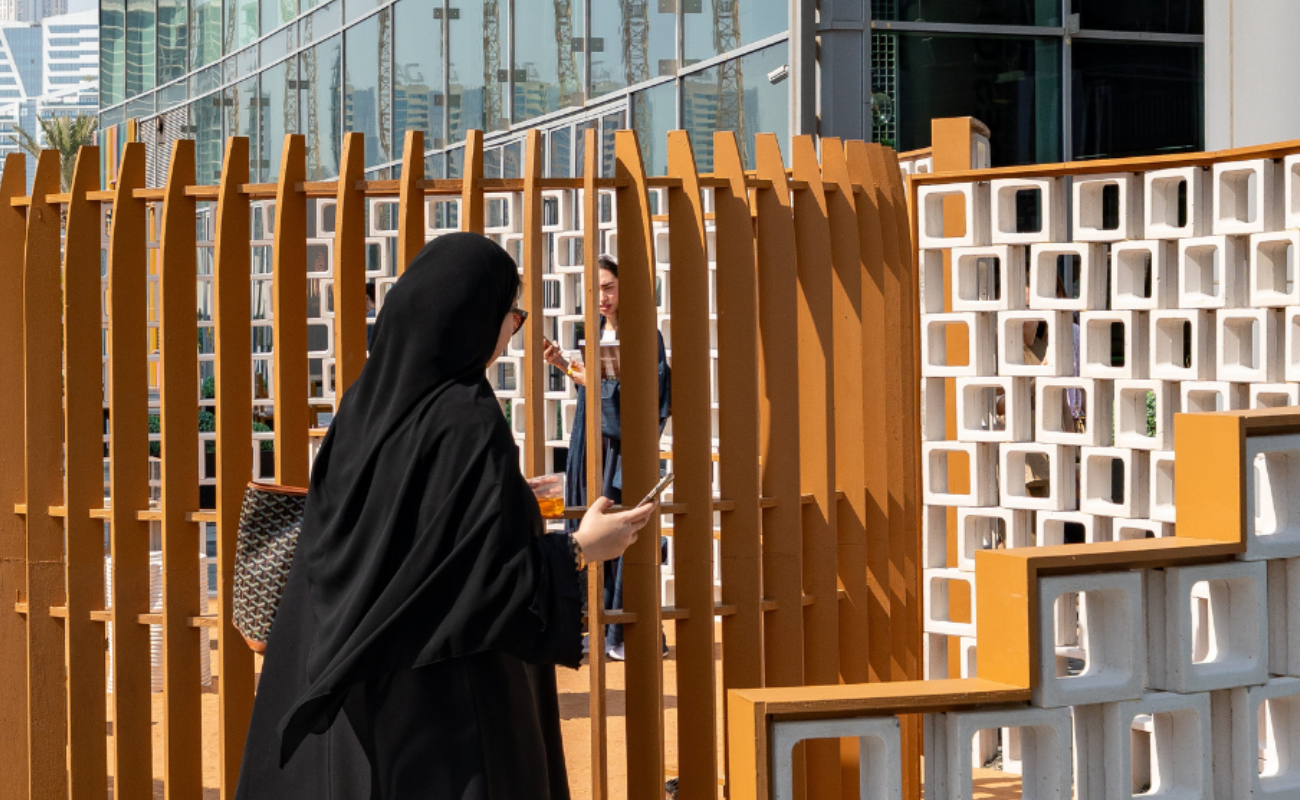
I’d also experience Three Gardens and a Room, the winning Urban Commission by Dubai-based NAO Architects, founded by Reem Nassour. It looks at something deceptively simple: how relatively modest architectural elements like walls, shade, planting and light can completely change the way we gather, pause and experience a place. I like that it challenges the idea that architecture needs to be monumental in order to affect us.
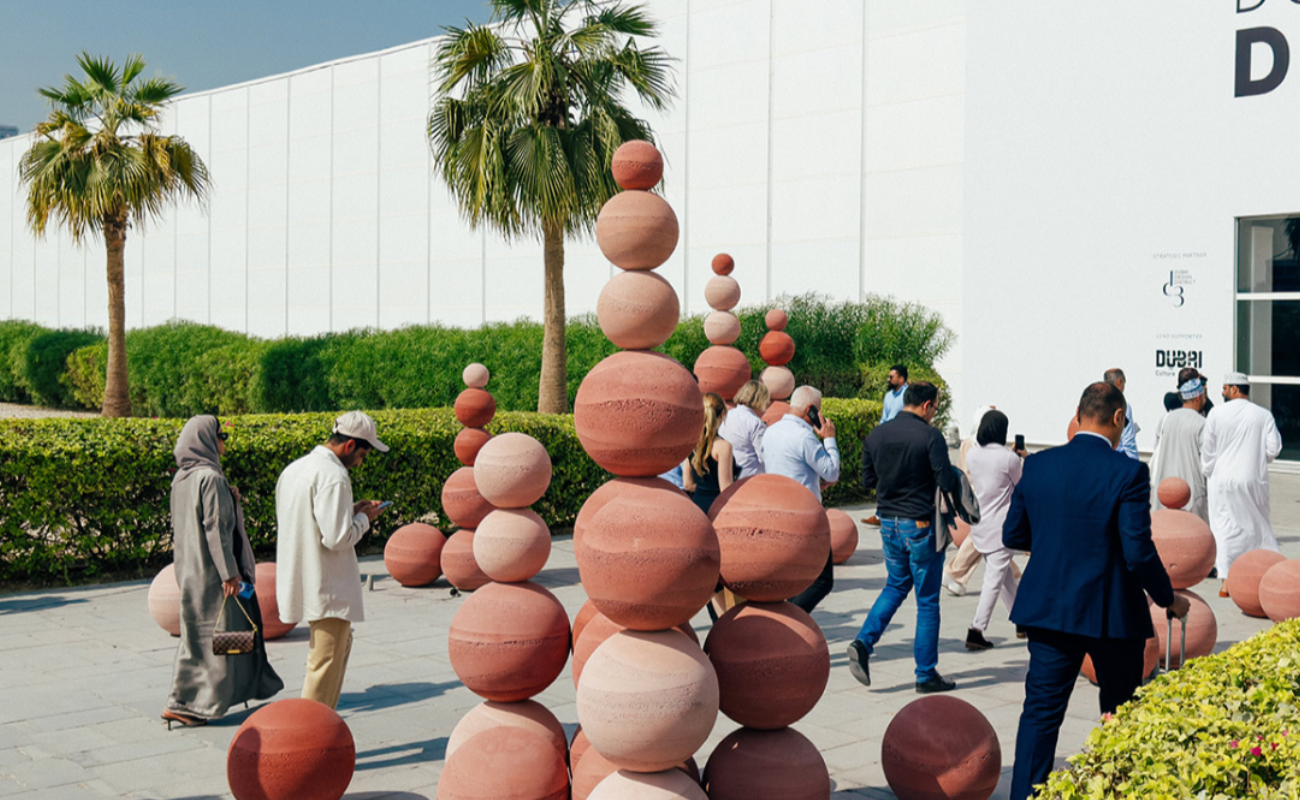
And I would absolutely spend proper time at Downtown Design. It gives you another lens onto the design landscape because you see international manufacturers, regional studios, collectable design and emerging practices within the same context. A healthy design culture needs experimentation and research, but it also needs manufacturers, commissioners, collectors and routes to market.
But I’d also leave time to wander. Across d3, there are very different ways into the programme. Architecture firm Woods Bagot, in partnership with d3, will present Worlds Ahead: 25 Years of Design, Place and Impact in the Middle East, reflecting on the practice’s 25 years in the region while looking ahead to questions around AI, robotics and quality of life.
Elsewhere, Ethr’s The Desert Dweller, designed by Omar Darwish, reinterprets the Bedouin tent through contemporary ideas of gathering, hospitality and exchange; M Moser Associates’ Resonance: Visualise Your Brain turns visitors’ brain activity into a live visual artwork using EEG technology; and Zaina Khan, presented with Base39, reinterprets the mashrabiya through a modular gathering structure designed around shade, permeability and circular construction.
How much of Dubai’s own identity is reflected in the design being created in the city?
Increasingly, I think Dubai’s identity is much more complex than a recognisable aesthetic. Dubai has always been shaped by movement: of people, commerce, materials and ideas. That history of exchange predates the contemporary city, and it continues to influence how creative work is produced here now.
At the same time, there is a much older architectural and material intelligence to draw from: courtyard houses, the majlis, barjeel, craft traditions and ways of designing around climate, resources and community. What interests me is how those forms of knowledge can be translated rather than simply replicated.
So when I think about a Dubai design identity, I don’t necessarily think of a particular material, motif or visual language. I think of coexistence. Many global cities are diverse, but what has always fascinated me about Dubai is that people from completely different cultural and professional backgrounds aren’t simply living alongside one another; they are actively making and building things together. A designer might be from one place, working with a craftsperson from another and a manufacturer from somewhere else entirely, for a client whose own cultural references are different again.
That inevitably produces work that can be difficult to categorise neatly, and perhaps that is the point. Dubai’s creative identity is still being written. I think that lack of fixed definition is one of its strengths because the people living and working here are still actively participating in what it becomes.
Beyond Design Week, where should creative travellers explore in Dubai?
It is actually a particularly good moment to be in Dubai because there is so much happening around the city alongside Dubai Design Week.
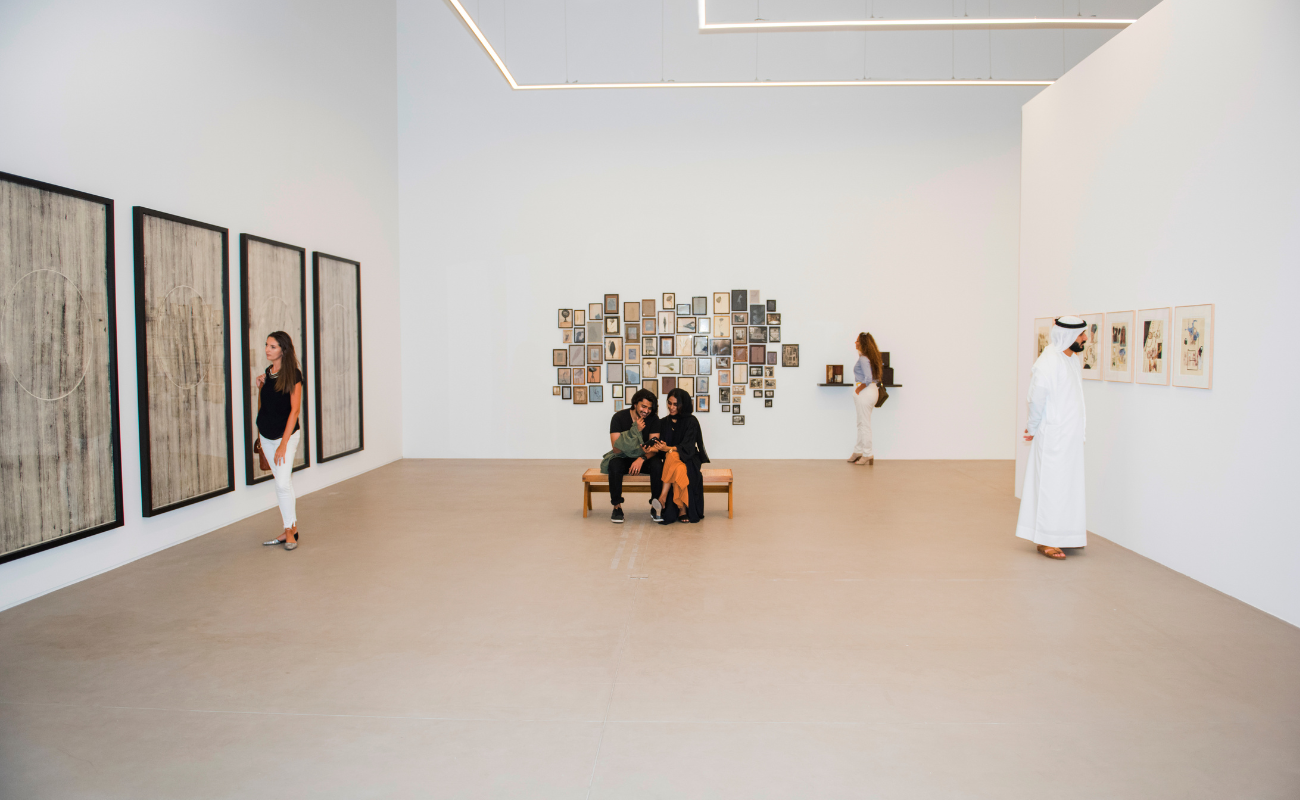
I would definitely spend time at Alserkal Avenue. Over the past two decades, it’s developed into a cultural home where galleries sit alongside independent institutions, cinema, photography, design, food and spaces for research and experimentation. I also love what has happened to its public realm. Studio Zain Masud reimagined the landscape as a sort of “desert grove”, bringing native and adaptive species back into what is fundamentally an industrial environment. It feels like a very thoughtful proposition for what landscape can mean in a city like Dubai, particularly around ecology, shade, biodiversity and belonging.
This year there is also ISEA2026, the International Symposium on Electronic/Emerging Art, which Dubai is hosting 6–15 November. ISEA has been running internationally since 1990, bringing together artists, researchers and practitioners working across art, science and technology. The Dubai edition, ELYAH: Constellating Place, Data and Identity, will feature more than 100 works and installations presented across locations throughout the city. I think the timing is really interesting because it introduces another set of disciplines and conversations into the city at the same moment as Dubai Design Week.
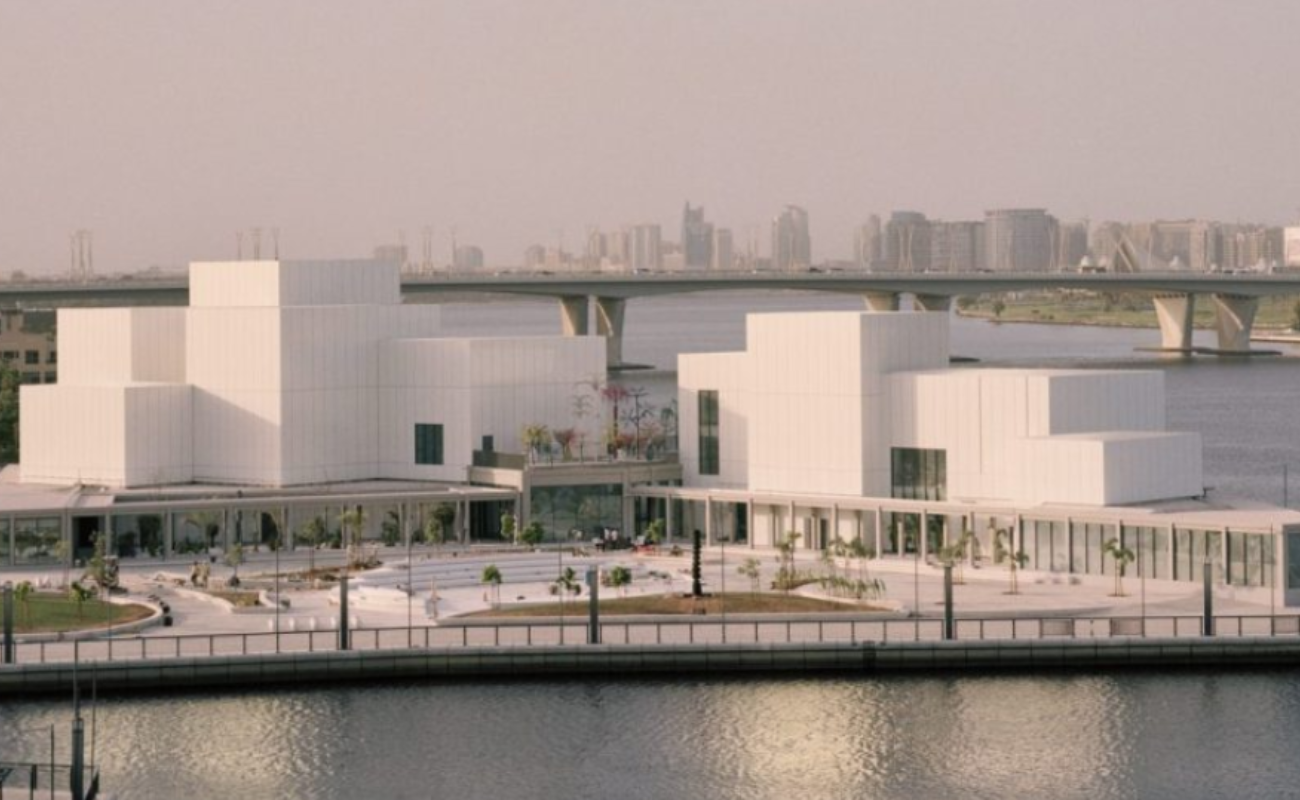
I would also go to Jameel Arts Centre at Jaddaf Waterfront. During Dubai Design Week, they are opening Just as the Heart of a Mango is a Stone, a major solo exhibition by Sudanese artist Salah Elmur. It brings together paintings, archival photography, sketches and ephemera made since 2018, looking at memory, landscape, identity, family and Sudanese life. There are also Artists’ Rooms by Lulua Alyahya, Shezad Dawood and Walid Siti, so there is quite a lot to spend time with.
Then I would head over to Al Fahidi Historical Neighbourhood. It’s one of the places where you can still experience the scale and architectural logic of an earlier Dubai: narrow sikkas, courtyard buildings, barajeel and construction using stone, teak and palm, where you can begin to understand how architecture here historically responded to climate, privacy, community and available resources.
And if someone is able to extend their trip by a few days, I would tell them to go to Sharjah for the Sharjah Architecture Triennial. Architecture Otherwise: Building Civic Infrastructure for Collective Futures, opens on 14 November and brings together practices across architecture, anthropology, urbanism, art, design, education and community-based work. I have always found the Triennial particularly interesting because its perspective on architecture is grounded in the realities and knowledge systems of the Global South.
Away from the festival, where do you personally go for art, design, food or inspiration?
There are so many smaller places I love, and increasingly I find myself drawn to spaces that feel independent and very particular to the people behind them.
Gallery Meshary AlNassar is a relatively new favourite at Alserkal Avenue. Meshary’s practice moves between interiors, architecture, furniture and collectable design, and the new space functions as both his working studio and a gallery. I love spaces where those boundaries aren’t too fixed.
Cinema Akil began as a nomadic cinema before establishing its permanent home at Alserkal and was the GCC’s first arthouse cinema. Its programming brings films and filmmakers from all over the world to Dubai, but what I particularly value is that it has built a real community around film rather than simply being somewhere you go to watch one.
I love Gulf Photo Plus for similar reasons. It has been part of Dubai’s cultural landscape since 2007 and works across photography education, exhibitions, publishing, printing and community programming. It is one of those places where a discipline is supported as an entire ecosystem rather than simply through exhibitions.
The Third Line is important to me because it has been part of the development of Dubai’s contemporary art scene for more than twenty years and has consistently supported artists from the region and its diaspora. And Efie Gallery brings another important perspective, creating a platform in Dubai for contemporary artists from Africa and its diaspora and building connections between Africa and the Middle East.
I also really like Bayt AlMamzar. It was originally the founders’ grandmother’s family home and has been transformed into an independent cultural space with artist studios, residencies, exhibitions, a library and places for people simply to meet and exchange ideas. There is something about that domestic scale that I love; it feels much closer to how creative communities actually form.
Beit Prod is another very recent addition. Created by Dubai-raised photographer and creative director Prod Antzoulis, it has just opened an appointment-only physical space in Al Quoz, bringing together vintage furniture and objects, analogue photography and pieces collected across different periods.
And not everything needs to be a cultural institution! I have a real affection for Al Khazzan Park. It’s a small neighbourhood park built around that unmistakable blue-and-white water tower, and was redeveloped as Dubai’s first park powered entirely by solar energy. I like that it is simply a piece of everyday civic space.
Then there are places that are simply part of my own life. To the Moon and Back is my go-to for coffee, and there are lots of independent restaurants and small spaces around the city that I return to because you feel the personality of the people who created them.
Dubai Design Week 2026 takes place from 3 to 8 November at Dubai Design District (d3). For programme information, visit dubaidesignweek.ae.