THE CREATIVE SIDE OF LAS VEGAS: ART BEYOND THE CASINOS
From working studios and street art in the Arts District to major contemporary works hidden in plain sight on the Strip, Las Vegas has developed a creative identity that goes far beyond casino spectacle.
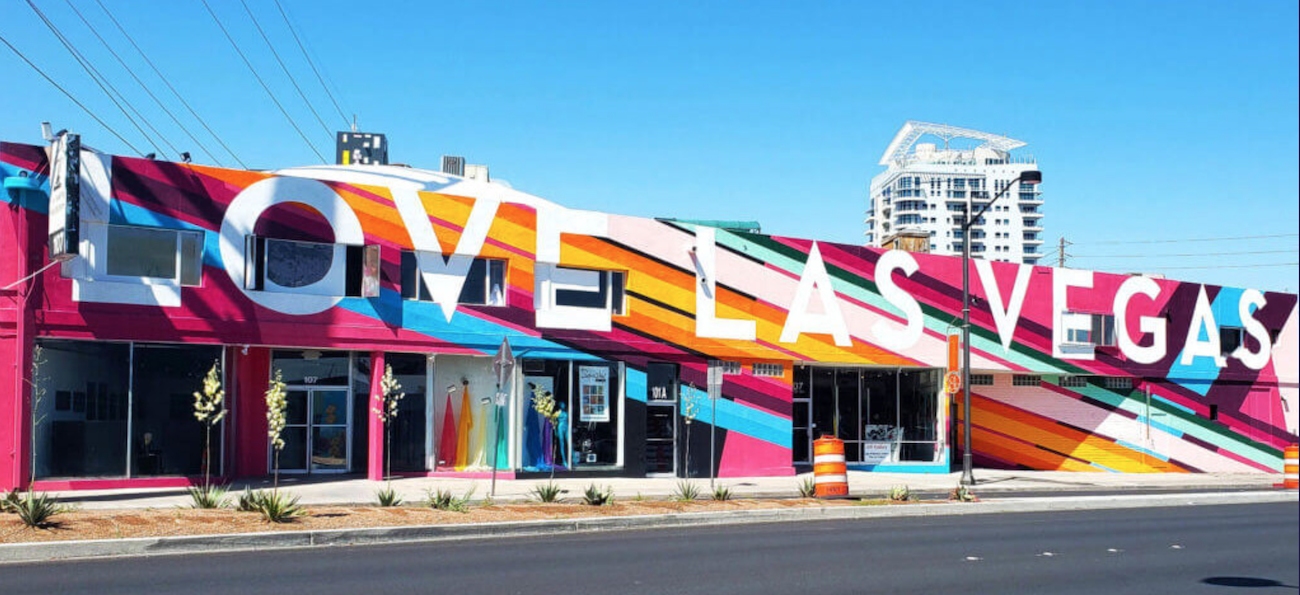
For years, a pocket of Downtown Las Vegas was little more than antique shops, artists’ studios and old industrial buildings. Known originally as 18b, after its original 18 blocks, it has steadily expanded into one of the city’s most interesting creative neighbourhoods.
Sandwiched between the excesses of the Strip and Fremont Street, it feels like the city is embracing its artistic conscience, with some Las Vegas flair – of course.
The creative heartbeat
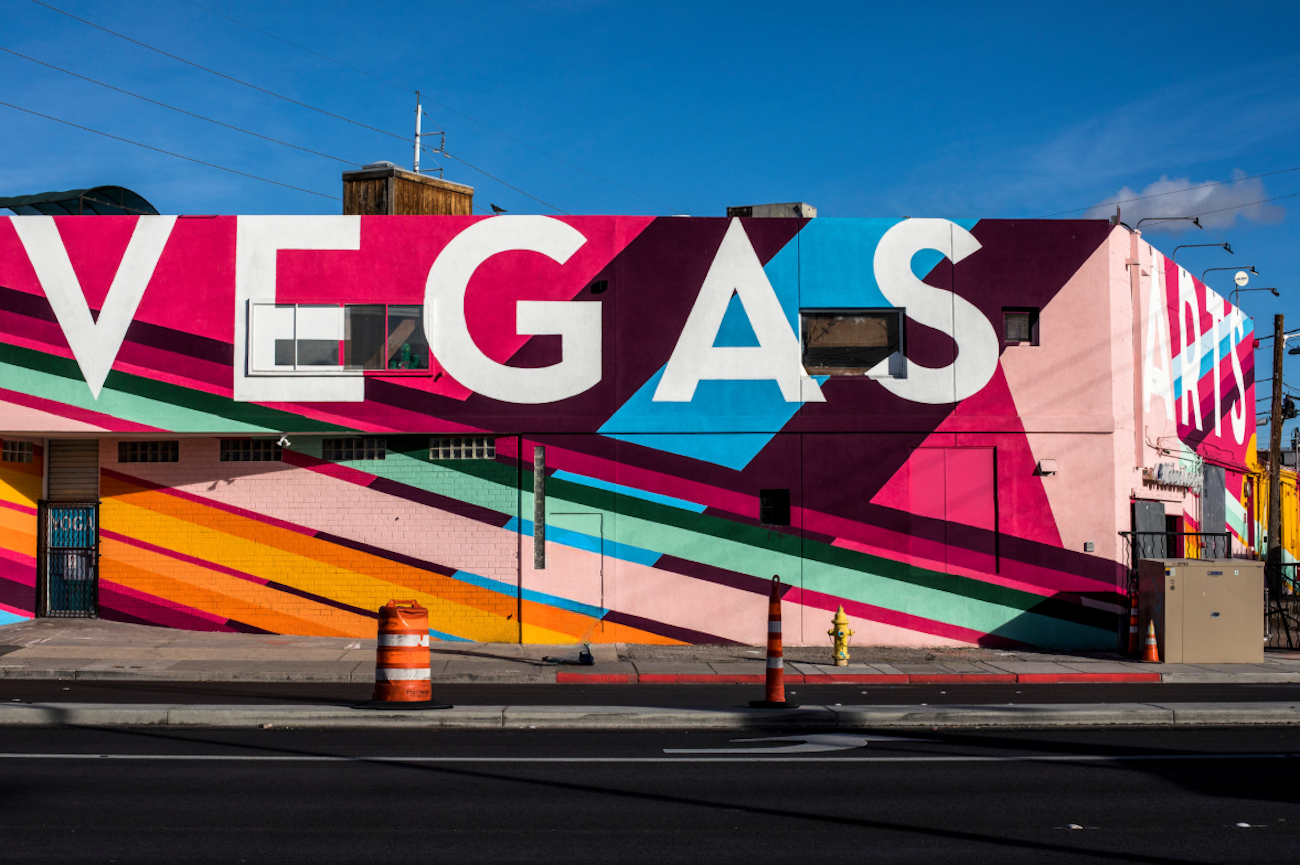
Murals spill across warehouse walls; independent galleries sit alongside record shops, boutique retailers and some of the best vintage stores you’ll find anywhere in the city. Across the Arts District, every street seems to reward wandering without a plan.
At its centre is the Arts Factory, a former industrial building now occupied by working studios, small galleries, shops and creative businesses. It feels satisfyingly unpolished: art is being painted, assembled, sold and discussed in rooms that still feel like places of work rather than another layer of casino decoration.
Elsewhere, the distinction between gallery, shop, bar and studio becomes pleasantly blurred. You might enter a vintage store looking for an old casino ashtray and emerge with a piece of local art, a 1970s jacket or a lamp that’s clearly too large to fit in your suitcase. Along Main Street, retro furniture, design shops and antique dealers offer enough atomic-age Americana to furnish a small motel.
Despite the investment arriving in the area, the neighbourhood still feels lived in rather than curated. That balance may become harder to hold, however. New restaurants, cocktail bars and developments are moving in, raising the question faced by creative neighbourhoods everywhere: can the culture that made an area desirable survive once everybody else discovers it?
First Friday: the real Las Vegas
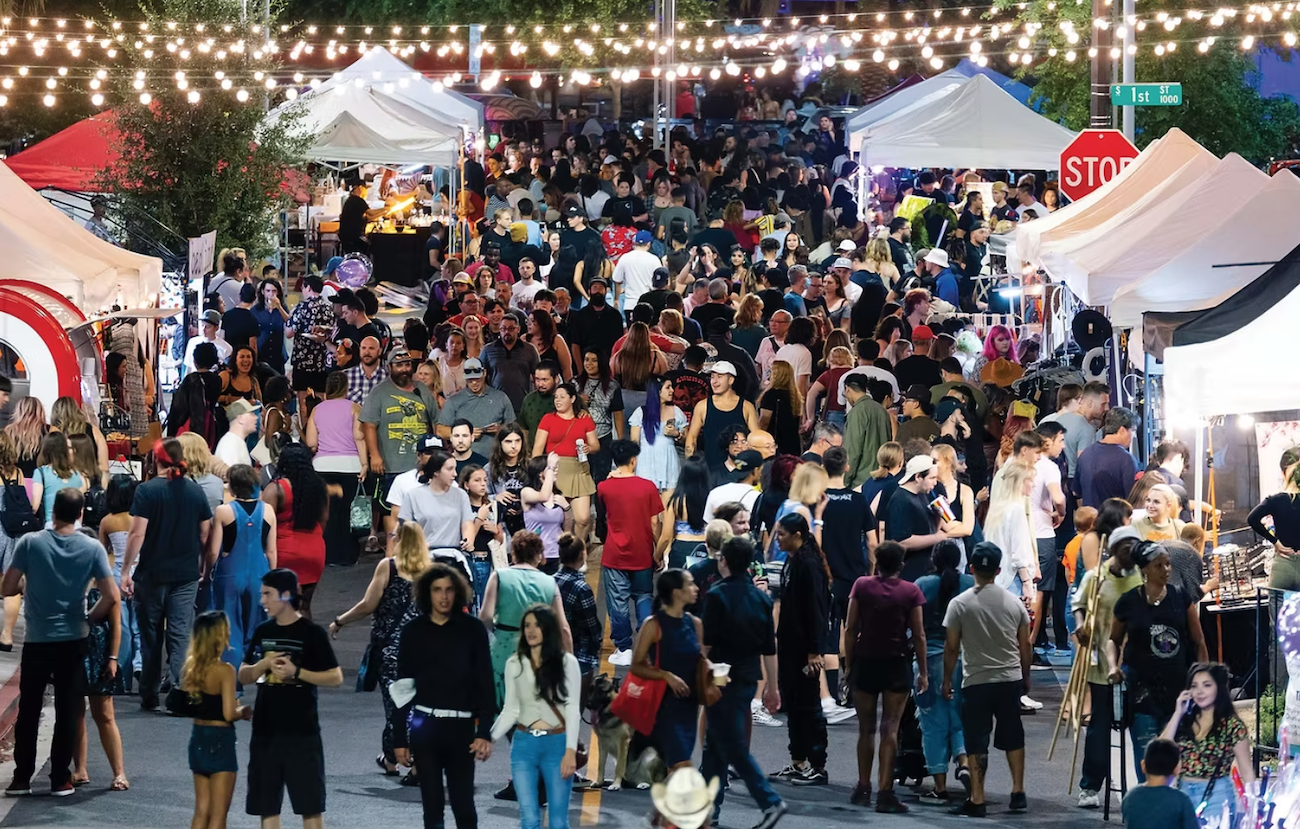
If you want proof that Las Vegas has become a genuine creative city, visit on the first Friday of the month. What began as a grassroots arts gathering has become one of the city’s defining cultural events.
From early evening until late at night, the Arts District fills with local artists, musicians, food vendors and thousands of residents who come not to gamble but to celebrate creativity.
Live painting unfolds on the streets, galleries throw open their doors, DJs and bands perform across multiple stages, market stalls pop up on disused car parks, theatre companies spill into public spaces and artists work directly in front of visitors. The atmosphere feels completely different from anything on the Strip.
Families can easily wander between exhibitions while serious collectors browse Preview Thursday events looking for emerging talent. A younger crowd drifts between pop-up bars, Ninja Karaoke and independent venues hosting everything from spoken word to experimental performance.
More than anything, First Friday reminds you that Las Vegas isn’t simply a tourist destination: people actually live here, they make things here and create culture here.
The Strip is an accidental gallery
Even the Strip is more culturally interesting than it first appears, with Las Vegas properties assembling a remarkable collection of contemporary art. Around ARIA and CityCenter, works by Jenny Holzer, Maya Lin, Frank Stella, Nancy Rubins and Claes Oldenburg sit among restaurants, gaming floors and luxury shops.
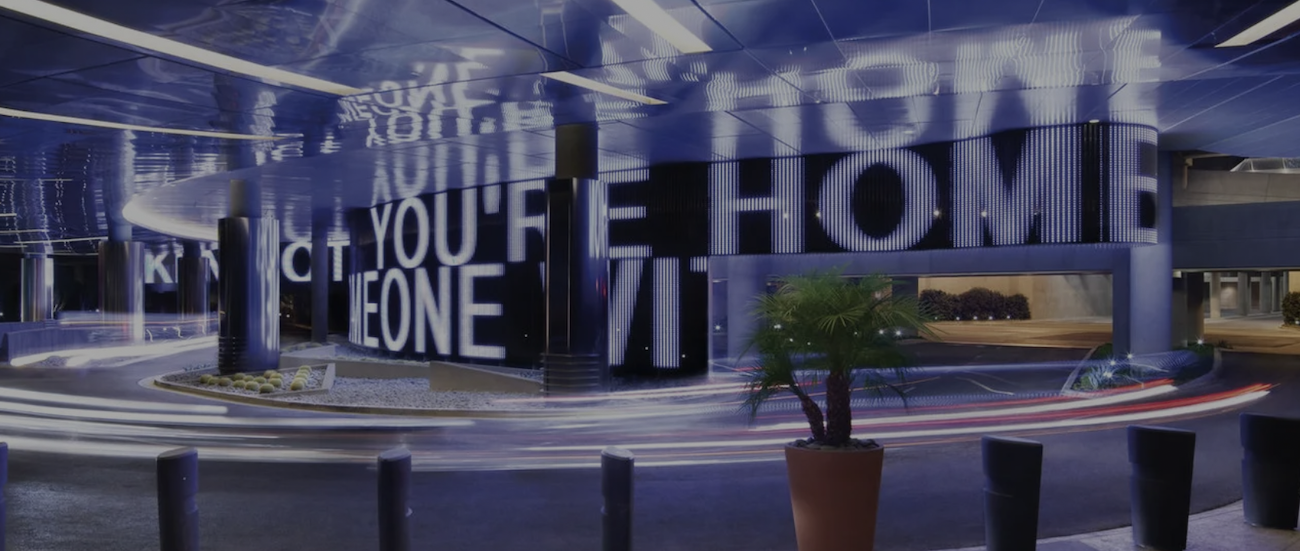
Holzer’s LED installation, VEGAS, sends language racing around an enormous electronic sign, part artwork and part dispatch from the city’s overstimulated subconscious.
Nancy Rubins’ Big Edge turns boats, canoes and kayaks into a vast airborne tangle, while Frank Stella’s Damascus Gate Variation I transforms the entrance to Vdara into a monumental field of colour.
Guests heading towards dinner drift past major artworks without necessarily realising what they are seeing; art becomes part of the architecture and visual noise of the city, sometimes studied, sometimes photographed and sometimes entirely ignored by someone checking the odds on a baseball match.
This may not be the contemplative atmosphere of the Tate, but it is a very Las Vegas way to encounter art: somewhere between a blackjack table, an expensive handbag and a cocktail costing roughly the same as a small watercolour.
Enter Omega Mart
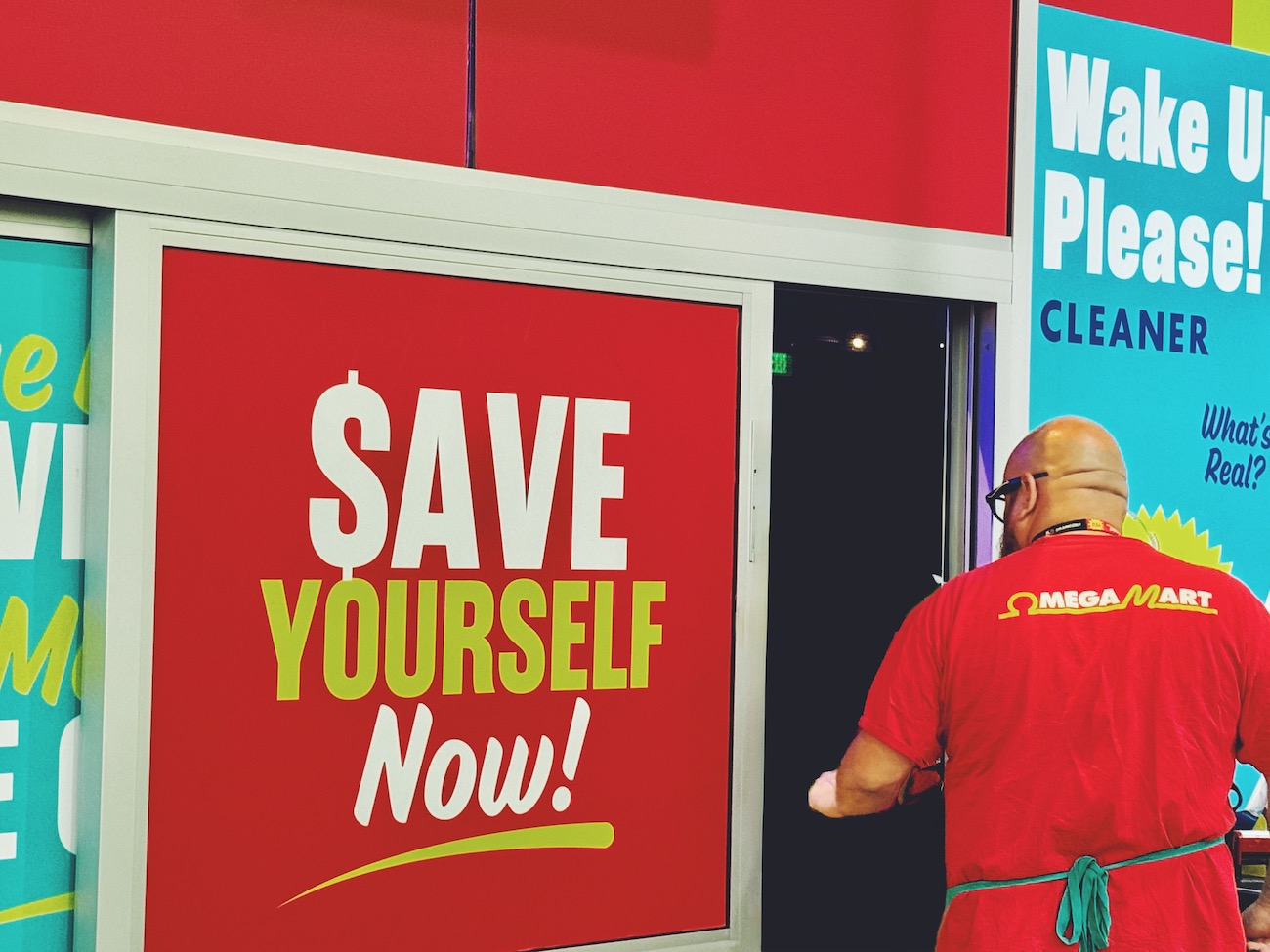
Nothing illustrates the more experimental side of Las Vegas better than Meow Wolf’s Omega Mart. Trying to explain it is almost impossible. Imagine a supermarket designed by David Lynch after drinking six energy drinks and reading too much science fiction.
Hidden doors lead to entirely different dimensions, office corridors dissolve into psychedelic installations and nothing behaves as common sense suggests.
It begins as a joke about consumer culture: the shelves are filled with corrupted corporate slogans and products become stranger the longer you look at them. Open a refrigerator door, however, and the supermarket gives way to laboratories, glowing caves and office corridors that suggest something has gone seriously wrong behind the scenes.
You can wander through and enjoy the visual assault, but an elaborate story is buried beneath the surface. Cards, telephone messages, documents and hidden screens gradually reveal the fictional corporation behind Omega Mart. The deeper you go, the less it resembles an attraction and the more it becomes a playable piece of installation art.
More than 300 artists and collaborators contributed to the project, mixing work by Las Vegas creatives with contributions from names including Brian Eno and Beach House. That collective authorship matters: Omega Mart might operate on the scale of a major visitor attraction, but beneath the technology is something agreeably unruly, hundreds of ideas colliding inside one enormous building.
It’s playful, unsettling and brilliantly imaginative. It also understands something fundamental about Las Vegas: this city has always blurred the line between culture, commerce and illusion. Omega Mart simply puts that confusion on a supermarket shelf and attaches a price tag.
Brewery Row and BBQ
The Arts District has quietly developed its own Brewery Row, with independent brewers occupying former industrial spaces that would once have been overlooked by visitors rushing between casinos.
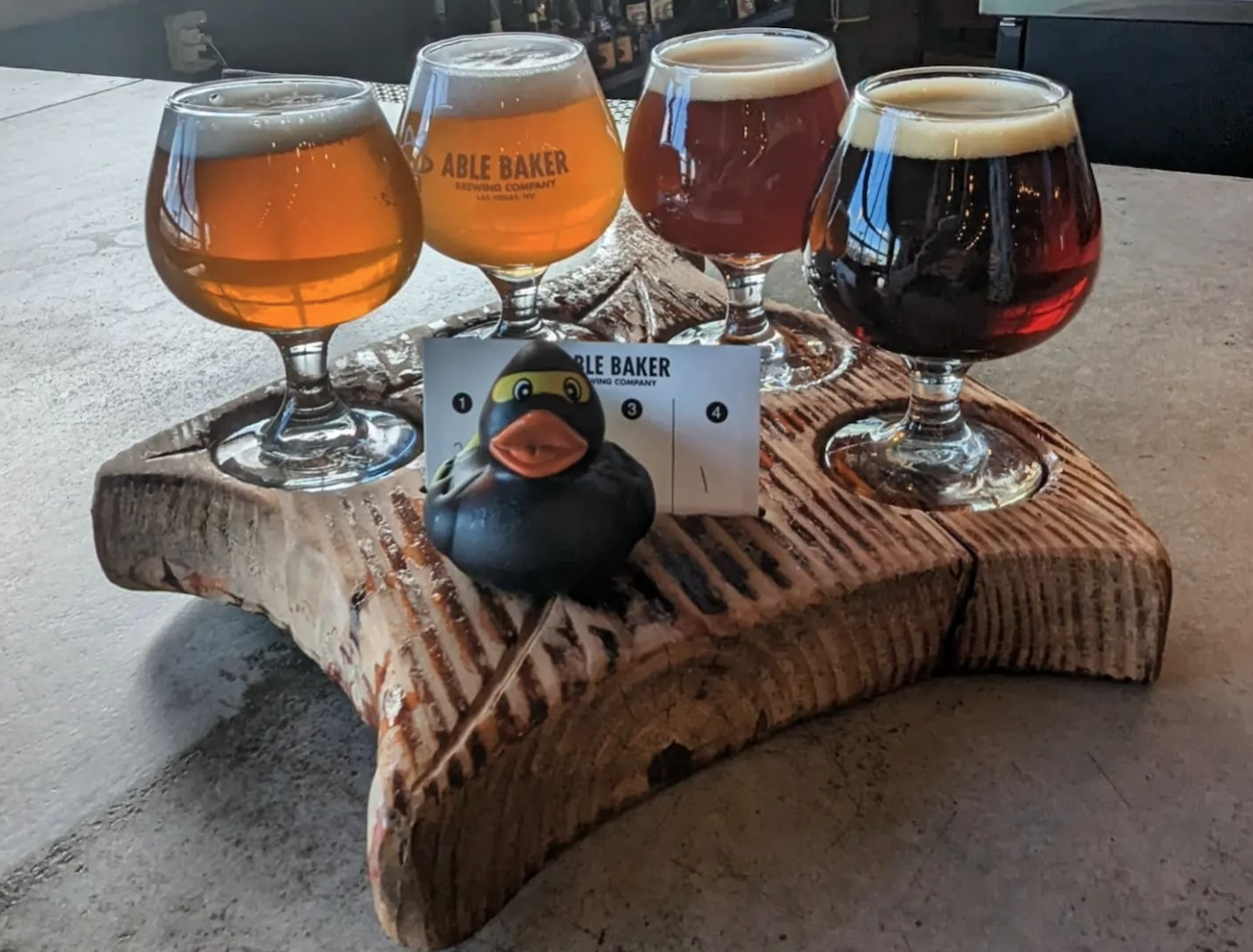
Able Baker Brewing is arguably the standout. Named after the first two atomic bombs tested in Nevada, it’s a brewery with a brilliant sense of humour and serious brewing credentials.
Thirty-two taps pour everything from crisp lagers and Belgian ales to rich barrel-aged stouts and barley wines. They also produce beers for some of Las Vegas’s best restaurants and regularly collaborate with local musicians and artists.
Best of all, every tasting flight arrives with a tiny rubber duck from their wonderfully eccentric collection. It’s completely pointless, slightly ridiculous and utterly memorable, rather like Las Vegas itself.
A short stroll away sits SoulBelly BBQ, where Texas-style smoking meets Vegas swagger. Brisket arrives with a perfect bark, ribs fall away from the bone and the atmosphere is as relaxed as the Strip is frantic.
We ordered various-style barbecue dishes between us, intending to sample a little of everything. It was so good we came back the following day; there can’t be many better compliments than that.
Looking beyond the obvious
People often dismiss Las Vegas as superficial; that’s because they never leave the Strip. But perhaps the more interesting point is that you don’t always need to leave it either.
Art here appears in working studios and on warehouse walls, but it also sits among restaurants, gaming floors and luxury shops. It hides behind supermarket refrigerators and spills out into the streets on the first Friday of every month.
Away from the casino floors, another Las Vegas is taking shape, more independent, more creative and increasingly confident about its own cultural identity. The trick is knowing when to stop looking up at the billion-dollar attractions and start looking around.
David O’Coy