Andaz One Bangkok: A Design-Driven Luxury Stay in the Heart of Bangkok
There’s a moment, stepping into Andaz One Bangkok, where you realise this isn’t just another polished five-star drop-in. It’s trying to say something. Not loudly, not in that slightly desperate “look at us, we’re design-led” way, but through a series of considered gestures that quietly build into something more interesting.
The building sits just off Wireless Road, with Lumphini Park on one side and the hyper-new sheen of One Bangkok on the other, which already sets up a kind of tension, old Bangkok versus new. The hotel leans into that contrast, and, for the most part, makes it work.
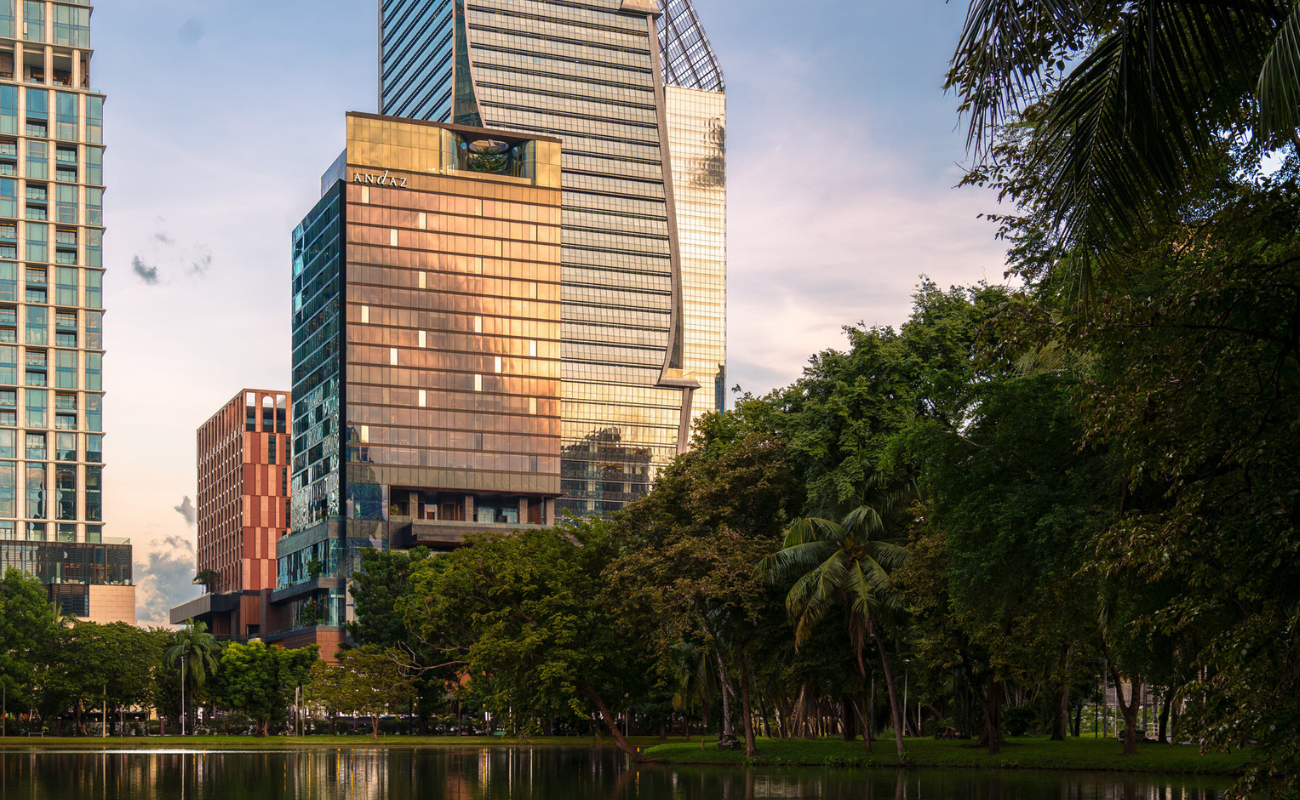
A building shaped by its surroundings
Rather than defaulting to the usual Thai luxury clichés, temples, gold leaf, and predictable references, the architecture and interiors pull from something more specific. Wireless Road itself, once home to the city’s first radio-telegraph station, becomes a subtle narrative thread. You see it in the geometry, the layering, the sense of signal and movement translated into physical form.
Curves dominate. Arched doorways, softened ceilings, and rounded transitions between spaces. It’s a language that nods to Bangkok’s mid-century buildings, the kind you still catch glimpses of in older neighbourhoods, but it’s been reworked here with a lighter, more contemporary hand. Nothing feels heavy. Even when materials lean towards marble, brass, and dark woods, there’s enough openness to stop it from becoming oppressive.
There are also quieter references tucked into the detailing. Grilles that echo old shophouse windows. Partitions that feel like abstracted gates. It’s the sort of thing you don’t necessarily clock immediately, but it accumulates.
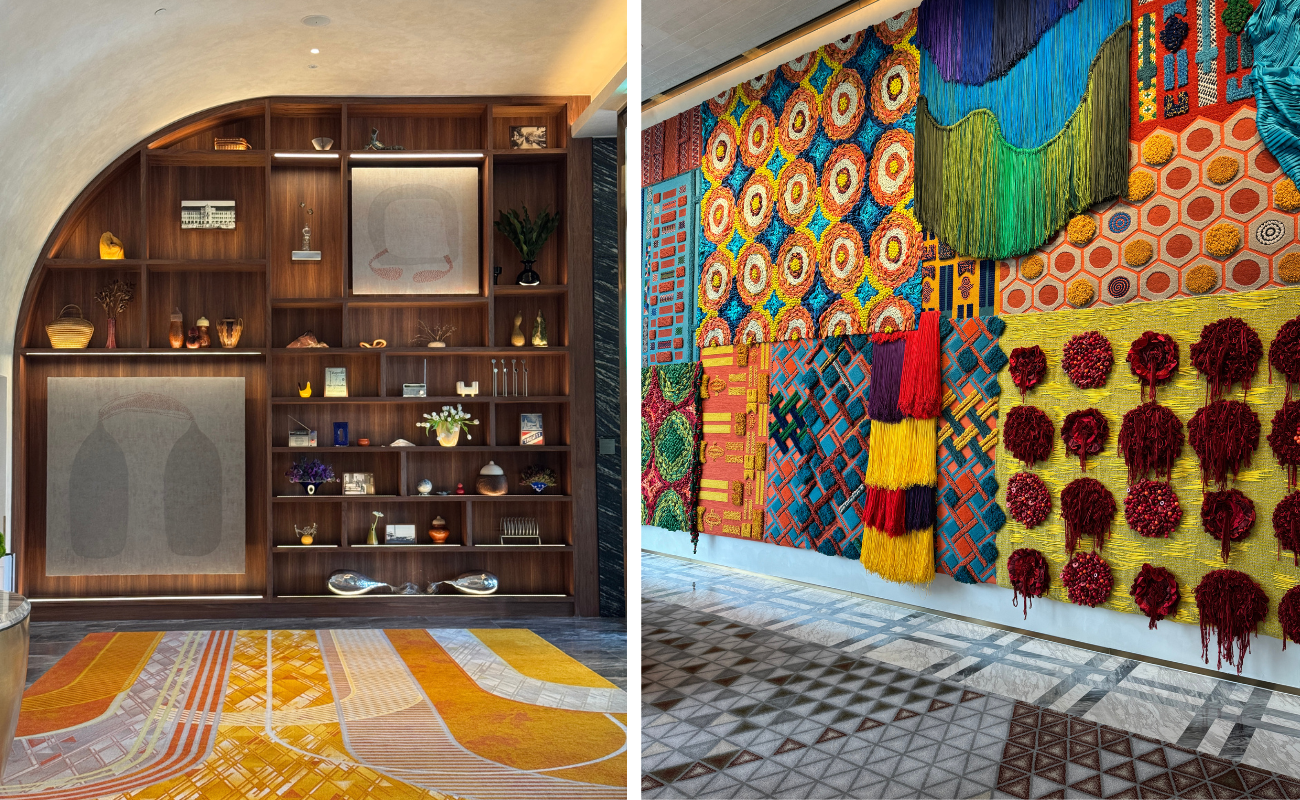
Art as anchor, not afterthought
What lifts the space, though, is the art. Not in the usual hotel sense of “something large on the wall to fill the void”, but pieces that genuinely hold the room.
You arrive through a large mixed-media installation by Pinaree Sanpitak. “Pocket of Nature, 2025” draws on the greenery of Lumphini Park and the layered history of the site. Blending paintings and sculptural forms from her Malai series, the work brings together her signature breast stupa motifs in a composition that feels both intimate and ceremonial, like a personal collection shaped by memory, place and cultural symbolism.
It sets the tone early; this is a hotel that’s prepared to foreground Thai contemporary art rather than tuck it politely into corridors.
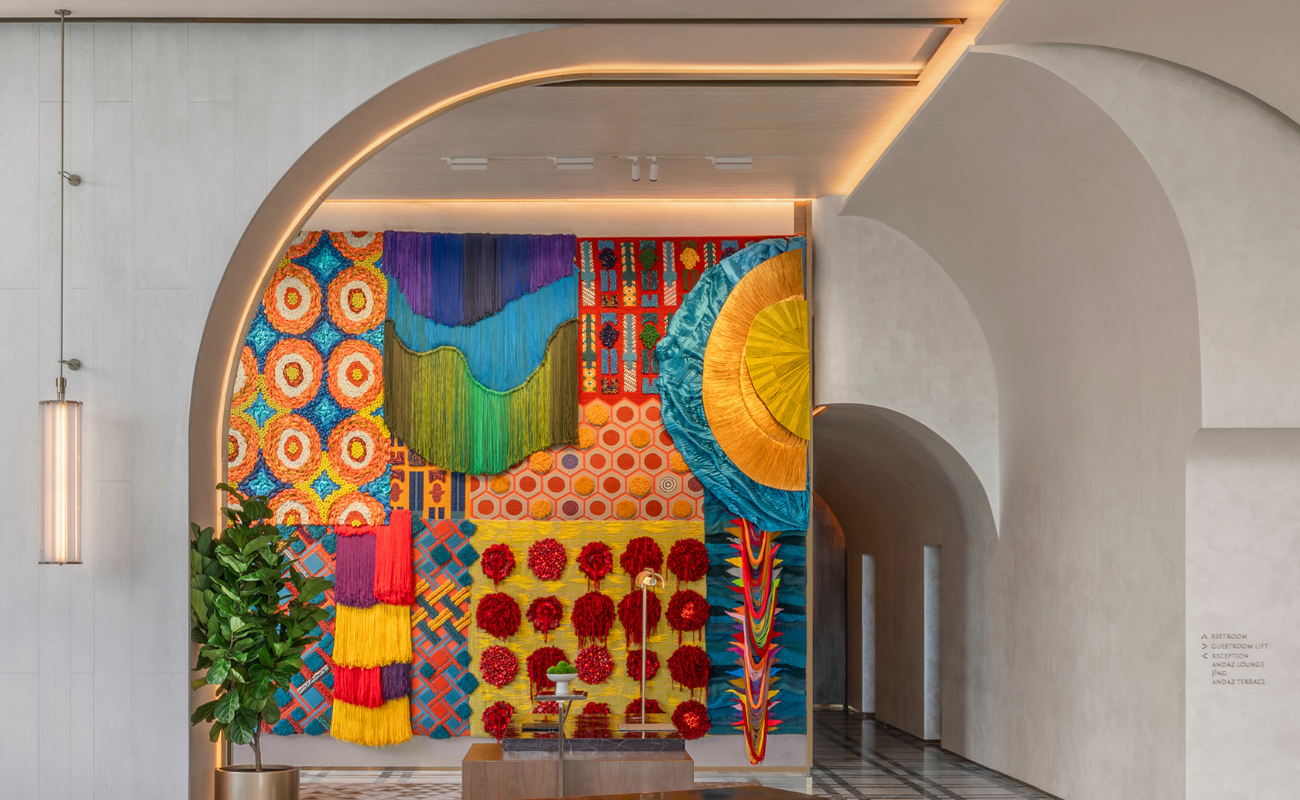
Then, as the lift doors open into the main lobby, you’re met by “Blockwilt, 2024” from Ploenchan Vinyaratn. It’s hard to ignore. A sprawling, bold textile work built from upcycled yarn, all reds, pinks, oranges and electric blues, hand-tufted into something that feels part city map, part electrical storm. Look closer, and you start to pick out references: the tangle of Bangkok’s overhead wires, the clock tower in Lumphini Park, fragments of nearby architecture. It manages to be both playful and oddly precise.
What’s refreshing is that these pieces aren’t isolated moments. The hotel returns to site-specific artworks as a way of structuring space. You’ll find smaller interventions in corridors, unexpected objects placed just so, even an antique grand piano positioned almost casually near the lobby, as if it wandered in and decided to stay.
A vertical neighbourhood
The idea for Andaz One is that the hotel functions as a “vertical neighbourhood”. It sounds like the sort of phrase that should be immediately dismissed, but here it just about holds up.
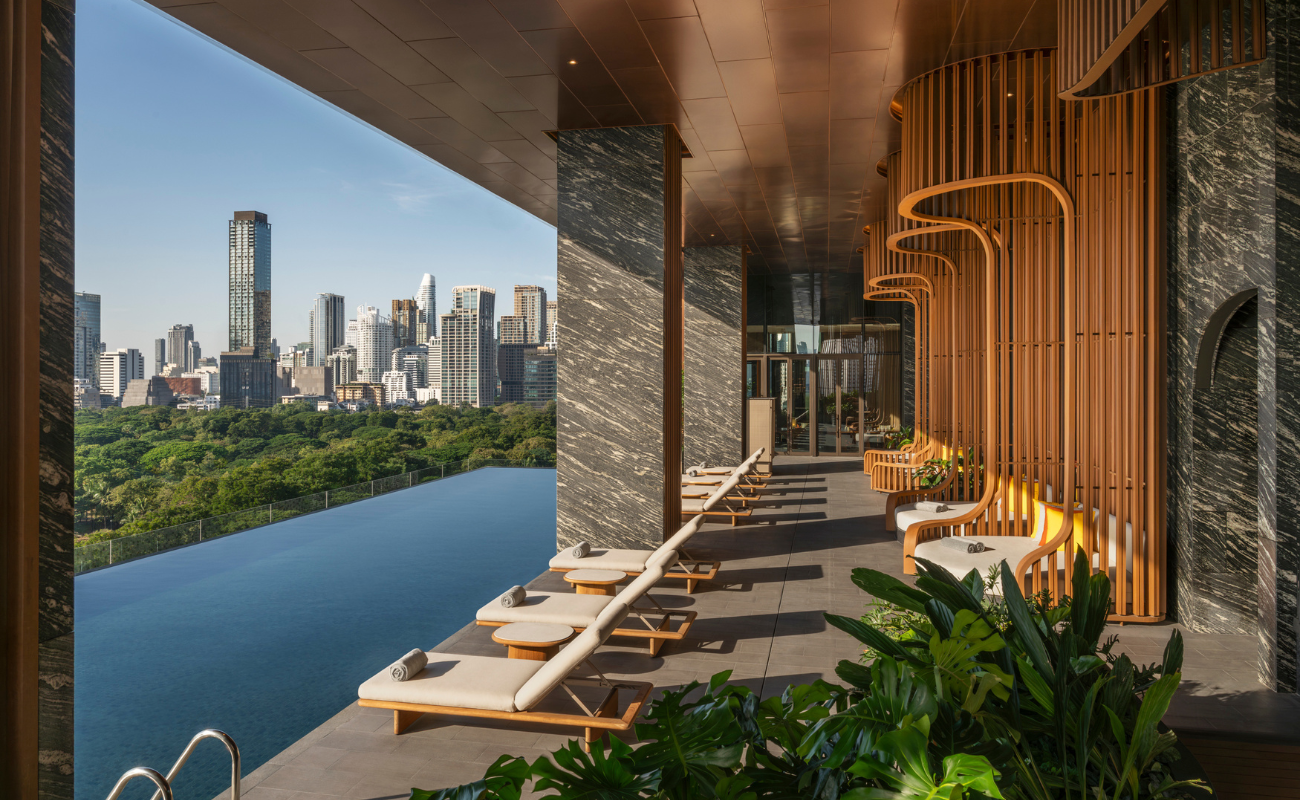
Different areas shift in tone and palette without feeling disconnected. The pool level draws loosely on the nearby polo club, with its open, slightly clubby feel, while the lobby leans more urban, more layered. It’s less about literal storytelling and more about subtle shifts in atmosphere as you move through the building.
Light plays a big role in all of this. Floor-to-ceiling windows pull Bangkok into the interior, particularly in the public spaces, where the city becomes part of the backdrop rather than something you leave behind. At certain times of day, late afternoon especially, the place softens. Colours warm up, reflections stretch, and the whole building feels a little less controlled.
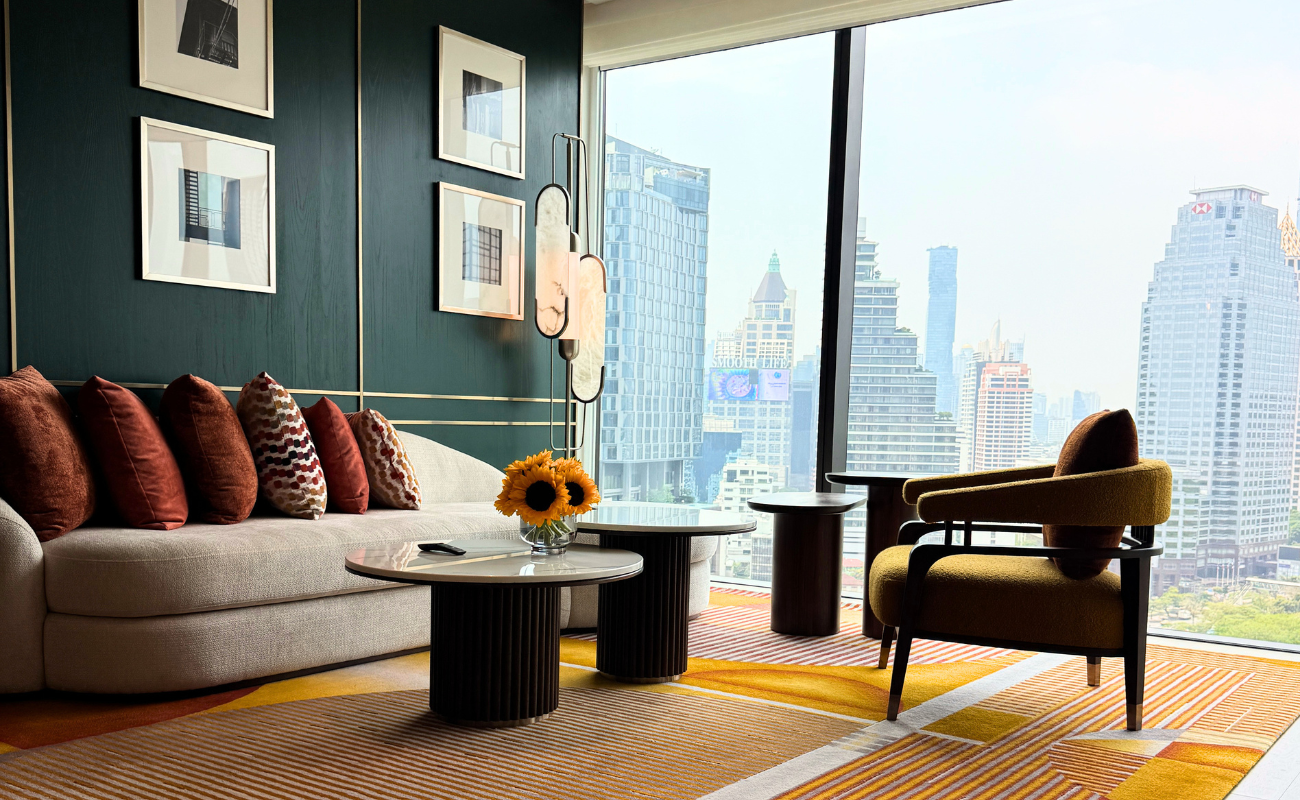
Rooms that continue the conversation
The 244 rooms and suites carry the same architectural language throughout, without overplaying it. There’s a consistency to the curves, the materials, the slightly retro references, the strong colour palette, but they’re tempered with enough restraint to keep things comfortable.
Furniture leans mid-century without slipping into pastiche. Circular tables, low-slung chairs, warm woods, all offset by sharper colour moments, mustard yellows, burnt oranges, deep greens. It shouldn’t quite work on paper, but in practice, it feels cohesive.
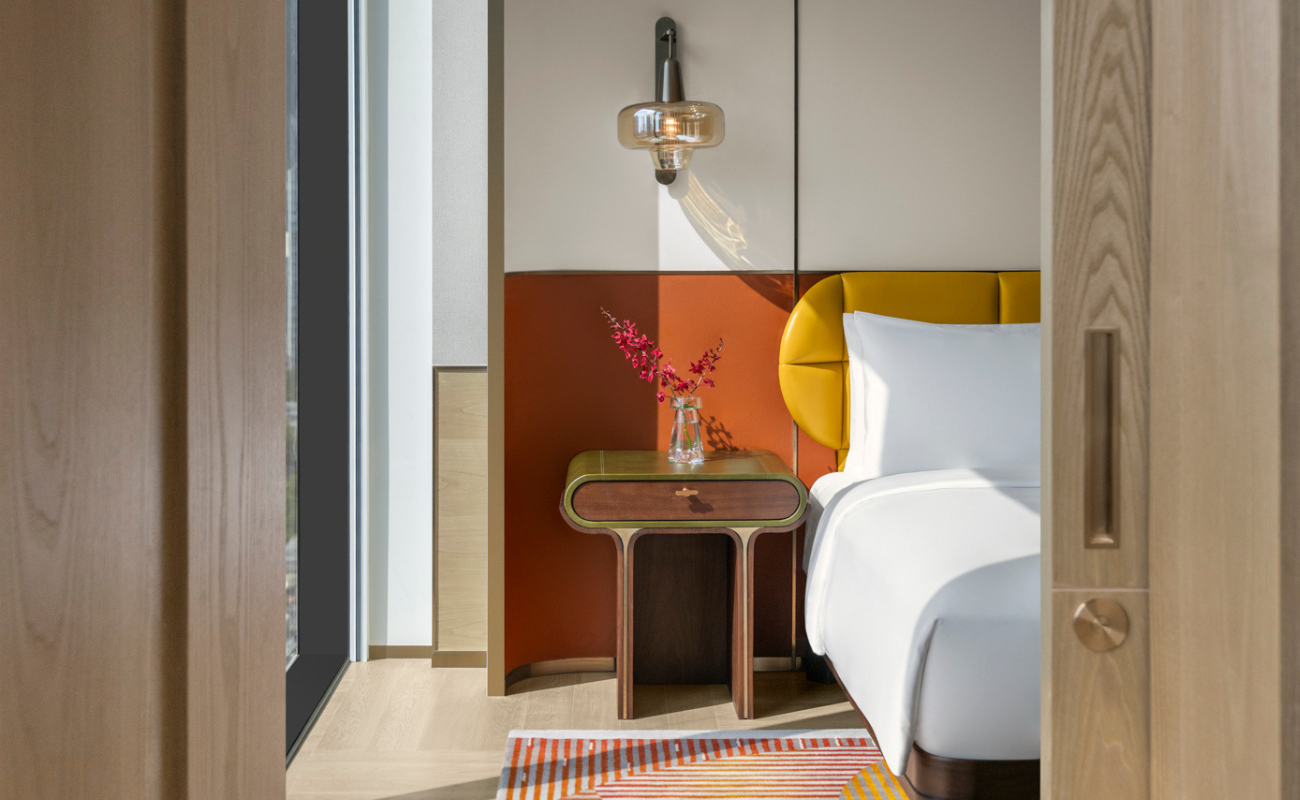
The real architectural trick, though, is the orientation. A large proportion of rooms are angled towards Lumphini Park, which means the view becomes part of the design. Green foreground, skyline beyond, a layered composition that changes with the light and the weather. You find yourself sitting a little longer than intended, just watching it.
Bathrooms are properly indulgent without tipping into excess. Marble, muted greens, brushed gold and those small luxuries that matter more than they should: BYREDO amenities, a Dyson hairdryer, and robes you’ll briefly consider packing.
Suites step things up, naturally. More space, more curves, and in some cases, a large square bathtub positioned squarely for park gazing.
Dining here feels considered rather than formulaic
Breakfast leans Asian in a way that feels right for Bangkok (dim sum, congee, pork dishes), alongside the usual European/American selections, pastries and fruit. If the air’s clear, the terrace is the place to enjoy your morning iced coffee.
Jing handles Chinese cuisine with confidence, proper Cantonese and Sichuan dishes, not watered-down versions. Take your cue from the staff who know the menu well enough to confidently make suggestions you shouldn’t miss (like the beef wok fried noodles and the pork BBQ assortment).
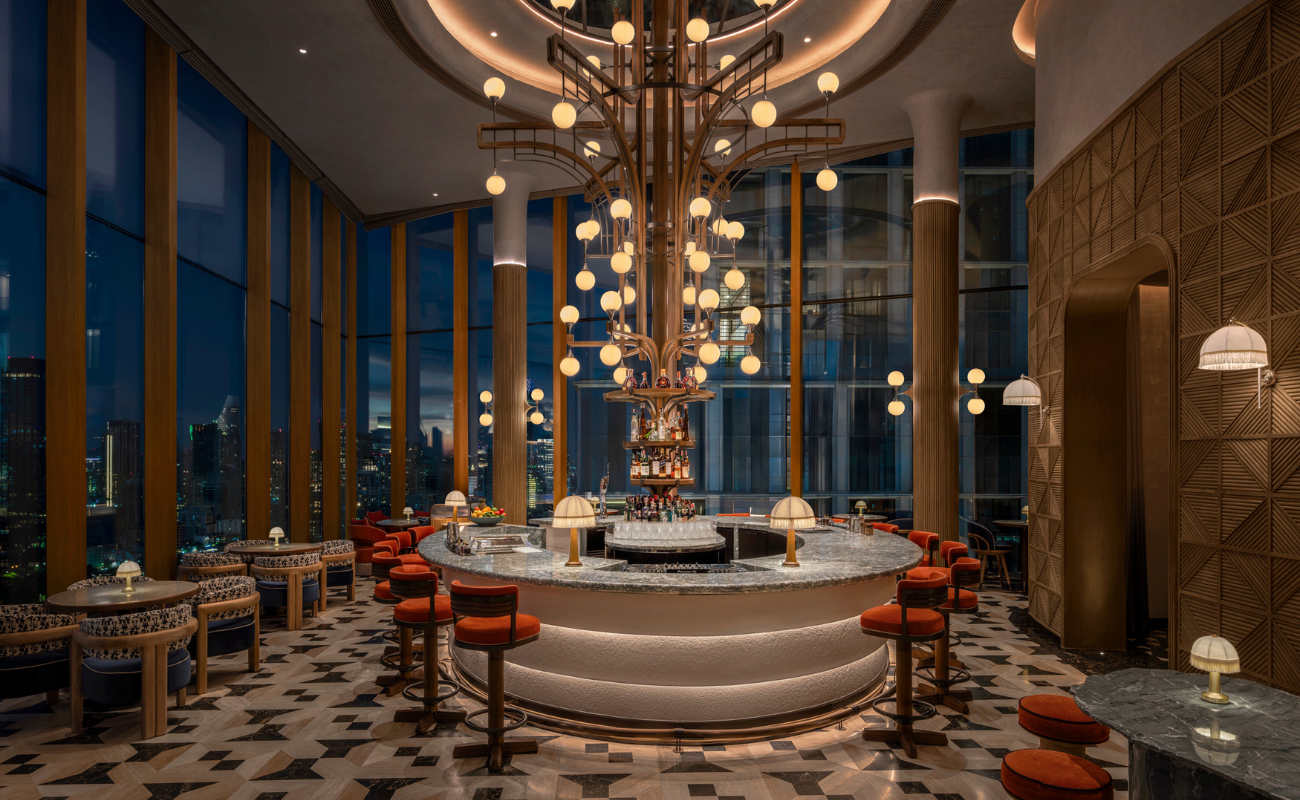
Piscari on the 23rd floor, part restaurant, part speakeasy, part cocktail bar, sees a design shift where the style leans
toward Mediterranean to complement the menu (the Veal Tonnato and Lamb Saddle were our standouts) with deep blues, sunset tones, fringed lighting, all set against floor-to-ceiling views of the city. Come at sunset, but definitely stay longer than planned.
The small things that make a difference to a stay
The Andaz Lounge, set within the main lobby, is a nice touch. Open to all in-house guests, free coffee, soft drinks, light snacks, daily 5-6pm wine and beer hour, and newspapers make for an informal offer that is useful rather than just a tick-box perk.
The seventh-floor pool is one of those places you end up spending longer than planned. Big enough to swim properly, lined with generous and comfortable daybeds, and overlooking the treetops of Lumphini Park, it’s less about showing off, more about quietly switching off.
The gym is excellent. Large, well-equipped, and certainly not an afterthought. Rows of weights, Matrix machines, and, importantly, space to move; you could happily train here for an hour and not feel like you’re compromising.
Bangkok has no shortage of ambitious hotels, and plenty of them are technically impressive. What’s rarer is somewhere that feels like it has a point of view. Andaz One Bangkok draws on its immediate surroundings, the history of Wireless Road, the visual chaos of the city, and the quieter rhythms of the park and filters them into something coherent. Delivering a design stay that is homely and comforting, with great service.
David O’Coy