Soft Cell Interview: Marc Almond & Dave Ball on Northern Identity, Creative Reinvention and Cultural Travel
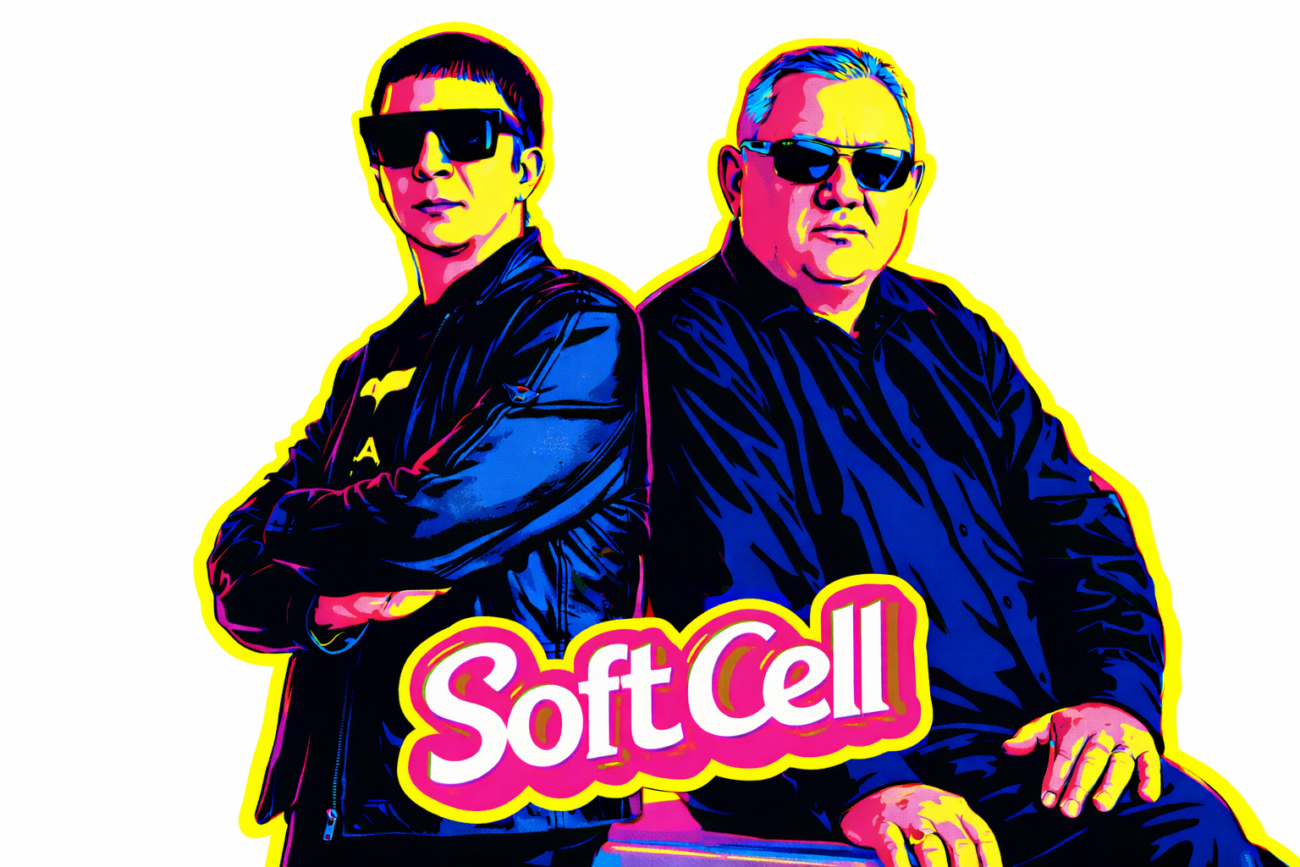
Four decades after Non-Stop Erotic Cabaret first slipped into the bloodstream of British pop, Soft Cell remain one of the UK’s most distinctive creative exports. Their music was born in northern seaside towns, sharpened in Leeds art schools and baptised in New York studios — a trajectory that feels less like nostalgia and more like a map of British cultural travel. For Fused, a magazine rooted in creative travel and contemporary culture, this is a story about movement. Between cities. Between decades. Between underground credibility and global recognition.
Replaying a Classic, In Full
Soft Cell’s recent live format is deliberate: two sets, one evening, total immersion.
Marc Almond: “We plan to do two sets in the evening. The first set will be greatest hits, some album and fan favourites as well as previewing some new songs live for the first time. The second set will be Non Stop Erotic Cabaret in its entirety and in track order with accompanying visuals and a few extras at the end. It’ll be a full-on and exciting show.”
Dave Ball: “The shows are split into two halves. The first half includes some old favourites, some hits that don’t appear on Non-Stop Erotic Cabaret and a few new tracks off our album Happiness Not Included.” Revisiting the album in sequence is not museum culture. It is performance as architecture , each track placed precisely where it belongs, like walking through a city district in its original order.
When asked whether it feels strange that the record is now over 40 years old, both are disarmingly candid.
Marc: “It’s hard to believe that a small collection of songs has had such a long life, that people still listen to and enjoy it. I’m amazed at how fresh and current it still sounds — and lyrically still relevant. It doesn’t feel like it’s 40 years old at all, but it scares me a bit to think that it is.”
Dave: “What surprises me is how fresh it still sounds today. Marc’s voice sounds more youthful back then and my synth playing was more simplistic , although I’ve always tried to stick with a minimalist style.”Minimalism, it turns out, travels well.
Technology Then and Now
The early 1980s stage setup was improvised and analogue. Today, it is digitally orchestrated.
Marc: “We have better technology available now and a richer catalogue of songs. We’re able to explore the visual side a lot more and we have more experience as musicians and performers.”
Dave: “All our visuals, lights and sequenced synths are run live from offstage computers as opposed to Kodak projectors and Revox reel-to-reel machines. It makes changing set orders easier and gives us much more control and clarity. I still play live analogue synths onstage , a Korg Prologue and an ARP Odyssey and we certainly don’t use autotune.” The tools may have changed; the discipline has not.
From Blackpool and Southport to New York
Soft Cell’s aesthetic was shaped long before Manhattan studios entered the frame.
Marc: “Being born in Lancashire seaside towns gives you a vaudevillian sensibility. It’s the home of cheap showbiz and hard-bitten entertainers, lurid cabarets and pier shows. Being born in the North gives you a tough survival instinct.”
Dave: “Our ‘northern grit’ was sheer determination. All the guitar bands in Leeds used to laugh at us ,a synth duo was unheard of, especially with a camp-looking singer and a guy who looked like a bouncer on a funny electric organ. We remained convinced we were onto something.” That conviction would ripple outward, influencing a generation of British electronic artists including Pet Shop Boys, Eurythmics and Yazoo.
Recording in New York marked a pivotal moment of cultural dislocation.
Marc: “We were young guys from Northern seaside towns recording in one of the top New York studios. We ate up the experience and in some ways New York ate us up.” Creative travel, in its purest sense.
The Soft Cell Formula
Despite extensive solo careers, when Almond and Ball reunite, the chemistry is unmistakable.
Marc: “It’s just the recipe and the chemistry. Dave’s music has a cinematic feel and pop sensibility. It’s dark and threatening at times, but with a sleazy naughtiness too. Electronic pop and soulful songs with happiness on the surface but bitterness underneath. Like salted caramel.”
Dave: “We never worked in the studio together. I would give Marc demos, he’d go away and write lyrics. I think of it cinematically, I write the score and Marc writes the script. When I work with him, I put my Soft Cell hat on. Certain sounds and chords that are specific to us.” It is a creative partnership built on distance as much as proximity.
Happiness Not Included, Reflection Without Illusion
Their later album, Happiness Not Included, carries a tone of sober observation.
Marc: “The world has been going to hell in a handcart for as long as I can remember. Maybe happiness is almost impossible to attain. It doesn’t come with the package. Life is a shitshow, deal with it. And survive.”
Dave:“Most of the music was written before lockdown. It’s reflective and melancholy in parts, with Marc’s observations about life over the top.” There is no false optimism here. Only clarity.
Rebellion, Labels and Art-School Instinct
Soft Cell’s relationship with record labels was not always harmonious.
Marc: “Maybe if some singles weren’t bigger hits it was our fault for not making them suitably commercial. We chose tracks like ‘Numbers’ because it wound up the record company. The art college transgressive nature coming to the fore.”
Dave: “I don’t think it was the record companies that chose our singles, we had artistic freedom. Sometimes not very wisely. ‘Numbers’ was probably heavy for daytime radio.”Their defiance was part of the brand.
Streaming and the Value of the Live Experience
Both remain sceptical about the economics of streaming.
Marc: “It’s much harder to make money from records and streaming revenue is very unfair. I’m old school, a CD and vinyl child. People love a real live experience.”
Dave: “Music streaming remains one of life’s great mysteries to me. I’ve never seen notable income from it despite millions of streams.” In a digital era, the analogue moment still matters.
What Comes Next?
For now, the focus is on performance and letting the work speak.
Marc: “No plans at present, we’ll see.”
Dave: “We’ll see how the album performs. I always try to keep an open mind.”
Soft Cell and the Creative Traveller’s Mindset
Soft Cell’s story mirrors a wider creative truth. Identity rooted in place. Courage sharpened by rejection. Technology embraced but never allowed to dominate. From Lancashire’s pier shows to New York’s neon, from analogue tape machines to digital sequencing, Marc Almond and Dave Ball have travelled through culture without losing their accent. For Fused, that journey matters. Because creative travel is not simply about geography, it is about perspective. And few British acts have navigated those shifts with such enduring, sardonic elegance.