What to See at Venice Biennale 2026: The Must-Visit Pavilions and Installations
VENICE BIENNALE 2026: THE ESSENTIAL GUIDE TO THE 61ST INTERNATIONAL ART EXHIBITION
Every two years the art world turns its attention to Venice. Curators, collectors, artists and cultural travellers converge on the lagoon city for the Venice Biennale, one of the most influential events in global contemporary art. Running from 9 May to 22 November 2026, with preview days from 6–8 May, the latest edition of the Biennale once again transforms Venice into a vast cultural stage. Historic palazzi, naval shipyards, gardens and churches become temporary homes for installations, performances, films and monumental artworks. For travellers who follow culture as closely as they follow destinations, the Biennale is more than an exhibition. It is an experience that reveals where contemporary art is heading next. This guide highlights the most compelling national pavilions, collateral events and citywide projects shaping Venice Biennale 2026.
The National Pavilions to See at Venice Biennale 2026
The heart of the Biennale lies in its national pavilions, many located within the leafy grounds of the Giardini or the vast industrial halls of the Arsenale. Each country commissions artists to respond to the moment we live in.
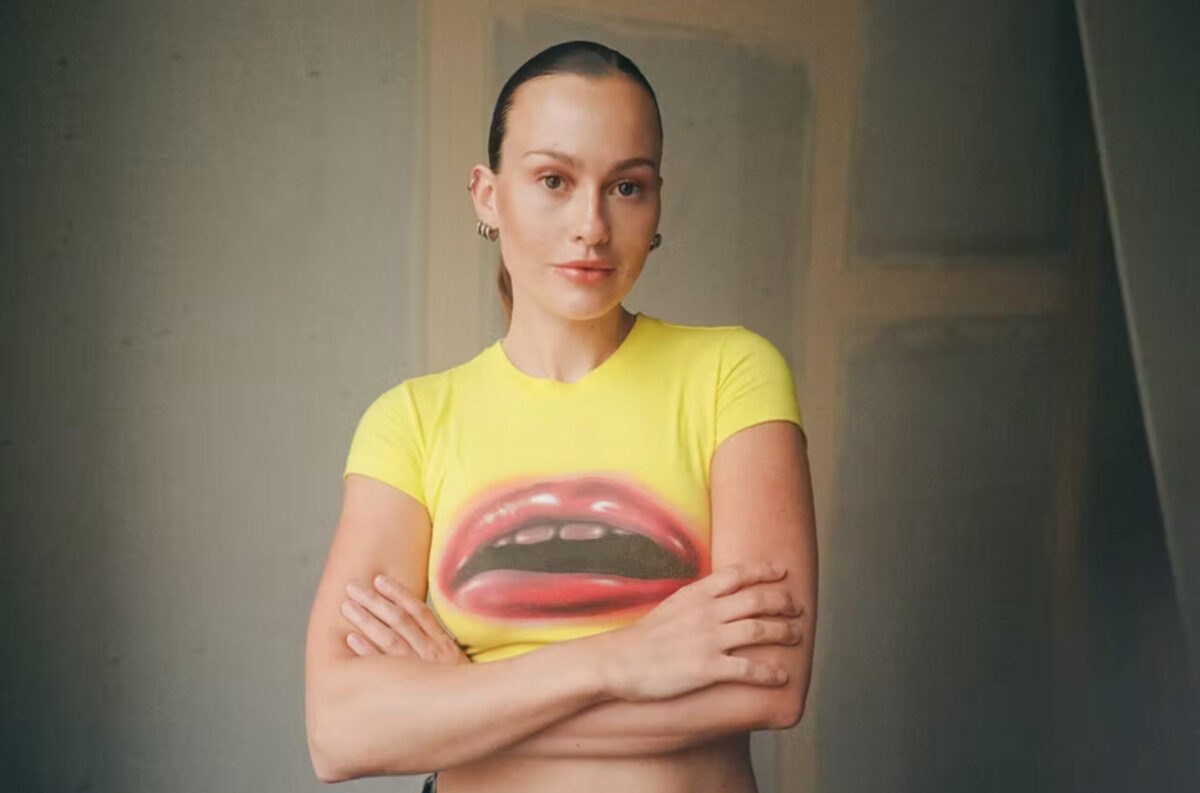
Denmark: Pornography, Science and the Future of Humanity
Artist Maja Malou Lyse represents Denmark with Things To Come, a provocative exhibition that explores the intersection of sexual imagery, technology and declining global fertility. Described as a leading voice of fourth-wave feminist art in Denmark, Lyse presents a speculative video fairytale set in the year 2045, starring adult performer Nicolette Shea as a scientist working inside a futuristic sperm bank. The project draws on recent scientific research suggesting that exposure to erotic imagery can increase sperm motility. Lyse pushes this idea further, asking a radical question: could images influence human reproduction itself? By combining science, speculative fiction and pornography, the Danish Pavilion examines how digital culture shapes not only imagination but biological reality.
Estonia: Painting in Public
Estonian artist Merike Estna transforms the pavilion into a living studio with The House of Leaking Sky. Throughout the Biennale she will paint live inside the exhibition space, creating 22 monumental canvases, including what may become the largest painting produced during the 2026 Biennale. The installation also includes hand-painted ceramic floor tiles and the tools of production, extending painting beyond the canvas. Estna lives in Venice with her family for the duration of the exhibition, blending art-making with motherhood and everyday domestic rhythms. The result reframes painting as a social and performative act rather than a static object.
Finland: Listening to the Wind
Marking the 70th anniversary of the Finnish Pavilion, artist Jenna Sutela presents Aeolian Suite, an immersive installation inspired by wind as both physical force and cultural metaphor. The project blends sound, music and movement, drawing on theatre traditions such as Commedia dell’arte as well as experimental language forms like grammelot. Working with hair artist Sara Mathiasson and scenographer Celeste Burlina, Sutela explores how wind shapes technology, climate science, spirituality and communication. The pavilion becomes an atmospheric environment where visitors experience the invisible forces moving through the world.
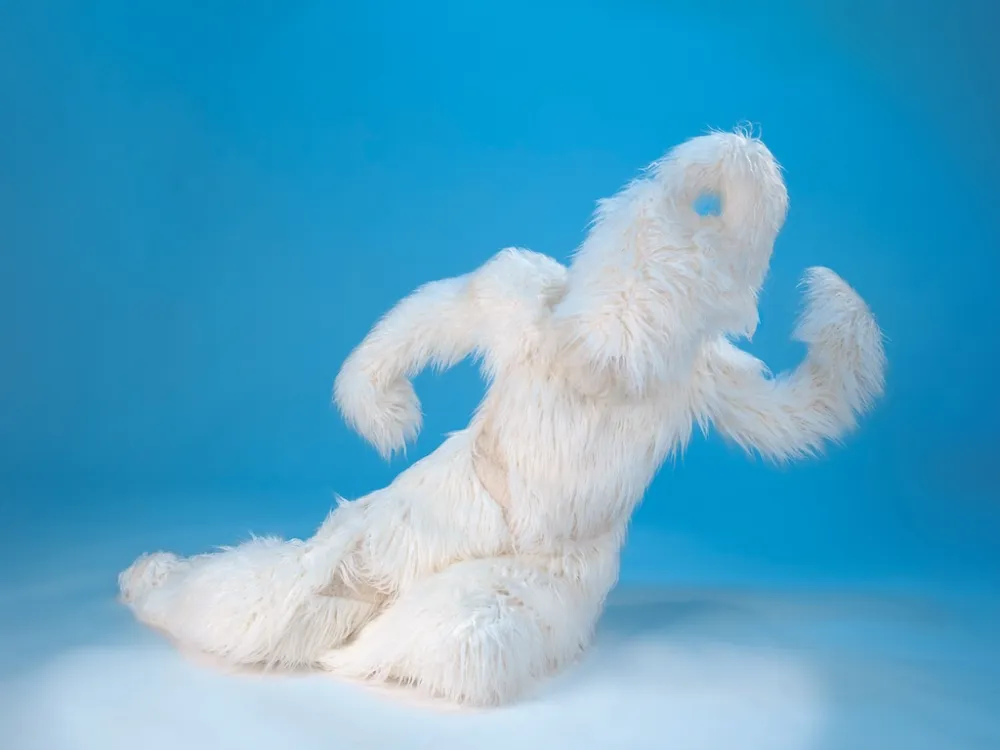
Ásta Fanney Sigurðardóttir, Hero Form , 2026. Photo Sandijs Ruluks , Courtesy of the artist
Iceland: Imagining New Universes
Representing Iceland, artist Ásta Fanney Sigurðardóttir presents Pocket Universe, a multidisciplinary exhibition combining sound, moving image, performance, sculpture and installation. Rather than a traditional exhibition, the project unfolds as a shifting landscape of encounters. Objects appear and dissolve, performances emerge unexpectedly, and narratives remain open-ended. Sigurðardóttir’s work suggests that even during periods of instability, imagination and belief can create new ways of seeing the world.
Japan: Parenthood, Diaspora and Collective Care
Japanese-American performance artist Ei Arakawa-Nash presents Grass Babies, Moon Babies, an installation shaped by themes of diasporic identity and parenthood. Visitors are invited to adopt a baby doll inside the pavilion. Acts of care—changing a diaper or holding the doll—trigger a digital experience through a QR code. Each doll generates a poetic message linked to its assigned birthday, connecting personal moments with larger historical narratives. The result is a participatory work where care, collaboration and audience engagement become central artistic gestures.
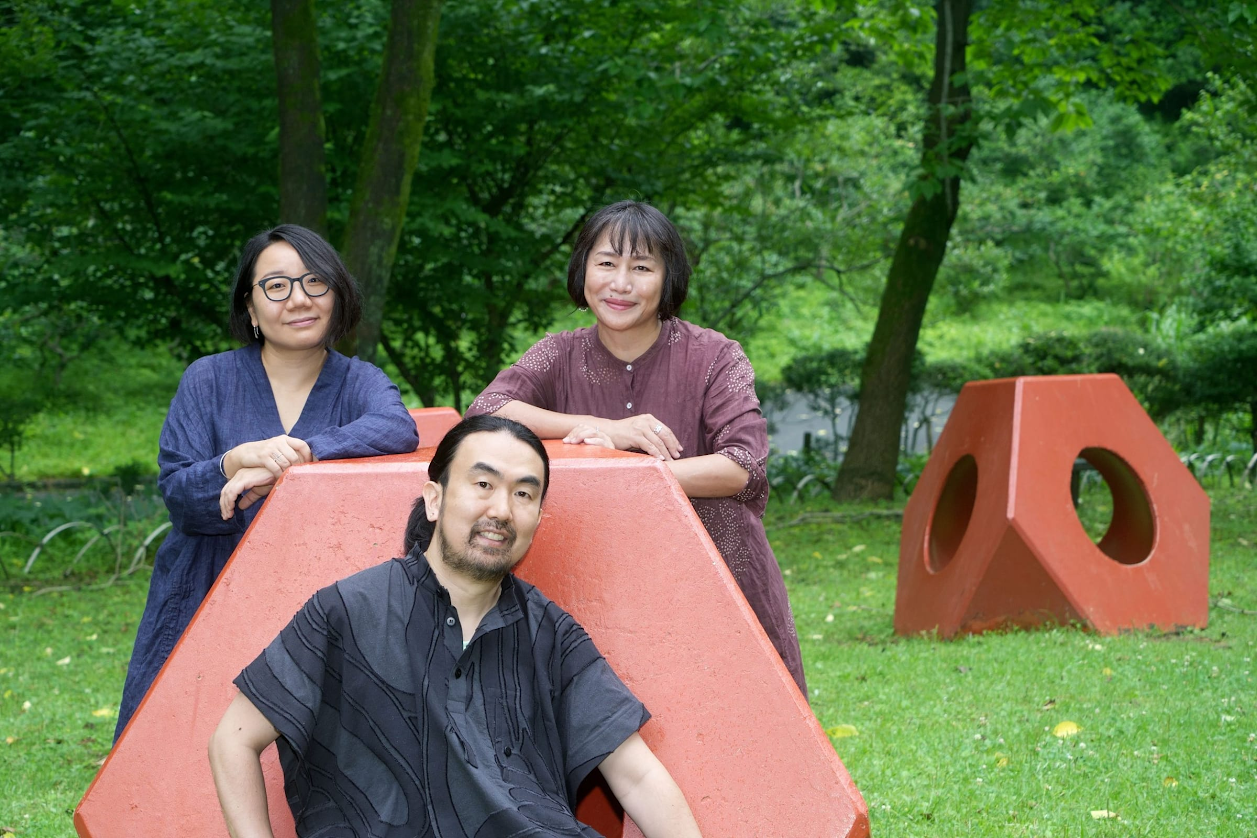
HORIKAWA, Arakawa-Nash, TAKAHASHI, with Isamu Noguchi’s Octetra at Kodomonokuni (Children’s Land), Yokohama, Japan; Photo:
Hako Hosokawa
Kazakhstan: Sound, Silence and Memory
Kazakhstan’s pavilion presents Qoñyr: The Archive of Silence, curated by Syrlybek Bekbota. The exhibition takes inspiration from the Kazakh concept qoñyr, a word associated with earth, resonance and quiet reflection. Visitors encounter a sensory landscape combining monumental sculpture, sound installations, and immersive digital environments. The project reflects on Kazakhstan’s complex history, addressing themes including nuclear trauma, political repression and cultural resilience.
Netherlands: The Fortress Mentality
For the first time in its history, the Dutch Pavilion hosts a performance installation. Artist Dries Verhoeven and curator Rieke Vos present The Fortress, transforming the iconic Gerrit Rietveld Pavilion into a bunker-like structure. The work examines how Western societies respond to geopolitical uncertainty by retreating behind borders and defensive ideologies. As visitors move through the space, they confront a striking paradox: the structures we build to protect ourselves can easily become prisons.
Spain: Memory in a Postcard
Spanish artist Oriol Vilanova presents Los restos, a multimedia installation built from an archive of postcards collected over two decades. Purchased from flea markets and second-hand shops, these fragments of correspondence form a vast landscape of forgotten messages. The exhibition operates as an anti-museum, where modest everyday objects become vehicles for memory, nostalgia and reflection. In an age of instant digital communication, the project quietly asks what remains when personal stories are reduced to fleeting images.
Uruguay: Turning Chaos into Resilience
The Uruguayan Pavilion presents ANTIFRAGIL, an installation by artist Margaret Whyte inspired by philosopher Nassim Taleb’s concept of antifragility. Using textiles, obsolete machines, helmets and fragments of debris, Whyte constructs a sculptural environment where fragility becomes strength. The installation addresses gender politics, social conflict and historical transformation, positioning vulnerability as a catalyst for creative force.
Major Collateral Events at Venice Biennale 2026
Beyond the national pavilions, the Biennale expands across Venice through a programme of collateral exhibitions and citywide installations.
Demond Melancon: Monumental Beadwork Portraits
New Orleans artist Demond Melancon presents new work in the Arsenale. Rooted in the Black Masking Indian tradition, his monumental portraits are constructed entirely from hand-sewn glass beads. By bringing this craft tradition into the context of contemporary art, Melancon challenges the hierarchies that historically separated fine art from craft. His work celebrates Black cultural heritage while redefining the possibilities of contemporary portraiture.
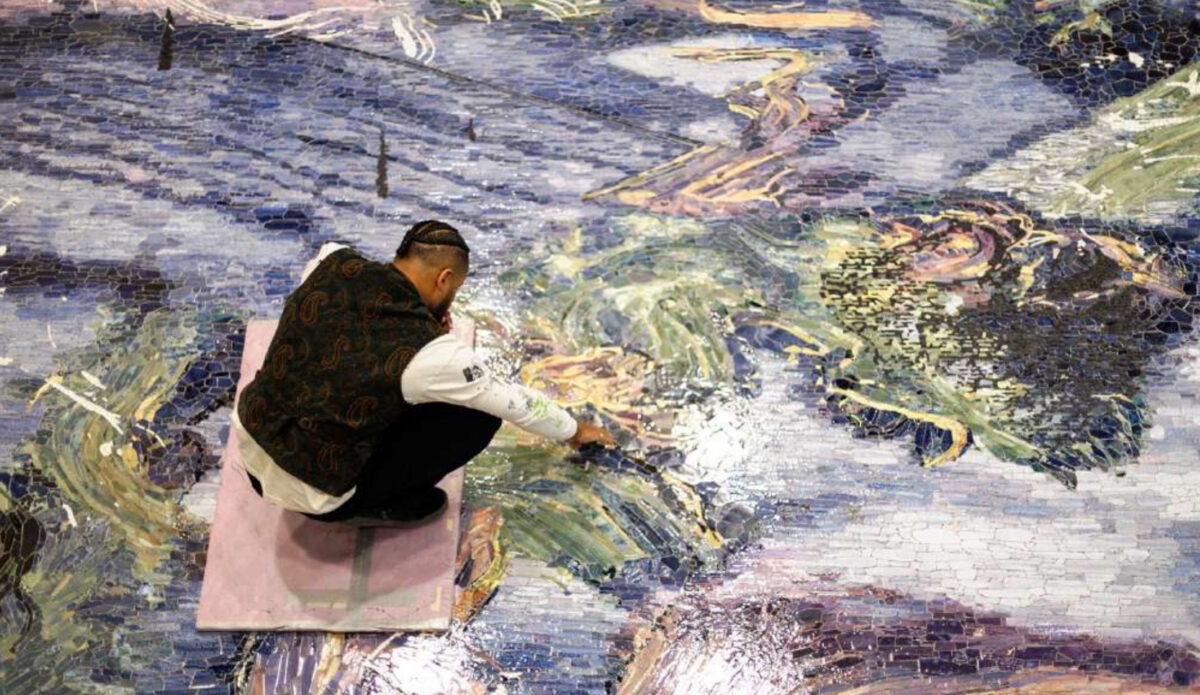
Manuel Mathieu working on Le mont habité , 2025. Photo:Jeanne Tétreault. Courtesy of the Gallery Hugues Charbonneau and the artist.
Manuel Mathieu: History, Memory and Spirituality
Haitian-Canadian artist Manuel Mathieu debuts at the Biennale with work presented across both the Arsenale and Giardini. Working across painting, sculpture, ceramics, film and poetry, Mathieu explores the connections between personal memory and collective history. His practice reflects on historical violence, erasure and spiritual traditions shaped by his upbringing in Haiti and his later migration to Canada. Through a delicate balance between abstraction and figuration, Mathieu’s work invites viewers to slow down and reflect on the repeating cycles of history.
Li Yi-Fan: Screen Melancholy
Taiwanese artist Li Yi-Fan presents Screen Melancholy at Palazzo delle Prigioni. Curated by Raphael Fonseca, the project examines how digital technology reshapes the relationship between images and human experience. Belonging to a generation that grew up alongside the birth of the internet, Li’s work explores the emotional and cultural implications of a world increasingly mediated by screens.
Art Across Venice: Installations Around the City
Beyond the official pavilions, Venice itself becomes part of the exhibition.
DRIFT’s Kinetic Light Installation Above the Grand Canal
The Amsterdam-based studio DRIFT, founded by artists Lonneke Gordijn and Ralph Nauta, presents Shy Society, a large-scale kinetic installation suspended above the Grand Canal between the Peggy Guggenheim Collection and the Ponte dell’Accademia. The project expands the studio’s celebrated Shylights series, a constellation of luminous forms that open and close like flowers. Inspired by nyctinasty, the biological movement of plants responding to light, the installation transforms the night sky above the canal into a floating garden of illuminated sculptures.
The Cultural Pulse of Venice Biennale 2026
For travellers who move through the world in search of culture, the Venice Biennale remains one of the most important events on the global art calendar.
Across its pavilions and installations, the 2026 edition reflects the themes shaping contemporary life:
• identity and diaspora
• climate and technology
• memory and archives
• borders and geopolitics
• the body in a digital world
Venice itself becomes part of the artwork, a city where centuries of history meet the experimental ideas shaping tomorrow. For those planning a cultural pilgrimage this year, the Biennale offers something rare: a living map of where contemporary art is heading next.