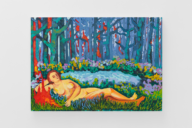
Toronto: Inside a City Rewriting Its Art Scene
There’s a particular creative energy to Toronto right now. It’s a city in transition; like many, it is still recalibrating after the pandemic while opening itself up to new voices, new spaces, and new ways of thinking about art.
At the centre of that shift are galleries like United Contemporary, a space that reflects the changing shape of the city’s cultural landscape, where collaboration, experimentation and storytelling take precedence over rigid structures.
A Gallery Built on Collaboration
“United was founded by Burke Paterson in 2018, and takes its inspiration from United Artists – a film studio that emphasised collaboration”, comments the Gallery’s Associate Director, Rebecca Travis. “That’s an ethos that is brought into the gallery, and it’s approach to working with artists and providing support to their creative vision. Although the gallery is a commercial space, there is a lot of control in the hands of the artists in terms of what they want to show.”
That sense of shared authorship runs through everything. United Contemporary represents fourteen artists working across painting, photography, installation and sculpture, but what connects them is less about medium and more about intention, as Gallery Director Melanie Trojkovic explains.
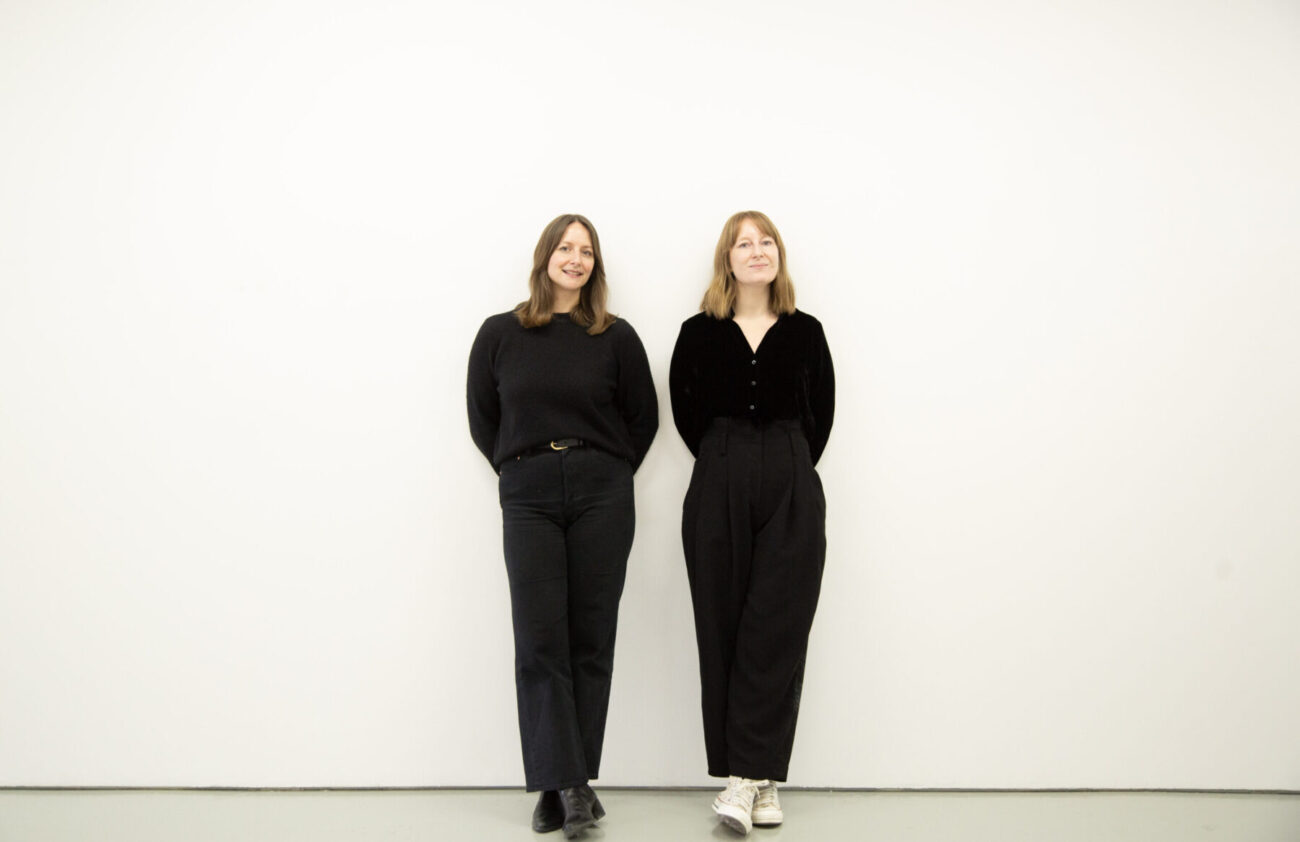
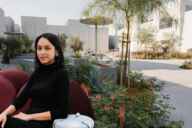
Rebecca on left, Melanie on the right
“Toronto is a truly diverse city, so we aim to foster creative voices that reflect the community we inhabit. Most of the artists we work with are emerging to mid-career; in terms of age, the youngest artist is 31, and the oldest is 93, which gives a sense of the range. Each artist’s practice is unique, but there is definitely a focus on storytelling through material, personal and family narratives, and often practices that cross between different media.”
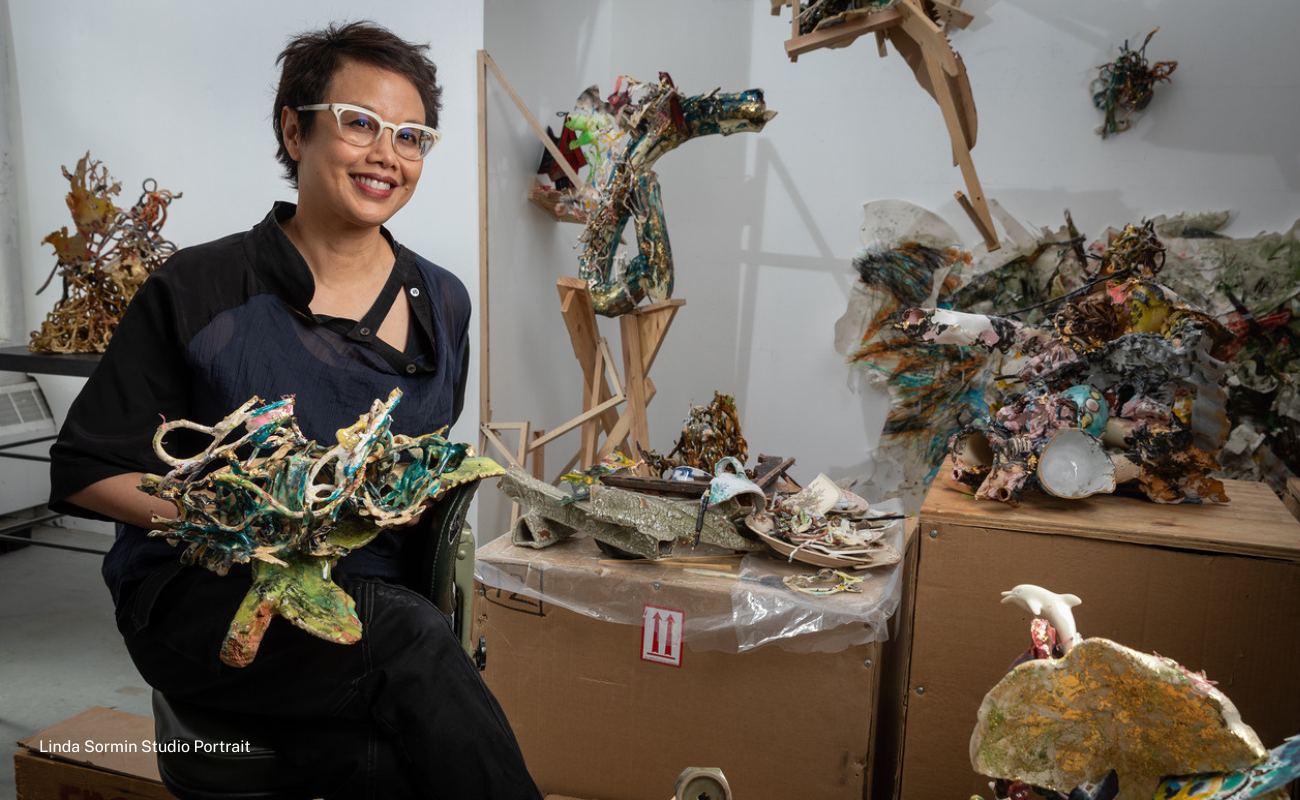
Many of the artists connected to United Contemporary are rooted in ideas of identity, migration and material storytelling, with practices that feel both deeply personal and globally relevant. One example is Linda Rotua Sormin (pictured top), whose sculptural ceramic installations push the boundaries of the medium while reflecting on her Batak Indonesian lineage and diasporic experience. Her work, often suspended, fragmented or in motion, speaks to displacement and cultural memory, and has been exhibited at major institutions including the Museum of Fine Arts, Boston and the Smithsonian American Art Museum. It’s this kind of practice, where concept, material and lived experience are inseparable, that defines the gallery’s programme and, more broadly, signals the direction of Toronto’s contemporary art scene right now.
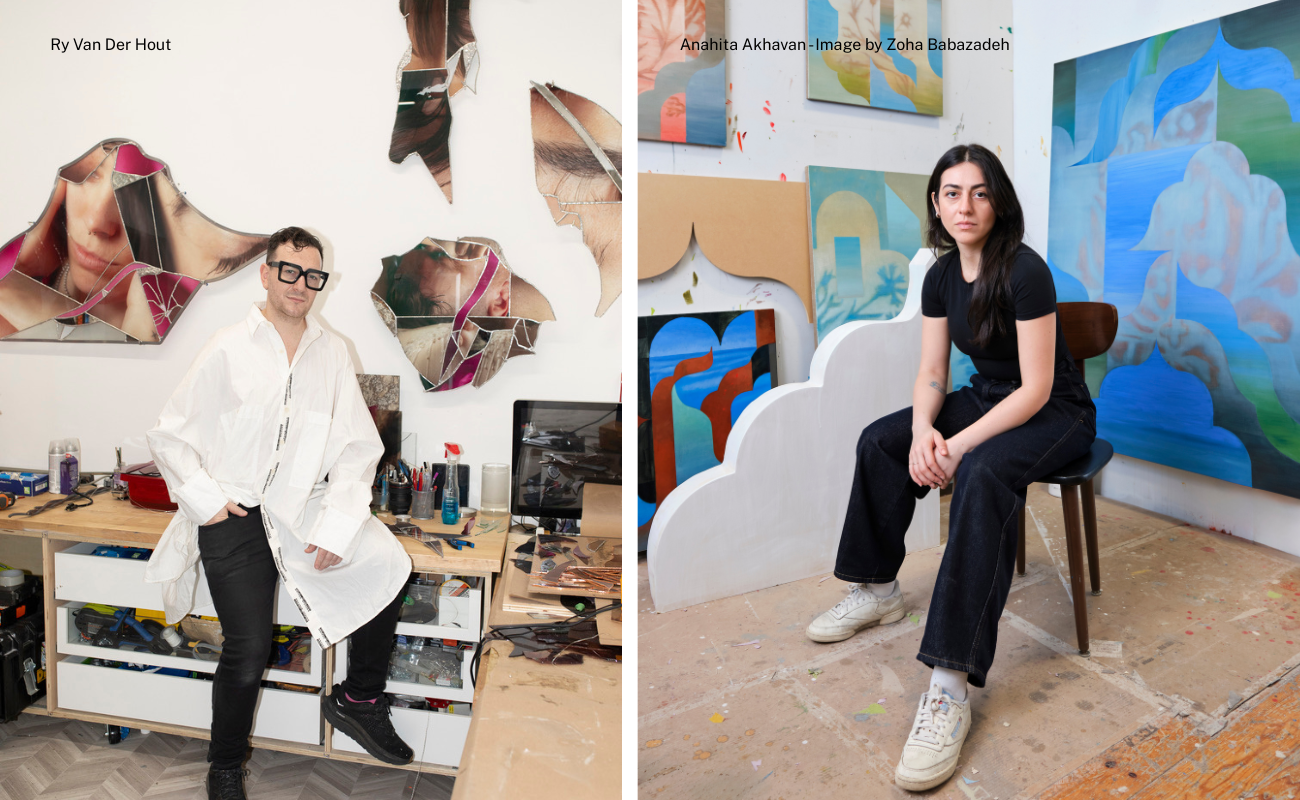
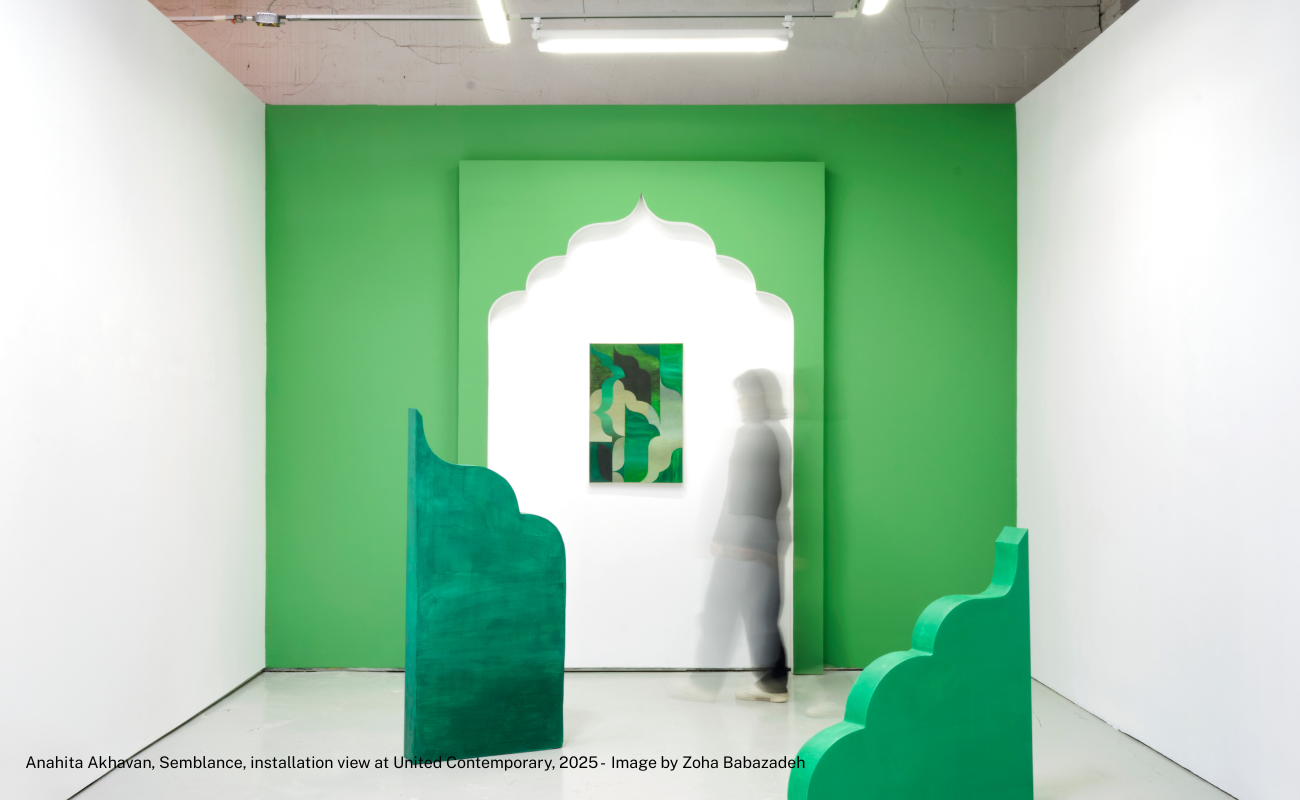
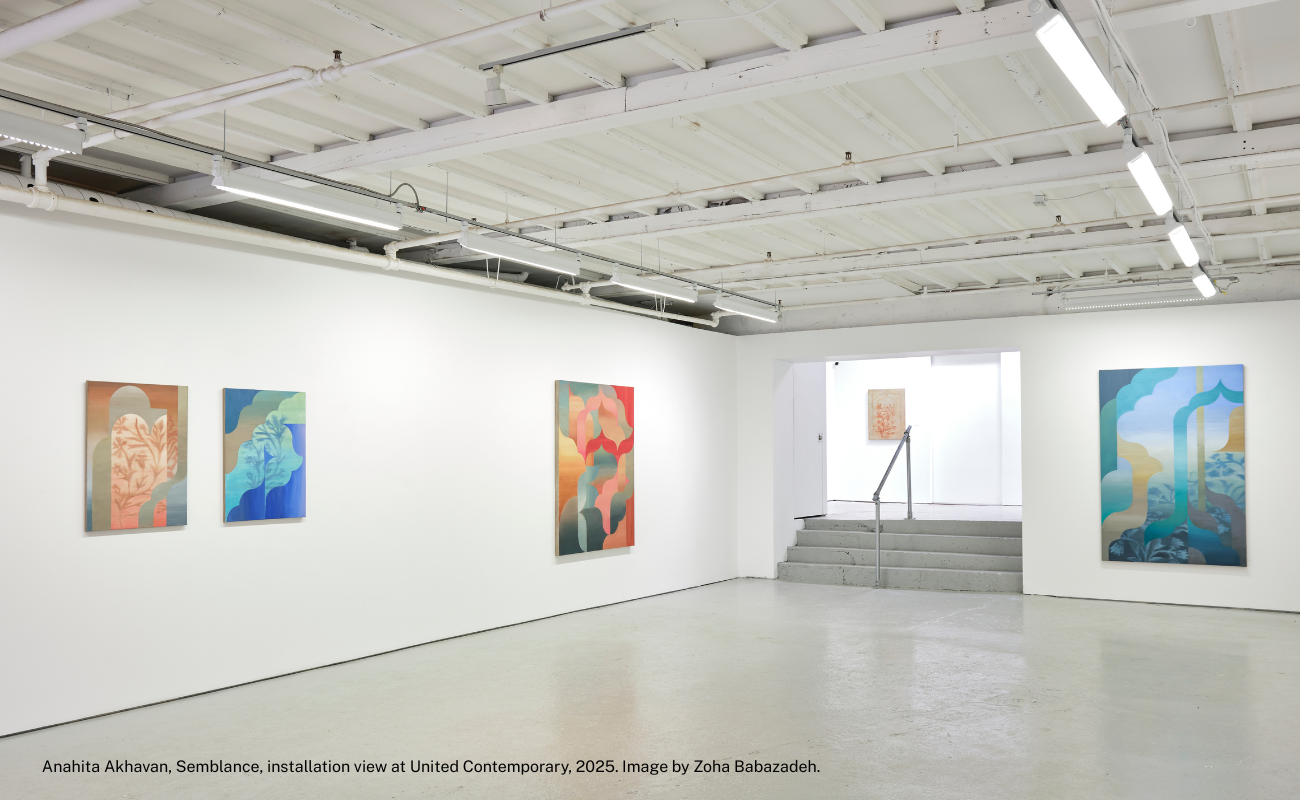
Anahita Akhavan explores the intersection of Islamic art, architecture and cultural identity through intricate, geometric abstractions that speak to migration and belonging. Ry Van Der Hout works with glass and mirrors to examine transformation, using fragmentation as a metaphor for queer experience and becoming.
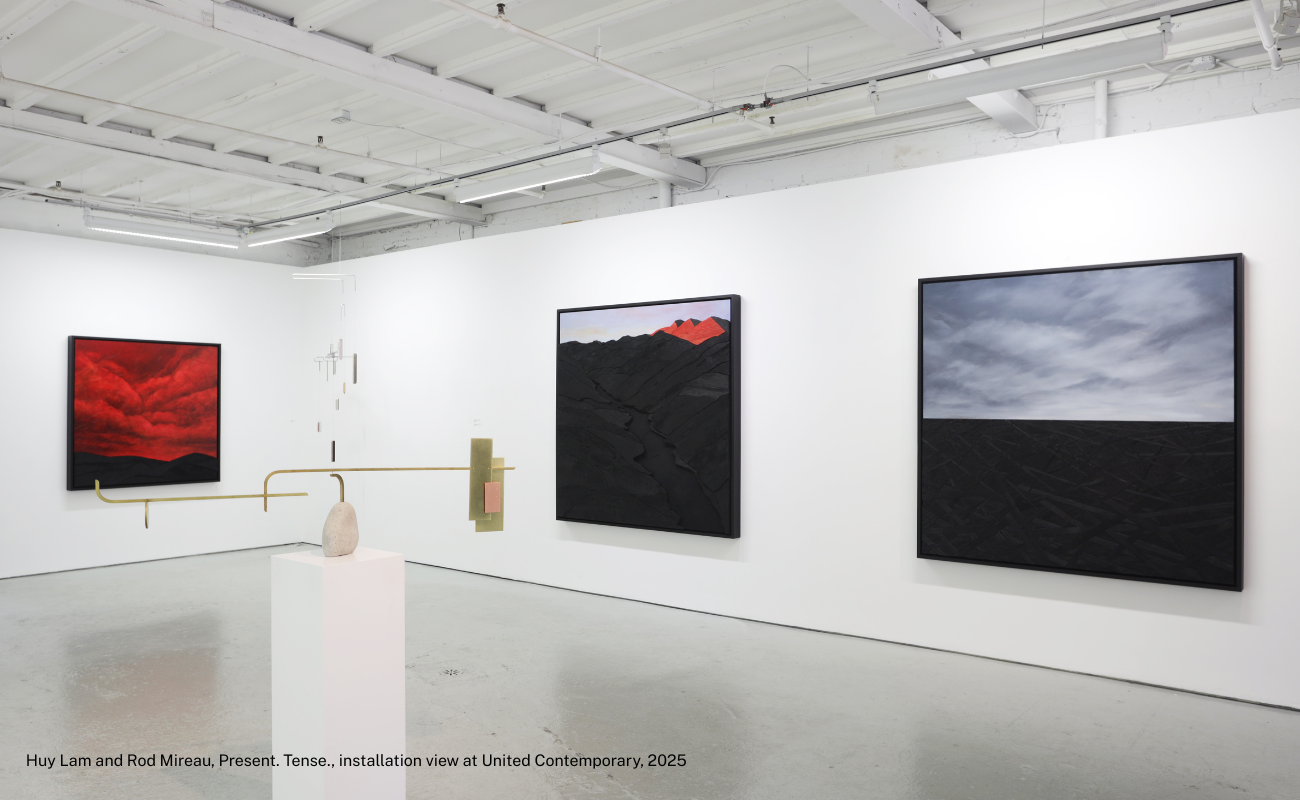
Meanwhile, Huy Lam, whose recent works were displayed alongside visiting artist Rod Mireau, approaches non-verbal communication through meditative, process-led constructions, creating precise collages and sculptural forms that play with light, balance and perception. Together, these practices signal a broader shift in Toronto’s contemporary art scene, where material, identity and narrative are increasingly intertwined.
A city evolving
Toronto’s art scene, much like the city itself, is evolving with the effects and instability from the pandemic still apparent, but as Rebecca explains, within that flux is momentum. “It’s definitely an interesting time in Toronto’s art scene. There is some much-needed work to be done to diversify institutions at every level, which is still very much a work in progress.”
“There’s some really vital storytelling and explorations of cultural lineage happening through contemporary practice right now, and that feels exciting and significant.” Rebecca, who is originally from the UK, feels that discovering some of the contemporary Indigenous artists, in particular, has been an exciting experience. “The scene also feels like it’s growing in a positive way, the Toronto Biennial is in its third iteration, and there’s new spaces opening that challenge the idea of traditional gallery models – nomadic spaces, garage spaces in laneways, and new commercial spaces.”
For curators arriving from elsewhere, that energy is immediate. Melanie is originally from Melbourne, Australia and can see how the opportunity for Canadian artists has evolved. “When I arrived in Canada, almost ten years ago, it was immediately clear that I had arrived at an exciting moment for contemporary art. The Canadian visual language is distinct, deeply rooted in place, yet globally resonant, and many local artists continue to gain international recognition. In particular, Indigenous voices have become increasingly prominent and supported, both within institutional frameworks and independent initiatives.”
New Spaces, New Conversations
Part of what defines Toronto right now is where art is happening. The traditional white cube still exists, but increasingly it’s being complemented, and sometimes challenged, by more informal, experimental environments. Laneway galleries, artist-run spaces and temporary installations are creating a more decentralised, accessible scene. Even the annual Nuit Blanche pops up each October as a short, sharp, shock of nighttime creative drama.
At United Contemporary, that openness and experimentation extend to how exhibitions are built. “The foundation of the gallery programme is exhibitions by the artists we represent, but we often also curate shows with artists outside of our roster, to put practices in conversation and to support other artists working in the city, whether that’s in group exhibitions or solo shows.” Enthuses Rebecca. “We are lucky to have recently moved to a large gallery with two adjoining spaces, so we aim to program exhibitions that work in dialogue together. Having a larger space also lends itself more to curatorial collaborations or larger group exhibitions, and there are also city-wide events that we align with, such as Contact Photography Festival.”
The result is a programme that feels less static, more like an ongoing exchange.
The Reality Behind the Momentum
Yet for all its creative energy, Toronto, like many global growing cities, remains a challenging place to build a career in the arts. “It’s unfortunately a tough landscape for artists with less and less affordable studio space, and not enough access to funding for organisations to compete with overhead costs”. Says Rebecca. “There are some incredible spaces and amazing curatorial voices in the city, but they need full support from the larger organisations and funding bodies to really thrive. Some of the most supportive organisations for artists and curators are the Artist Run Centres (ARCs), spaces like TPW and The Plumb, that have great programming and are artist-forward, and organisations like the Toronto Outdoor Art Fair and Artist Project, that often give artists their first commercial opportunities in the city.”
The tension between constraint and creativity is part of what gives the scene its urgency, which is beginning to translate more internationally. “It has been exciting to see contemporary Canadian artists gaining increasing international recognition, from inclusions in major biennials and global exhibitions, and representation at art fairs through their Canadian dealers,” points out Melanie. “Amid current political and economic shifts across North America, many Canadian galleries are seeking opportunities to connect with audiences in other regions such as Europe, Mexico and Australasia.”
For United Contemporary, that means building connections beyond the city while staying rooted within it. “During 2025, we participated in our first international fair in New York City, Future Fair, which was an interesting moment as the market was in flux. Moving forward, we are eager to continue to expand our reach into new markets and contexts to foster meaningful dialogue between these geographies. For United Contemporary, it is about creating new pathways for Canadian artists to be a part of a broader, global conversation”
What to See Now
For visitors, Toronto rewards those willing to look beyond the obvious. “There’s a lot of great public art in the city throughout the year, from billboards to waterfront installations, and performance activations by the Bentway, so definitely keep an eye out for art programming outside of traditional gallery spaces.” Says Rebecca.
Alongside that, key institutions anchor the scene, from the Art Gallery of Ontario to MOCA Toronto, while The Power Plant Contemporary Art Gallery offers one of the city’s most consistently compelling programmes, set against the backdrop of the waterfront.
But some of the most interesting discoveries happen at street level, in clusters of independent galleries and unexpected spaces that reflect the city’s layered identity. Toronto isn’t a city that reveals itself all at once. It unfolds slowly, through neighbourhoods, conversations and the artists shaping its narrative from within. Right now, that narrative feels open, evolving and full of possibility.
The 2026 Toronto Biennial takes place 26/09 – 20/12 with the curatorial theme Things Fall Apart.
The annual Nuit Blanche takes place 3/10/26 celebrating 20 years with the theme Tomorrow’s Memories – looking back to the artists, curators, communities and places that defined Nuit Blanche and hold its histories
The 30th edition of Contact Photography Festival takes place during May 2026.
Read our guide to CREATIVE TORONTO here.
Top image credit: David Schimtz