PEMAKO PUNAKHA: INSIDE BILL BENSLEY’S BHUTANESE HIDEAWAY
Hidden within 60 acres of forest beside Bhutan’s Mo Chhu River, Pemako Punakha combines Bill Bensley’s theatrical design with tented villas, private pools and a deeply local approach to Himalayan luxury.
Bill Bensley has never been particularly interested in making hotels that behave like ordinary hotels.
The American architect and designer approaches each property as a story waiting to be told. Architecture, landscape, furniture, fantasy and local history are pulled together to create somewhere that feels less like conventional accommodation and more like entering a carefully constructed world.
At Pemako Punakha, that world begins with a bridge.
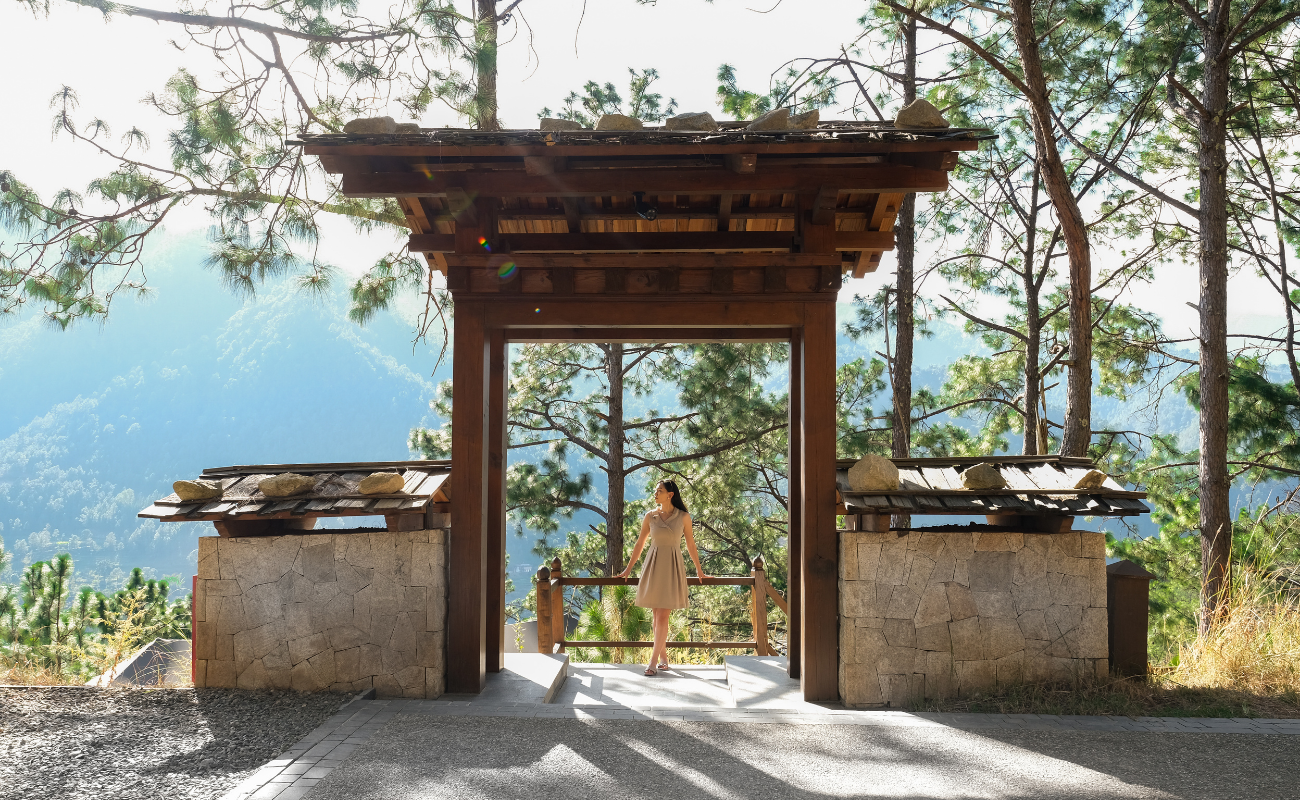
Guests cross the Mo Chhu River beneath hundreds of fluttering prayer flags before receiving a traditional blessing from the hotel’s resident Buddhist monk. Forest rises on either side, the river moves below and the buildings remain largely hidden within the landscape. Arrival becomes a small ceremony in itself — a transition from everyday life into somewhere quieter and altogether more mysterious.
Conceptually designed by Bensley, Pemako Punakha is home to Bhutan’s first luxury tented villas. It is also the flagship of Pemako, the country’s first Bhutanese-owned and managed luxury hotel group.
The retreat’s 21 villas are spread across 60 acres of forested land in the Punakha Valley, allowing the property to feel deliberately secluded. Each tent has an expansive outdoor deck, panoramic views across the Mo Chhu River and a private temperature-controlled swimming pool — another first for Bhutan.
For all the luxury involved, however, Pemako Punakha’s most compelling quality is its relationship with place.
Inspired by Bhutan’s hidden valleys
The design draws upon the Himalayan idea of the beyul: sacred hidden lands said to have been concealed by the Buddhist master Padmasambhava as places of refuge during troubled times.
These mystical valleys are believed to reveal themselves only to those with the right spiritual awareness. Bensley uses the idea as the narrative foundation for the hotel, creating a retreat that gradually unfolds as guests move through its gardens, pathways and forest.
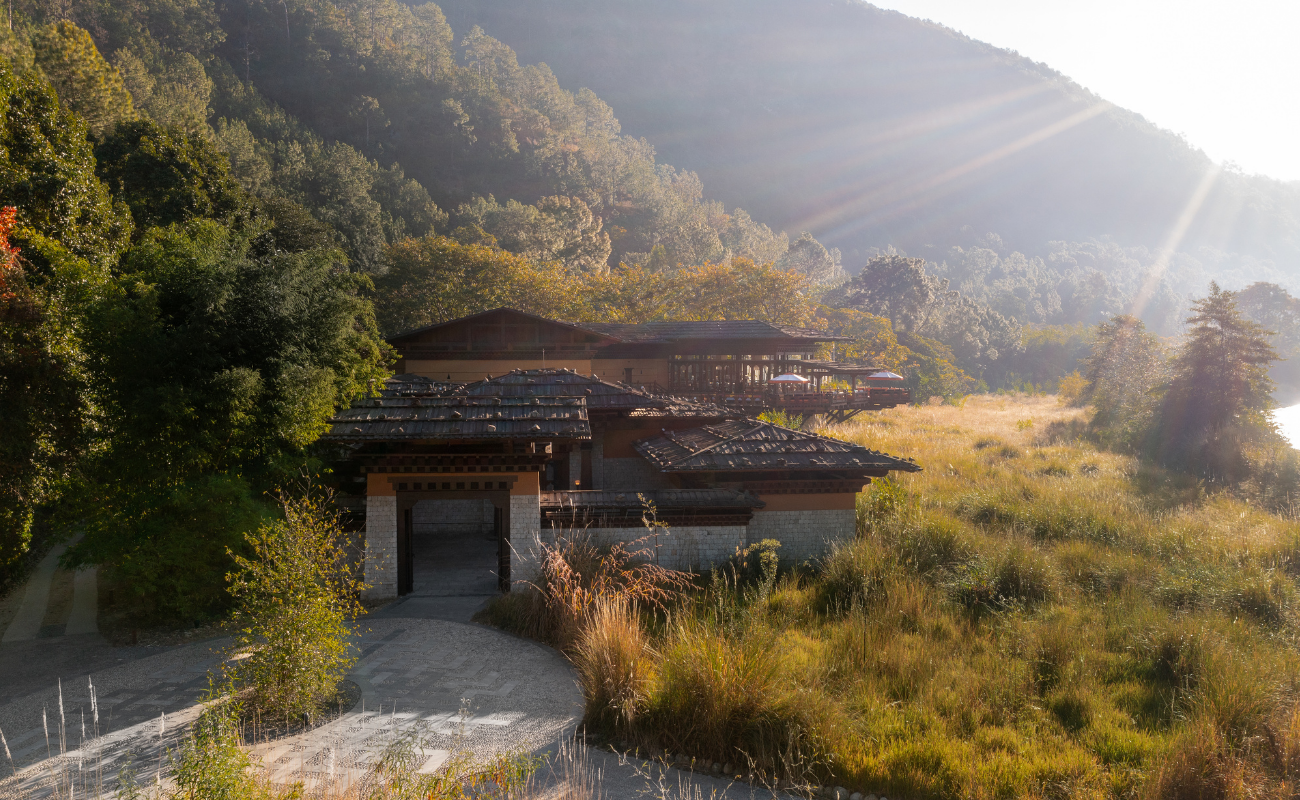
The landscape is not treated as an attractive backdrop to the architecture. It is the architecture.
Villas sit between mature trees rather than dominating them. Views are framed around the river and mountains, while pathways encourage guests to experience the property slowly. The sense of seclusion is enhanced by the relatively small number of rooms, with only 21 tented villas occupying the extensive site.
It is escapism, certainly, but one built around a distinctly Bhutanese understanding of sanctuary.
Bill Bensley’s theatrical approach to design
Bensley is known for creating hotels with colour, humour and a strong sense of narrative. His projects often reject the polished neutrality associated with international luxury in favour of interiors that are exuberant, layered and firmly connected to their location.
At Pemako Punakha, Bhutanese visual culture provides the raw material.
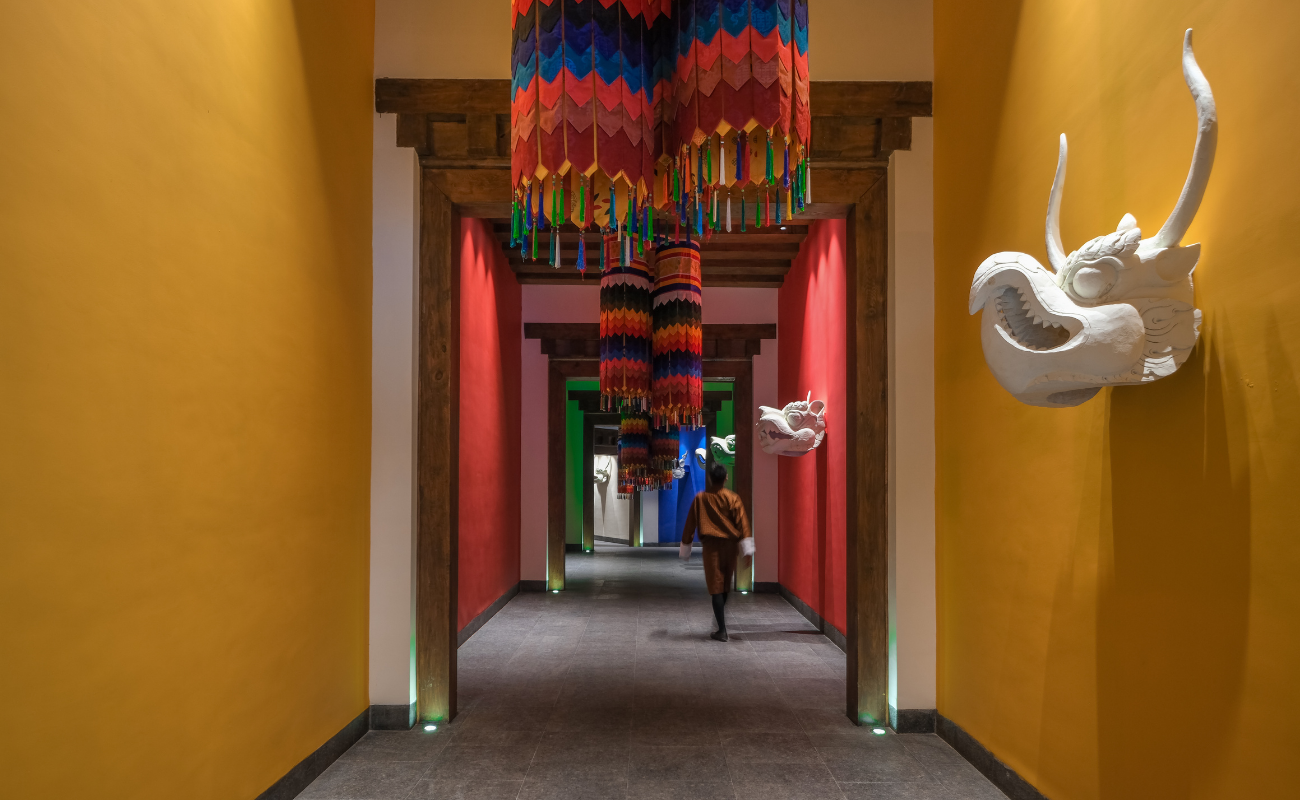
Yellow, white and orange reference the colours of the national flag, while areas of black recall the traditional tents used by highland communities. Furniture and architectural details take inspiration from Bhutan’s ancient dzongs — the imposing fortress-monasteries that remain among the country’s most distinctive structures.
Prayer art, local motifs and traditional craftsmanship appear throughout the retreat. A copy of The Bhutanese Guide to Heritage is placed beside every bed, providing guests with a route into the culture that inspired the interiors.
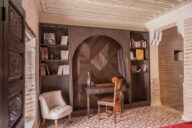
There is a great deal to look at, but the design does not feel like a collection of imported references. Its strongest moments come when decoration, architecture and landscape begin to merge: patterned fabrics seen against the surrounding forest, carved details framing river views and warm interiors opening onto private pools and mountain air.
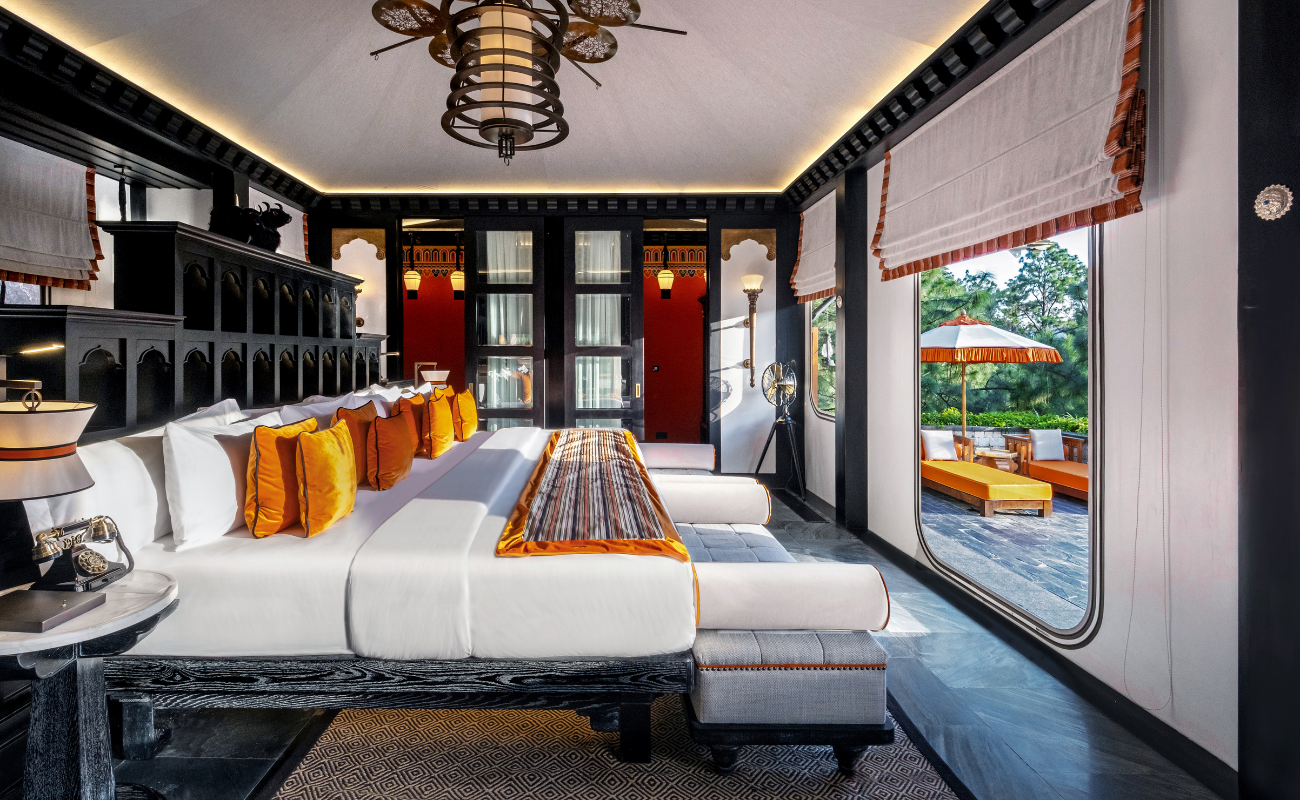
The tented villas bring an additional sense of adventure. Their dark, sweeping roofs and fabric structures evoke the temporary dwellings of Himalayan travellers, although the reality inside is considerably more indulgent.
This is camping only in the most imaginative sense of the word.
Bhutan’s first luxury tented villas
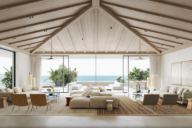
Each villa combines the romance of a canvas retreat with the comfort of a high-end hotel suite. Large bedrooms open onto private decks, while generous windows and terraces keep the river and forest constantly in view.
The private temperature-controlled pools are especially noteworthy. Bhutan’s mountainous climate can shift considerably with the seasons and elevation, making temperature control more than a decorative extravagance. It allows the pools to be used throughout the year, even when cool air settles across the valley.
Privacy is another essential part of the design. The villas have been positioned to create a sense of isolation without leaving guests disconnected from the wider property. It is possible to retreat completely, yet the hotel’s restaurants, shared spaces and cultural programme remain close at hand.
The result is a style of luxury built around space, silence and the freedom to slow down.
Experiencing Bhutanese culture
Pemako Punakha does not confine its sense of place to fabrics, furniture and architectural references. Bhutanese traditions form part of the guest experience, with activities designed to introduce the country’s spiritual, artistic and everyday customs.
Guests can take part in prayer-flag-hoisting ceremonies, meditation sessions and evening prayers with the resident monk. Traditional folk music and sacred Cham dances bring Bhutan’s performance culture into the hotel, while opportunities to wear the national dress offer a more personal introduction to local customs.
The gho, traditionally worn by Bhutanese men, is a knee-length robe secured at the waist. The kira, worn by women, is a long woven dress fastened at the shoulders and worn with a jacket. These are not historical costumes brought out purely for visitors; both remain visible parts of life in modern Bhutan.
More energetic pursuits include lessons in archery, the country’s national sport, and khuru, a traditional game in which darts are thrown towards a small outdoor target. Guests can try both with guidance from their personal butler.
At less thoughtful resorts, cultural activities can sometimes feel like a timetable of performances arranged around the visitor. Pemako’s Bhutanese ownership and largely local team give its programme a more convincing foundation.
A home-grown version of luxury
Ninety-nine per cent of Pemako Punakha’s employees are local residents. The hotel also works with neighbouring communities and uses locally produced agricultural and farm products wherever possible.
These details distinguish it from international resorts that arrive with a ready-made idea of luxury and apply it regardless of location.
Pemako instead offers a Bhutanese interpretation of high-end hospitality. Service, food, spiritual practices, craft and landscape are treated as connected parts of the experience rather than separate selling points.
That does not mean the property is restrained. This is still a lavish hotel, complete with private pools, personal butlers and Bensley’s unmistakably dramatic interiors. But the luxury feels most persuasive when it supports the destination rather than attempting to eclipse it.
The connection is particularly important in Bhutan, a country that has long taken a tightly controlled approach to tourism. Its “high value, low volume” policy is intended to limit the environmental and cultural pressures that can accompany rapid visitor growth.
A small retreat shaped around local employment, regional produce and a limited number of villas is naturally better suited to that philosophy than an enormous, self-contained resort.
From Mustang to Punakha
Interest in Bensley’s Himalayan work has grown further since Shinta Mani Mustang was placed at number one in Robb Report’s 50 Greatest Luxury Hotels on Earth 2026.
Situated in Nepal’s remote Lower Mustang region, that property shares some creative DNA with Pemako Punakha: a dramatic location, a strong narrative and an insistence that a hotel should emerge from its cultural and geographical setting.
Pemako Punakha, however, has its own identity. Where Mustang draws upon the stark terrain and trading history of Nepal’s mountain landscapes, Punakha is greener, softer and more closely entwined with river and forest.
Bensley’s work here is not about repeating a successful visual formula. It is about using design to heighten the character of an already remarkable setting.
A different side of Bhutan
Punakha served as Bhutan’s capital until 1955 and remains one of the country’s most culturally significant regions. Its lower elevation gives it a warmer climate than Thimphu and many of Bhutan’s higher valleys, producing a landscape of rice terraces, subtropical vegetation and forested hills.
The valley is best known for Punakha Dzong, an extraordinary 17th-century fortress positioned where the Pho Chhu and Mo Chhu rivers meet. With whitewashed walls, intricately painted timber and a commanding riverside setting, it is one of the clearest expressions of the architectural tradition referenced throughout Pemako.
Against this landscape, the hotel offers a base from which to encounter Bhutan at a more deliberate pace. The experience is not built around racing between attractions. Days might instead move from a forest walk to meditation, archery, a long meal or an afternoon spent watching the Mo Chhu from a private deck.
In an age when luxury travel is often measured by how much can be fitted into an itinerary, that slower rhythm may be Pemako Punakha’s greatest indulgence.
Bensley’s design provides the theatre, but Bhutan supplies the substance: forest, water, craft, ritual and a deeply rooted sense of hospitality. The result is a hotel that does not simply borrow the appearance of its surroundings. It attempts to become part of them.
Rates at Pemako Punakha start from £1,331 for one person in a luxury tented villa on a half-board basis.