Tasmania by design: the island’s best architecture, art and creative stays
Tasmania does not announce itself with the swagger of Sydney or the carefully cultivated cool of Melbourne. It works more quietly than that. Australia’s island state reveals itself in layers: convict-cut sandstone, Georgian warehouses, abandoned railway workshops, contemporary galleries, sculptural hotels and houses buried into hillsides. Around them is the landscape that informs almost everything built here — dense forest, battered coastline, dark water and an almost unreasonable amount of open space.
This is a place where architecture rarely feels separate from its surroundings. Buildings are sunk into cliffs, positioned at the end of lonely jetties or wrapped around existing stone walls. Timber is left warm and tactile. Concrete is allowed to look like concrete. Historic structures are not polished into blandness but adapted with their scars, machinery and industrial proportions intact.
Mona inevitably dominates Tasmania’s modern cultural story. When the Museum of Old and New Art opened outside Hobart in 2011, it changed how the rest of the world saw the island. It was strange, ambitious, provocative and largely underground — precisely the opposite of the polite white-box gallery. Yet Mona is only part of the picture. Across Tasmania, former factories have become museums, colonial farm buildings have been sensitively restored and ambitious new hotels have introduced contemporary design without sanding away the island’s character.
For travellers who choose destinations according to their museums, buildings, interiors and creative communities, Tasmania offers an extraordinary amount within a relatively compact island. This is the Fused guide to experiencing Tasmania through architecture, art, craft and design.
Inside this guide
Tasmania’s architecture and heritage
The best galleries and museums
Design-led hotels and creative stays
Tasmanian craft experiences
Why design lovers should visit Tasmania
Tasmania’s convict architecture and colonial heritage
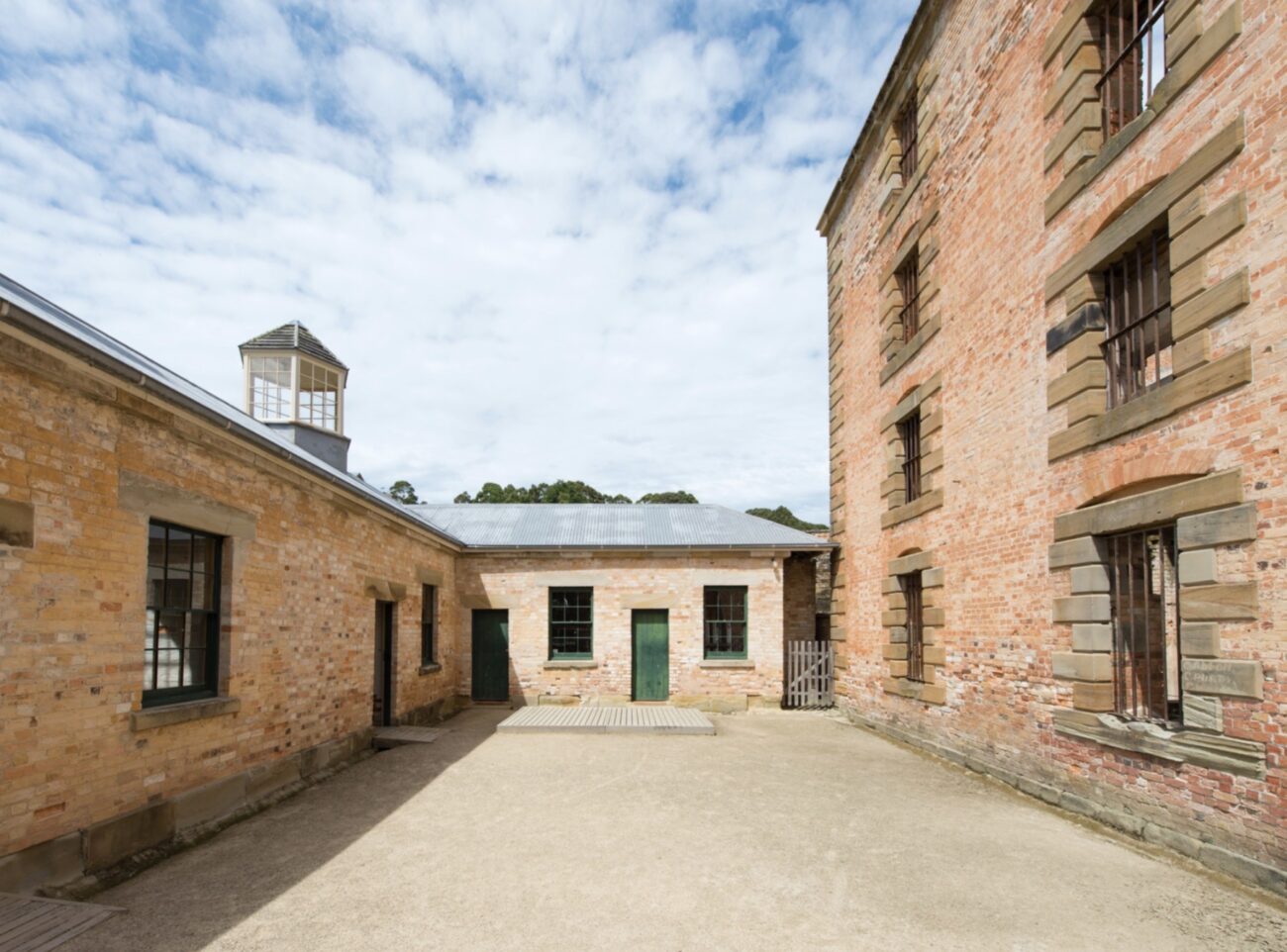
Port Arthur Historic Site
Port Arthur Historic Site, Turrakana / Tasman Peninsula
Port Arthur is one of those places where the landscape initially appears almost too beautiful for the history it contains.
Set beside the water on the Tasman Peninsula, the former penal settlement is made up of more than 30 surviving buildings and ruins spread across a vast historic precinct. Sandstone walls, institutional buildings, gardens and shoreline combine to create something that feels less like a single monument and more like an entire designed landscape.
The penitentiary is its most recognisable structure, but the church, hospital, guard tower, commandant’s house and separate prison reveal the scale and complexity of the settlement. Together, they offer a stark lesson in how architecture was used to organise, control and punish.
Port Arthur forms part of the UNESCO-listed Australian Convict Sites, a collection of 11 locations representing the forced transportation of convicts to Australia during the eighteenth and nineteenth centuries.
It is possible to explore independently, although a guided experience adds necessary human context to buildings that might otherwise be admired purely for their weathered beauty. Harbour cruises and evening tours uncover further stories from the site, but even during the day, Port Arthur possesses a lingering atmosphere that is difficult to shake.
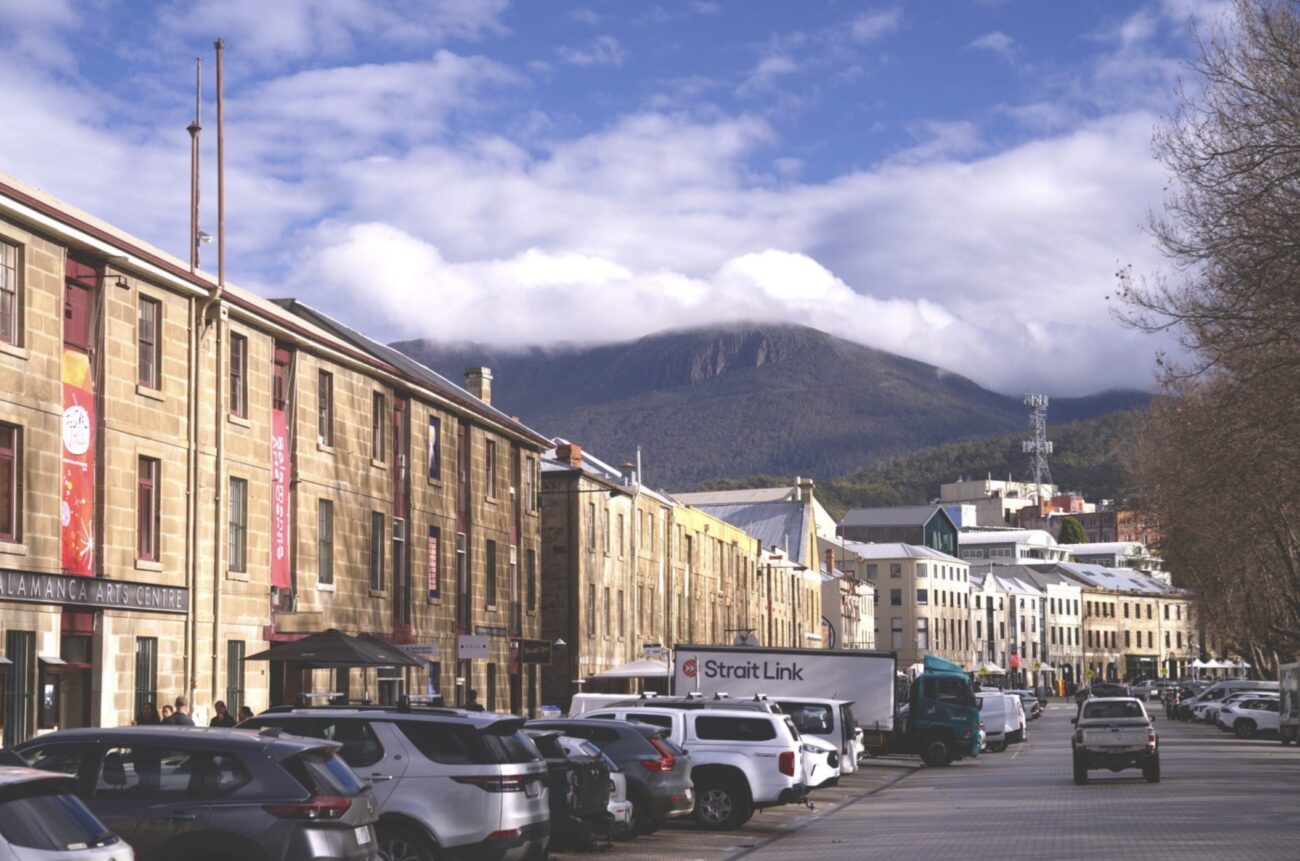
Salamanca Place, Hobart
Hobart’s relationship with sandstone is visible everywhere, but nowhere more clearly than Salamanca Place. The long row of Georgian warehouses was built during the 1830s using stone quarried from the cliffs behind the waterfront. Their original purpose was practical: storing grain, wool, whale oil and imported goods arriving through Hobart’s busy port.
Nearly two centuries later, their heavy walls, loading bays and broad warehouse proportions continue to define the city. The difference is what now happens inside them. Former storage spaces have become galleries, restaurants, bars, studios, shops and independent creative businesses. The Salamanca Arts Centre occupies seven heritage warehouses and remains one of the most important arts complexes in Tasmania.
There are prettier historic streets in Australia, but few demonstrate adaptive reuse on this scale quite so naturally. The buildings have retained enough of their original toughness to avoid becoming a heritage theme park. Behind the warehouses, Kelly’s Steps climb through the sandstone escarpment towards Battery Point. Hand-cut in 1839, the staircase is still one of the most atmospheric ways to move between two of Hobart’s most distinctive neighbourhoods.
Battery Point, Hobart
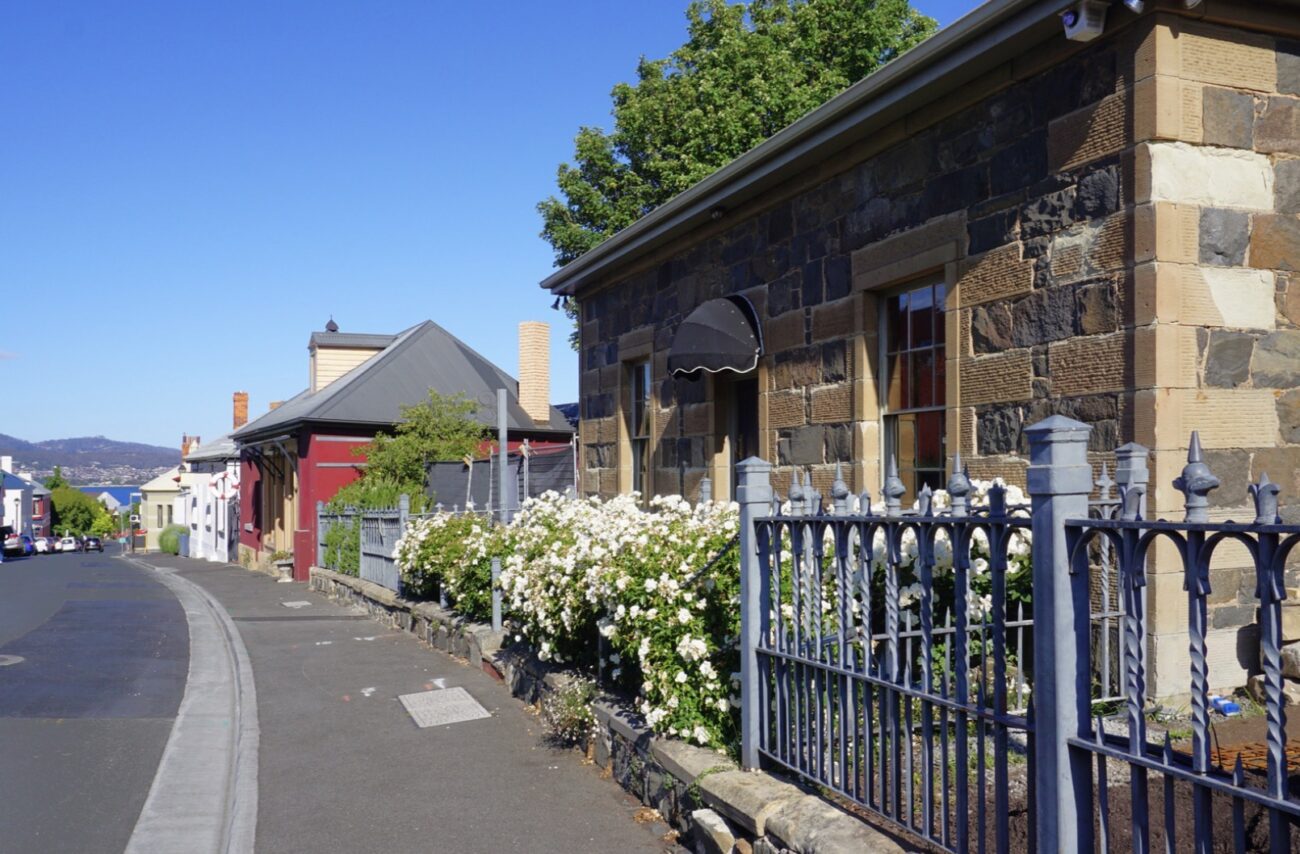
Battery Point sits just above Salamanca, although its narrow streets and small Georgian cottages can feel removed from the waterfront below. The district is one of Australia’s best-preserved colonial neighbourhoods, but importantly, it remains a functioning part of the city. People still live behind its sandstone walls. Cafés, pubs and small businesses inhabit buildings that have stood for generations.
Arthur’s Circus is the postcard moment: a circular arrangement of modest nineteenth-century cottages gathered around a village green. It is unusually intimate, more English hamlet than Australian city suburb, and unlike almost any other residential streetscape in the country. Beyond it, Battery Point rewards aimless walking. Tiny lanes open onto harbour views; Georgian cottages sit beside grander homes; walls lean slightly under the weight of age. St George’s Anglican Church, designed by colonial architect John Lee Archer, rises above the neighbourhood as one of its defining landmarks. The charm lies in the lack of grand gestures. Battery Point is not monumental architecture. It is architecture at the scale of daily life.
Brickendon Historic Farm and Convict Village, Longford
Brickendon is not simply a group of old farm buildings preserved behind ropes. It remains a working agricultural estate, which is precisely what makes it so revealing. Established in 1824 near Longford in Tasmania’s Northern Midlands, the property contains timber barns, granaries, workers’ cottages, a blacksmith’s workshop, farm buildings and a convict-built chapel. Its historic shearing shed continues to reflect the practical, self-contained nature of colonial farming.
Brickendon is also included within the UNESCO Australian Convict Sites World Heritage property. Here, the architecture tells a story not only of punishment and transportation, but of coerced labour, agricultural production and the creation of private estates. The arrangement of the buildings reveals how an early colonial enterprise operated: where people lived, where tools were made, how crops were stored and how livestock was managed.
Some of the convict-built cottages have been restored as accommodation, allowing guests to remain after day visitors have left. At that point, with the landscape quiet and the river nearby, Brickendon begins to feel less like a historic attraction and more like a place where the nineteenth century never entirely disappeared.
The best galleries and museums in Tasmania
Mona, Berriedale
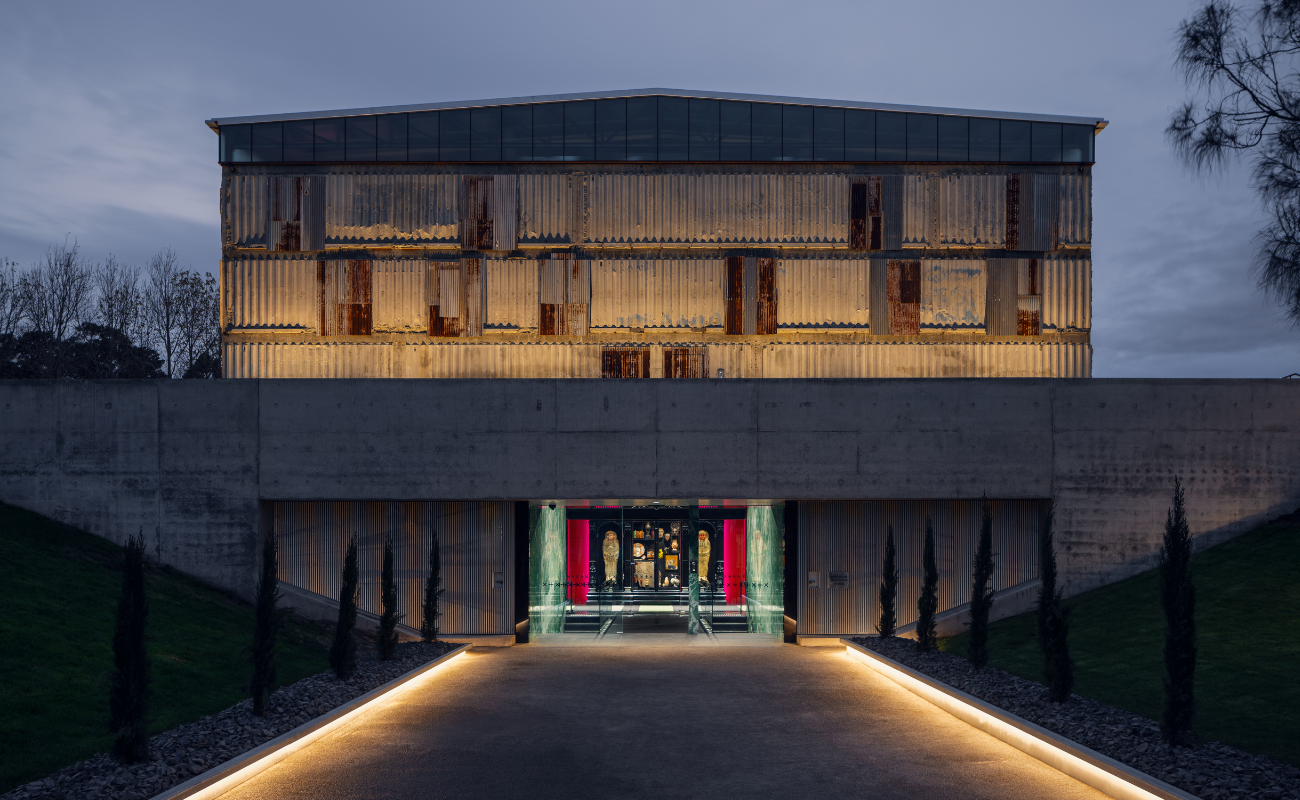
Few museums have transformed the image of a destination as dramatically as Mona. Built into the sandstone of the Berriedale peninsula north of central Hobart, the Museum of Old and New Art is approached almost theatrically. The best arrival is by ferry along the River Derwent, where the structure initially gives away little of what lies beneath the surface. Rather than climbing a grand staircase into a monumental gallery, visitors descend. Designed by architect Nonda Katsalidis, the museum extends several levels underground, with galleries excavated from the cliff. Raw concrete, rusted steel, exposed rock, darkness and disorientating passages replace the neutrality of a conventional art museum. It is an architectural experience before it is an artistic one.
The absence of windows in many spaces removes any reliable sense of time. Galleries appear suddenly. Staircases lead deeper underground. Ancient objects sit close to contemporary installations without the usual chronological hand-holding. Mona’s latest development has made the complex more extensive still. Phrontisterion, the museum’s new library, opened in June 2026, adding further galleries and spaces built into and beneath layers of sandstone. Anselm Kiefer’s monumental Elektra is also now part of the museum experience.
The wider site includes Moorilla winery, restaurants, bars, performance spaces and accommodation, making it possible to lose most of a day here without fully understanding where it went. That sense of surrender is part of Mona’s success. It does not politely request your attention. It swallows you whole.
Design Tasmania, Launceston
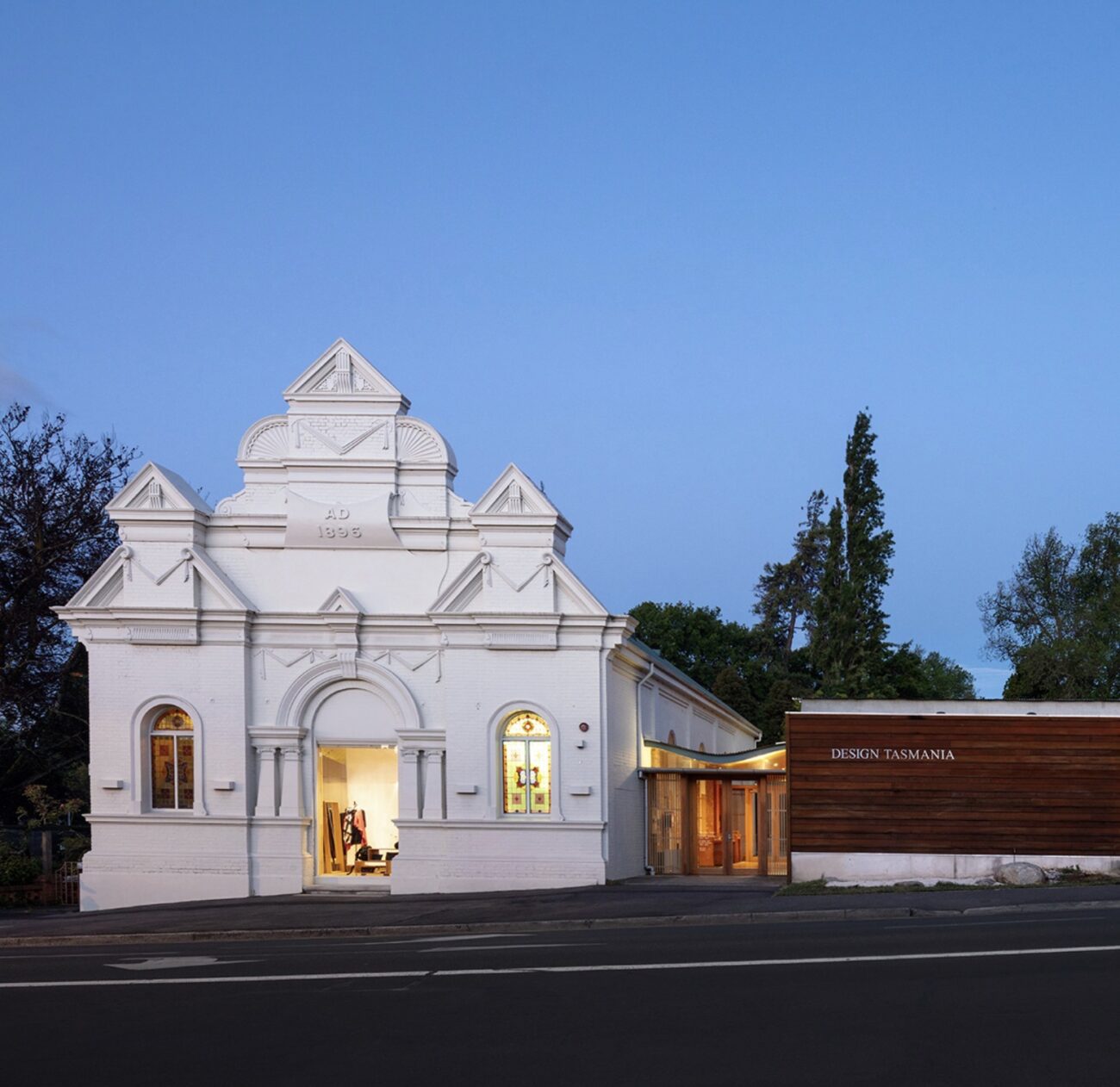
Where Mona favours spectacle and psychological disruption, Design Tasmania is calmer and more tactile. Located beside Launceston’s City Park, the organisation has supported Tasmanian craft and design since 1976. Its programme spans furniture, contemporary woodwork, ceramics, jewellery and object design, with a particular emphasis on material knowledge and making.
Tasmania’s abundance of distinctive timbers has long shaped its design identity, and the galleries demonstrate how local makers continue to respond to those materials without becoming trapped by rustic tradition. The building is restrained and light-filled, with timber surfaces and uncluttered sightlines that allow the work to take precedence. Objects are given room to breathe. Joinery, grain, proportion and finish become the main event.
A dedicated retail area provides one of the better opportunities to buy work by Tasmanian designers and craftspeople without falling into the familiar trap of generic gallery merchandise. For anyone interested in furniture or material culture, Design Tasmania provides a useful counterpoint to the island’s larger institutions. It demonstrates that Tasmania’s creative identity is built as much in workshops as it is in museums.
Tasmanian Museum and Art Gallery, Hobart
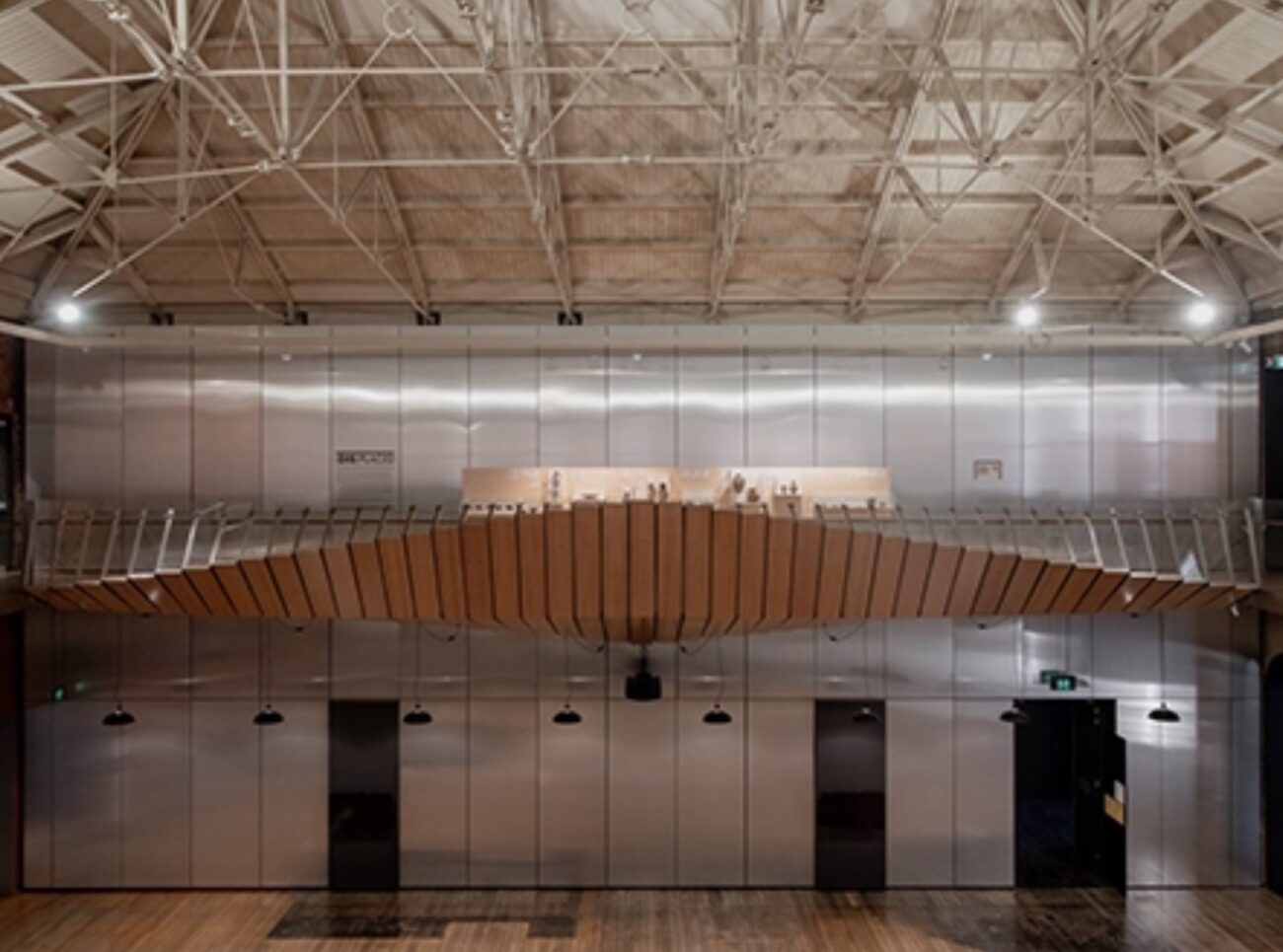
The Tasmanian Museum and Art Gallery occupies a collection of interconnected buildings on Hobart’s waterfront, bringing almost two centuries of architecture into a single cultural precinct. Rather than presenting one clean architectural statement, TMAG has evolved incrementally. Historic sandstone buildings, courtyards, former government spaces and contemporary interventions sit alongside one another.
That gradual development is part of its appeal. Moving through the museum feels like walking through the changing civic history of Hobart itself. Its collections span Tasmanian art, natural history, decorative arts, social history and Antarctic exploration. The museum also engages with the history and continuing culture of Tasmania’s Aboriginal people, adding an essential perspective to a city whose colonial architecture can otherwise dominate its visible historical narrative. TMAG is less performative than Mona, but that is not a criticism. It is a museum for looking closely, connecting stories and understanding the island beyond its more seductive surfaces.
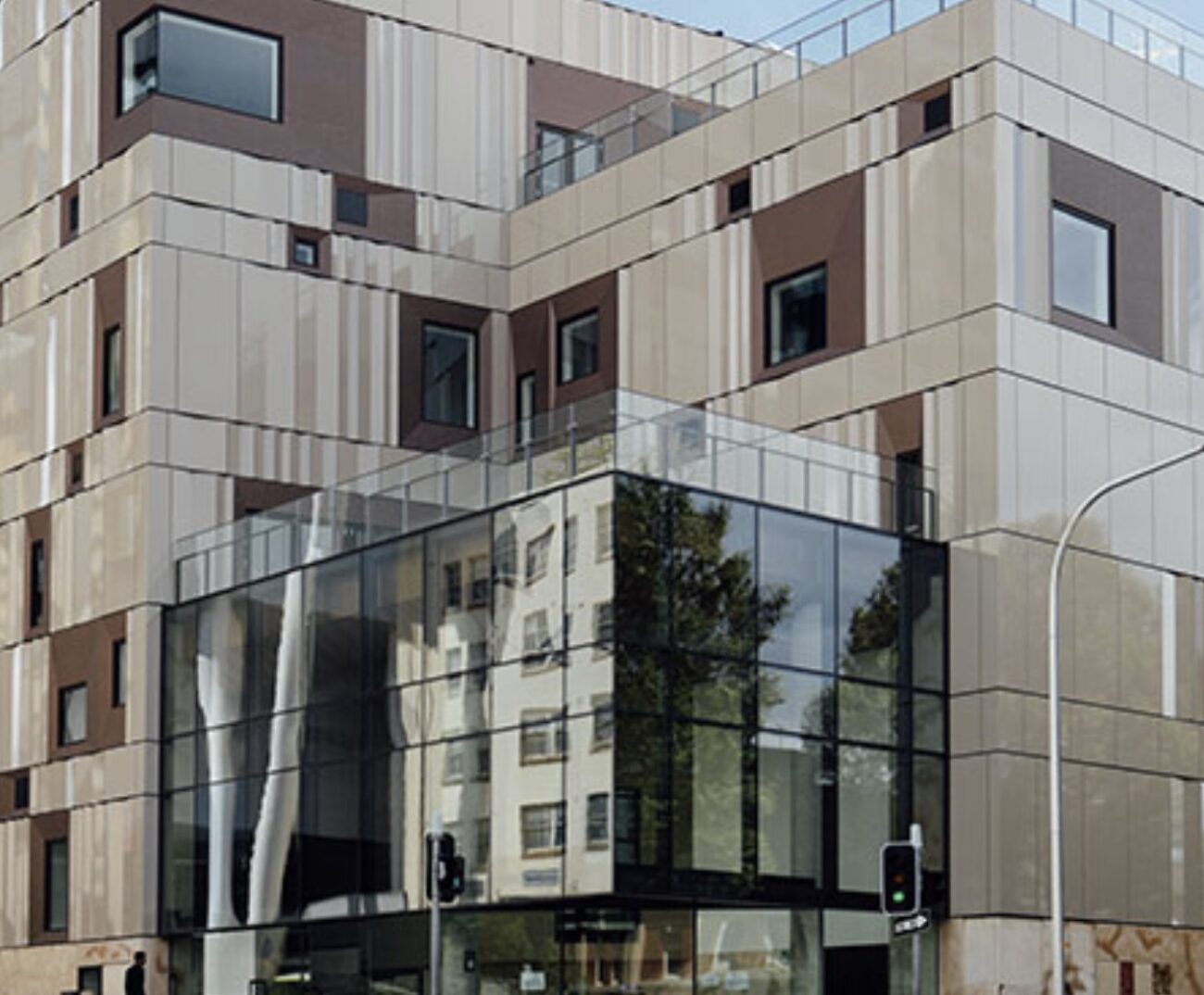
The Hedberg, Hobart
The Hedberg is an unusually confident meeting of old and new. Opened in 2021, the performing arts precinct connects the historic Theatre Royal with a contemporary building designed by Hobart-based LIMINAL Architecture in collaboration with Singapore studio WOHA. The Theatre Royal is Australia’s oldest continuously operating theatre. Rather than isolating it as a protected historic object, The Hedberg brings it into an active new complex containing a recital hall, studio theatre, rehearsal spaces and facilities for the University of Tasmania. Its bronze-toned exterior draws on theatrical curtains, musical notation and the shifting iridescence of Tasmanian abalone shells. The result changes subtly with the light, providing a contemporary counterpoint to the older masonry around it.
Inside, Tasmanian blackwood ceilings, interconnected foyers and retained historic materials continue the conversation between performance, architecture and memory. The project avoids the timid glass-box treatment often applied to heritage buildings. The new architecture is allowed to possess its own identity while respecting what was already there.
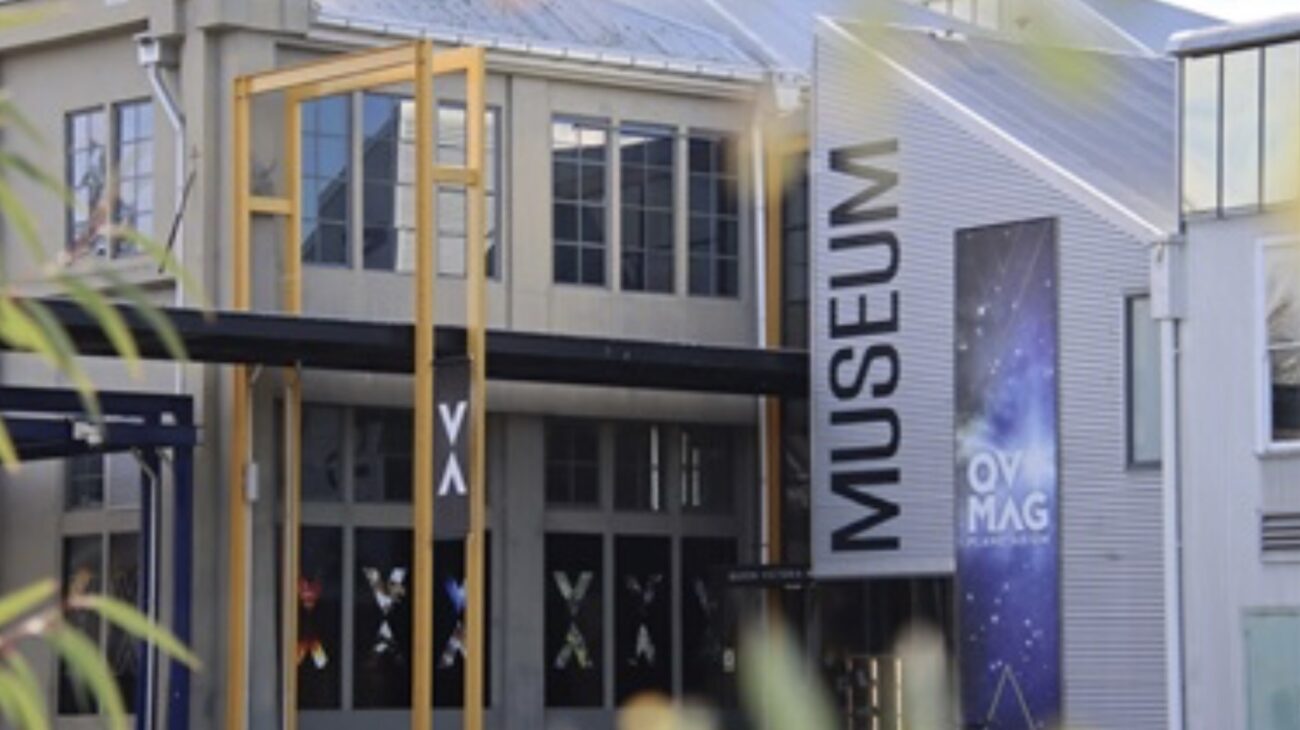
Queen Victoria Museum and Art Gallery, Launceston
The Inveresk campus of the Queen Victoria Museum and Art Gallery occupies part of Launceston’s former railway workshops. It is an impressive example of cultural reuse precisely because the redevelopment does not attempt to hide the site’s industrial past. Brick walls, exposed steel structures, sawtooth roofs and large workshop volumes remain visible throughout.
These are spaces built for locomotives, machinery and heavy engineering rather than framed artworks. That mismatch gives the museum much of its character. The scale allows objects to be shown with a generosity rarely available in a conventional regional gallery, while the surviving fabric preserves a connection to Launceston’s manufacturing history. QVMAG is often described as Australia’s largest regional museum, but its significance is not simply a matter of size. The Inveresk site demonstrates how industrial buildings can be repurposed without scrubbing away the labour and machinery that once animated them.
Tasmania’s best design-led hotels and creative spaces
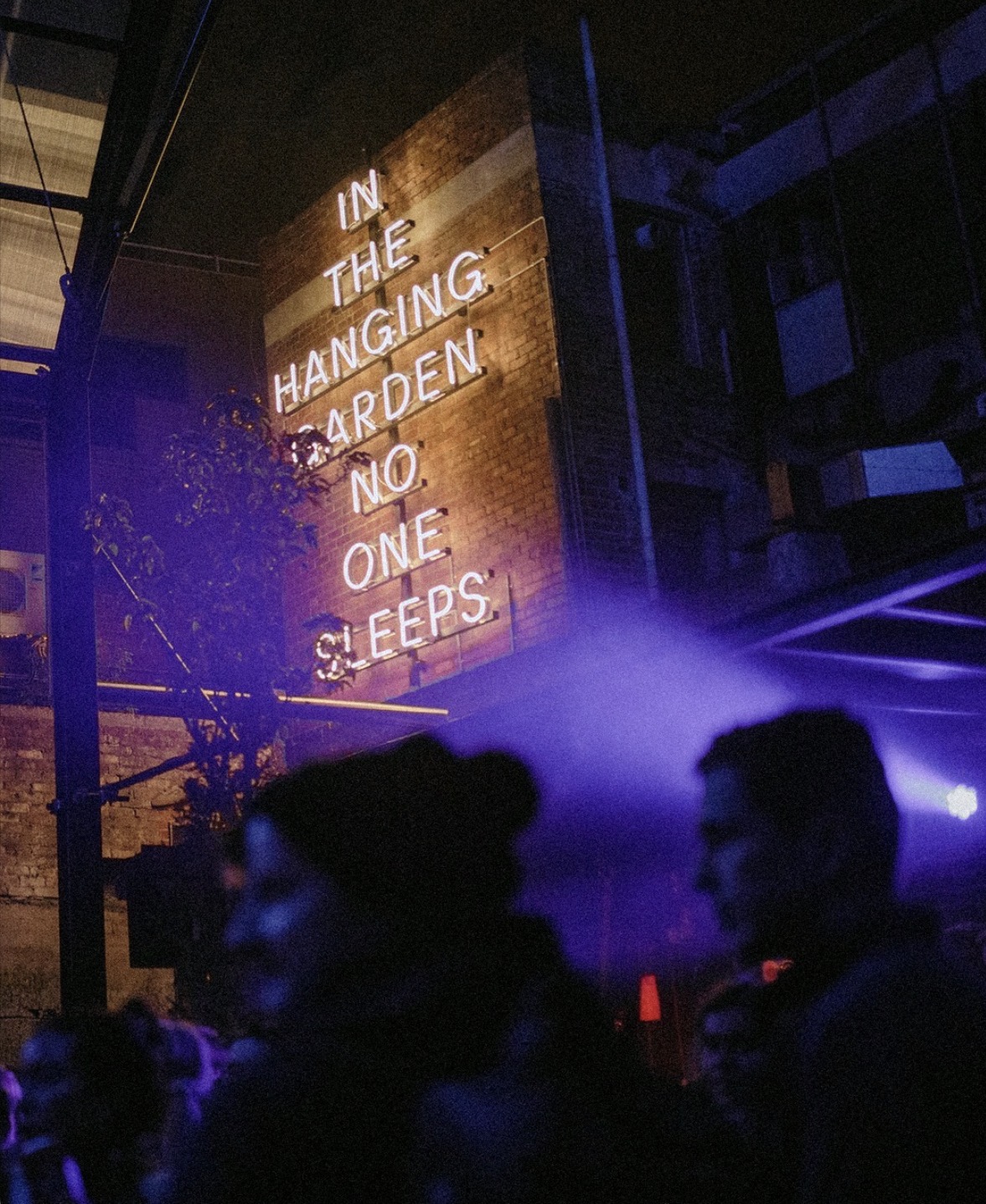
In The Hanging Garden, Hobart
A former inner-city car park is not the most promising foundation for a cultural destination. In The Hanging Garden has nevertheless turned one into one of Hobart’s liveliest contemporary spaces. At its centre is a vast, cathedral-like structure surrounded by bars, food vendors, performance areas, timber walkways and dense planting. Shipping containers, exposed structure and improvised-looking platforms give the precinct an industrial language, softened by greenery spilling through and around it.
The design is intentionally layered rather than pristine. Small corners sit beside communal tables. Covered spaces open into courtyards. Music and conversation travel through the structure. Hobart has no shortage of handsome sandstone, but In The Hanging Garden represents a younger and more informal side of the city’s design culture. It shows how atmosphere, programming and creative reuse can transform a neglected urban site without requiring everything to be polished into expensive submission.
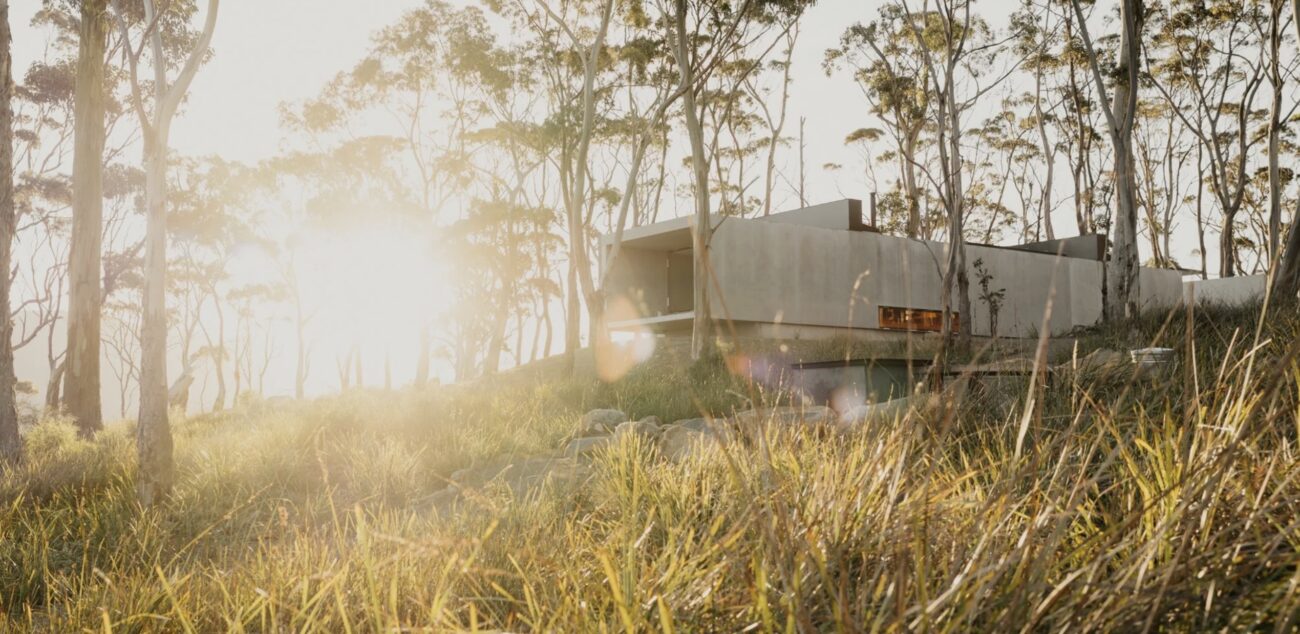
Vipp Tunnel, Bruny Island
Vipp Tunnel is less a conventional holiday home than a concrete viewing instrument. Set into a hillside on Bruny Island, the off-grid retreat was commissioned by Danish design company Vipp and designed by Hobart architecture studio Room11. Its long, monolithic form appears embedded in the land, facing across the D’Entrecasteaux Channel.
The architecture is unapologetically severe. Raw concrete surfaces, deep openings and clean geometric lines create something closer to a piece of land art than a cosy coastal cottage. Inside, the mood softens without becoming decorative. Floor-to-ceiling glazing draws the landscape into the living spaces, while a controlled palette keeps attention fixed on the changing water, sky and vegetation outside.
There is plenty of brutalist concrete in contemporary hospitality, not all of it convincing. Here, the material makes sense. The building feels protective, elemental and appropriately resistant to the landscape rather than merely styled for photographs.
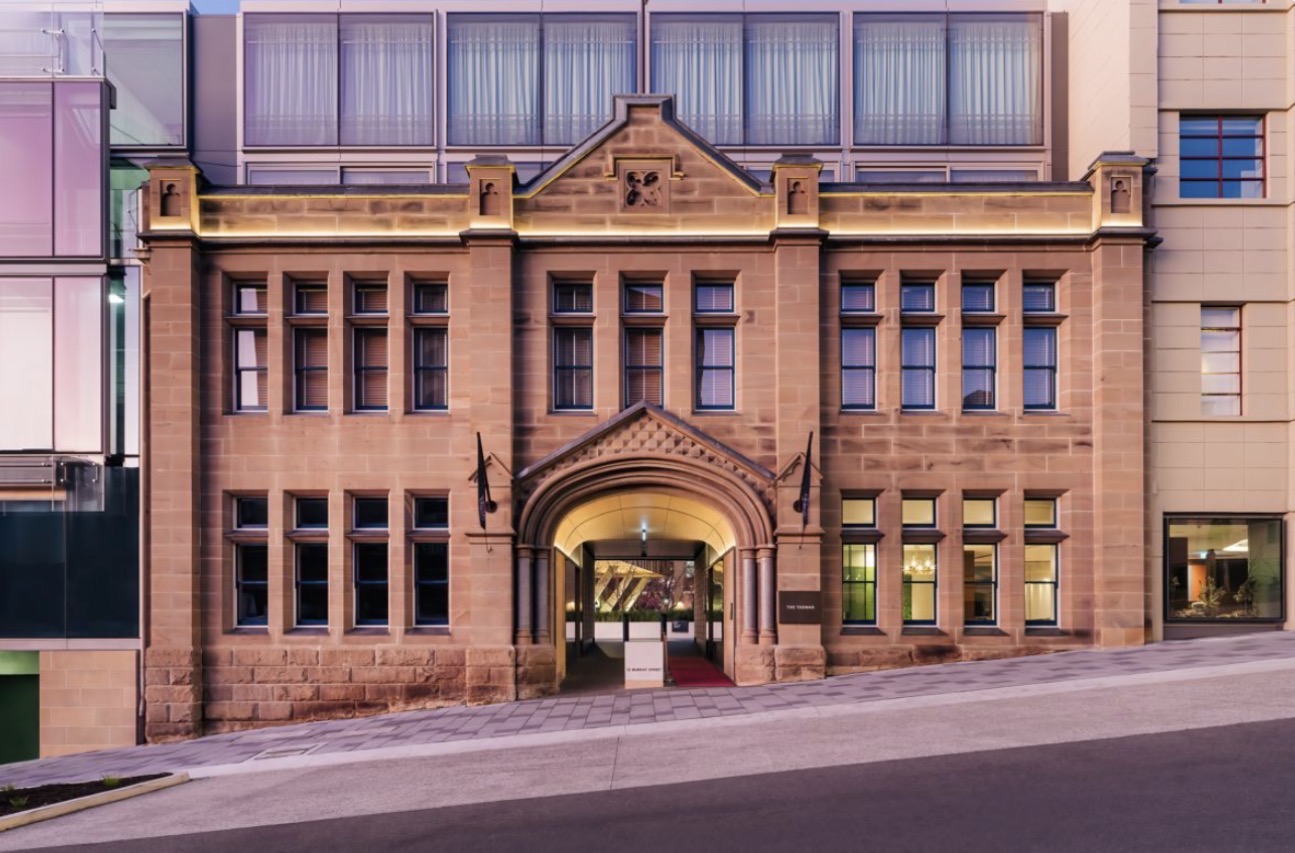
The Tasman, Hobart
The Tasman contains three distinct architectural periods within one hotel: an 1840s Georgian sandstone building, a 1940s Art Deco wing and a contemporary glass pavilion.
It should feel disjointed. Instead, the contrasts provide the property with its identity. In the heritage rooms, original stone and traditional proportions establish a sense of Hobart’s colonial past. The Art Deco section introduces richer lines and a more urbane character, while the contemporary wing opens towards the harbour through glass and modern detailing.
The hotel’s official description calls it an “architectural symphony”, which might ordinarily set alarm bells ringing. In this case, the metaphor is not entirely unreasonable. Georgian solidity, Deco glamour and modern transparency are allowed to play different parts without being forced into visual uniformity.
Travellers not staying overnight can still experience some of the building through the Deco Lounge and Mary Mary, a cocktail bar tucked within the Art Deco wing. The Tasman appears in the World’s 50 Best Discovery collection, although it was not included in the numbered World’s 50 Best Hotels list for 2024.
Check availability at The Tasman
Pumphouse Point, Lake St Clair
At the end of a long concrete flume extending into Lake St Clair stands one of Tasmania’s most recognisable hotels. Pumphouse Point occupies a former hydroelectric pumping station built during the 1940s. The setting is extraordinary: a severe industrial structure surrounded by dark water, forest and the mountains of the Tasmanian Wilderness World Heritage Area.
After decades of limited use, the heritage buildings were transformed by Cumulus Studio into a wilderness retreat. Importantly, the architects did not attempt to disguise the pumphouse’s original purpose. Exposed concrete, steel stairs, industrial fittings and generous ceiling heights remain central to the experience. Contemporary rooms occupy the old structure, but traces of infrastructure and engineering are visible throughout.
The companion Shorehouse sits on the lake’s edge, offering a slightly less isolated alternative to sleeping at the end of the flume. Pumphouse Point works because of the tension between architecture and place. The building is not conventionally beautiful, nor was it originally intended to be. Against the stillness of Lake St Clair, however, its utilitarian form becomes strangely poetic.
Check availability at Pumphouse Point
Hadley’s Orient Hotel, Hobart
Built in 1834, Hadley’s Orient Hotel offers a different kind of design experience: one rooted in accumulated stories, old-fashioned hospitality and the theatrical pleasures of a historic interior. Its Victorian façade, timber details, patterned surfaces and glazed atrium retain the atmosphere of a grand nineteenth-century hotel without turning the entire property into a costume drama.
Hadley’s has hosted artists, writers and explorers, including Antarctic figures Roald Amundsen and Sir Douglas Mawson. That cultural association continues through the annual Hadley’s Art Prize, a major Australian award dedicated to landscape art. The building can be explored through a self-guided audio trail uncovering some of its stranger episodes. Polar expeditions, early ice cream and an unfortunate incident involving a chimney all feature.
In a city currently fond of concrete, black steel and serious natural materials, Hadley’s offers something more decorative and eccentric. Tasmania’s design story is stronger for containing both.
Check availability at Hadley’s Orient Hotel
The Henry Jones Art Hotel, Hobart
Before Mona arrived and Hobart’s international reputation began to shift, the Henry Jones Art Hotel was already demonstrating what could be done with the city’s industrial waterfront. Opened in 2004, the hotel occupies former warehouses and buildings connected to the historic IXL jam factory on Hunter Street. Architect Robert Morris-Nunn retained much of the complex’s nineteenth-century fabric, including sandstone walls, timber beams, corrugated roofs and traces of its manufacturing past.
The rooms and public areas are integrated with hundreds of works by Tasmanian artists. Art is not restricted to a designated gallery corridor but appears throughout the property, turning the hotel into a constantly changing exhibition space. The architecture is equally important. New interventions sit within the rough industrial shell without erasing it, allowing old structures, uneven surfaces and heavy timber to remain visible. Guests can experience the building through its restaurants, bars and public areas, including the IXL Long Bar.
Today, art hotels are common enough to constitute a hospitality category. The Henry Jones was doing it before the phrase became marketing shorthand.
Check availability at The Henry Jones Art Hotel
Risby Cove, Strahan
On the edge of Macquarie Harbour, Risby Cove occupies land once associated with the Risby Bros sawmill, part of the industrial history of Tasmania’s remote west coast. A major refurbishment completed in 2025 reworked its 12 suites using custom timber furniture, locally produced art, bespoke lighting and a palette influenced by the surrounding rainforest, harbour and weather.
The preserved corrugated exteriors retain something of the property’s working character, while the interiors are warmer and more considered. Tasmanian timber is used with particular care, connecting the contemporary accommodation to both the former sawmill and the wider material culture of the region. At The Mill restaurant, salvaged Huon pine from Strahan’s old jetty appears alongside birdseye Huon pine detailing. It is a neat example of design performing several jobs at once: providing beauty, recalling local industry and giving otherwise discarded materials a second life.
The result is specific to its setting. It would make little sense transplanted to central Hobart, which is precisely the point.
Check availability at the Risby Cove
The Keep, Goulds Country
The Keep rises from a rocky outcrop in north-east Tasmania like a fragment of medieval Europe that has taken a very long wrong turn. Inspired by the defensive stone towers from which it takes its name, the off-grid retreat is arranged across three levels and surrounded by hundreds of acres of forest. The architecture creates a deliberate sense of shelter. Solid forms and enclosed spaces contrast with broad sections of glazing framing views over the Blue Tier and towards the north-eastern coastline.
Inside, timber, local artwork and custom furniture bring warmth to what could otherwise feel forbidding. The mood is secluded rather than severe: a contemporary retreat built around the primitive appeal of height, stone, fire and a locked door between you and the rest of the world. It is not a building that attempts to disappear into the landscape. It sits above it, commanding the view with a degree of drama. Sometimes subtlety is overrated.
Tasmanian craft and hands-on creative experiences
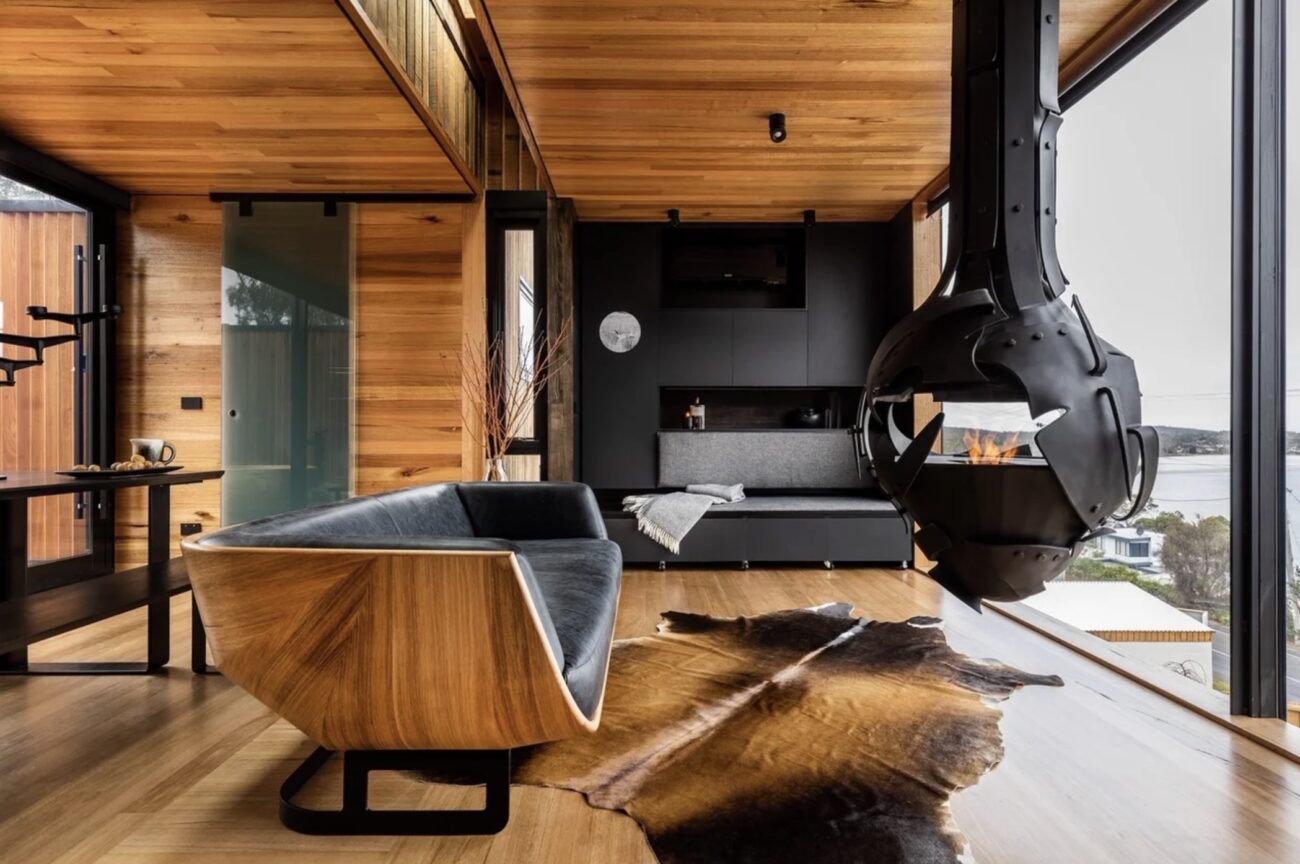
Mattila Studio, Hobart
Contemporary design is often encountered at the clean end of the process: the finished chair, polished object or carefully lit gallery display. Mattila Studio offers access to the messier beginning.
Led by artist-blacksmith Pete Mattila, its workshops introduce visitors to forging steel by hand. Participants heat, hammer and shape metal at the anvil, producing knives, tools or functional objects while learning the basic principles of one of the world’s oldest crafts. The studio is working rather than staged. Heat, noise, tools, sparks and physical effort are part of the atmosphere. It is a useful reminder that good objects begin with material resistance, repeated failure and considerably more sweat than the finished photograph tends to suggest.
For design-conscious travellers, the appeal lies not simply in taking something home. It is the opportunity to understand process: how steel responds to temperature, how a form develops and how much judgement is contained within an apparently simple handmade object.
Tasmanian Sculpture School, Launceston
The Tasmanian Sculpture School offers another route into making, this time through clay, proportion and the construction of three-dimensional form. Based in a working Launceston studio, workshops are led by bronze sculptor Jody Pawley. Participants use clay over armatures to create their own pieces while learning about structure, anatomy, balance and technique.
Surrounded by tools, half-finished figures and works in progress, the experience provides a candid view of sculptural practice. It is less about producing an instant masterpiece than learning how artists think through material. The slow pace is part of its value. Working by hand demands a kind of attention that is increasingly difficult to find while travelling, particularly when every destination is being simultaneously photographed, reviewed and uploaded.
Here, the point is simply to look, touch, adjust and look again.
Why Tasmania appeals to design-conscious travellers
Tasmania’s strongest architecture shares one quality: it feels inseparable from where it has been built. At Mona, sandstone becomes part of the museum. At Pumphouse Point, an industrial relic gains meaning from its isolation on the lake. At Vipp Tunnel, concrete frames the coast rather than competing with it. In Hobart, warehouses and factories continue to evolve without having their histories cleaned away.
Even the island’s most luxurious hotels tend to avoid generic international gloss. Local timber, stone, art and craftsmanship provide a sense of geography. You usually know where you are. That is increasingly rare.
The island’s creative appeal also extends beyond formal design destinations. Its produce, restaurants, distilleries and wineries are connected to the same emphasis on landscape, material and provenance. Historic towns lead quickly into wilderness. A morning spent looking at colonial architecture can become an afternoon beside a lake, in a forge or underground at one of the world’s strangest private museums.
Tasmania’s distances are manageable, but the island should not be rushed. The best route is not necessarily the one that collects the greatest number of landmarks. It is the one that leaves enough time to notice how buildings sit within the land, how materials weather and how old structures continue to shape contemporary life.
Tasmania has become one of the Southern Hemisphere’s most interesting destinations for architecture and design, but it has not arrived at a finished visual identity. That is what makes travelling here now so compelling.
The design story is still being built.
More from Fused
-
Stay in the World’s Best Art Hotels
-
Explore more Design Destinations
-
Browse Hotbed for design-led stays